


Daily Dose Of Jazz…
“Brother” Jack McDuff was born Eugene McDuffy on September 17, 1926 in Champaign, Illinois. He began his musical career playing bass first with Joe Farrell followed by Willis Jackson who encouraged him to take up the organ. In the late 50’s he moved to his new instrument and began attracting the attention of Prestige Records. He soon became a bandleader, leading groups that featured then, young guitarist George Benson, saxophonist Red Holloway and drummer Joe Dukes.
McDuff’s debut recording “Brother Jack” for Prestige was followed by his sophomore project, The Honeydripper, featuring Jimmy Forrest and Grant Green. After his Prestige tenure he joined the Atlantic Records family for a brief period and then by the 70s was recording for Blue Note.
The decreasing interest in jazz and blues during the late 70s and 1980s meant that many jazz musicians went through a lean time and it wasn’t until the late 1980s, with The Re-Entry, recorded for the Muse label in 1988, and once again began a successful period of recordings, initially for Muse, then on the Concord Jazz label from 1991. George Benson appeared on his mentor’s 1992 Colour Me Blue album.
Despite health problems, Brother Jack continued working and recording throughout the 1980s and 1990s, touring Japan with Atsuko Hashimoto in 2000. “Captain” Jack McDuff, as he later became known, was one of the most prominent jazz organist and organ trio bandleader during the hard bop and soul jazz era of the Sixties. He passed away of heart failure on January 23, 2001 at the age of 74 in Minneapolis, Minnesota.
More Posts: organ
Daily Dose Of Jazz…
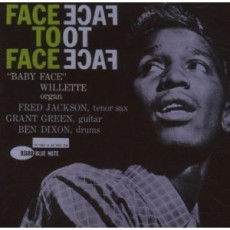
Roosevelt “Baby Face” Willette was born on September 11, 1933 in New Orleans, Louisiana. His mother was a missionary who played the piano in the church where his father was a minister. His musical roots are therefore in gospel and Baby Face taught himself the piano and started out playing the piano for various gospel groups, and spent his early career touring across the United States, Canada and Cuba.
It was in Chicago that Willette decided to switch from gospel and rhythm & blues to playing jazz. He played piano with the bands of King Kolax, Joe Houston, Johnny Otis and Big Jay McNeely before switching to organ. He was inspired by Jimmy Smith’s work, however, his playing style remained heavily influenced by gospel and soul jazz. Based in Milwaukee he performed with his vocalist wife Jo Gibson at such clubs as The Flame Club, The Pelican, The Moonglow and Max’s among others.
In 1960 he moved to New York City where he met Lou Donaldson and Grant Green, and played on a few Blue Note sessions with them. This led to Willette being signed to the label, which recorded his debut album Face To Face. After stints in New York City, and then California, failing health forced a return to Chicago, where his family resided. This would eventually become his final resting place as he passed away on April 1,1971.
Daily Dose Of Jazz…
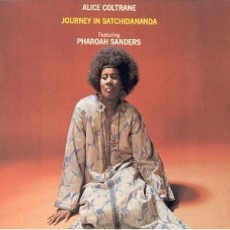
Alice Coltrane, née McLeod, was born on August 27, 1937 in Detroit, Michigan. She studied classical music and also jazz with Bud Powell and began playing professionally in Detroit, with her own jazz trio and as a duo with vibist Terry Pollard. It was while playing with the Terry Gibbs Quartet in 1962 that she met John Coltrane. Replacing McCoy Tyner as pianist with Trane’s group in 1965, the two married the following year and continued playing together until his death in 1967. She is the mother of daughter Michelle, drummer John Jr., and saxophonists Oran and Ravi.
After her husband’s death she continued to play with her own groups, later including her children, moving into more and more meditative music. Alice was one of the few harpists in the history of jazz and her essential recordings were made in the late Sixties and early 1970s for Impulse Records.
Coltrane became a devotee of the Indian guru Sathya Sai Baba in 1972, moved to California and established the Vendantic Center in 1975. By the late Seventies she had changed her name to Turiyasangitananda, became the swamini or spiritual director of Shanti Anantam Ashram established in 1983 near Malibu, California. Only on rare occasions would she perform publicly under the name Alice Coltrane.
The 1990s saw renewed interest in her work, which led to the release of the compilation Astral Meditations, and in 2004 she released her comeback album Translinear Light. Following a twenty-five-year break from major public performances, she returned to the stage for three U.S. appearances in the fall of 2006, culminating on November 4 with a concert in San Francisco with her son Ravi, drummer Roy Haynes and bassist Charlie Haden.
Alice Coltrane, pianist, organist, harpist and composer, passed away of respiratory failure on January 12, 2007 in Los Angeles, California.
Daily Dose Of Jazz…
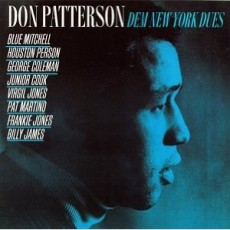
Don Patterson was born July 22, 1936 in Columbus, Ohio. He started studying piano as a child, heavily influenced by Erroll Garner but by 1956 switched to organ after hearing Jimmy Smith play. Making his debut on organ in 1959 he played with various groups into the early Sixties that saw him start performing regularly with Sonny Stitt, where he made a name for himself. This led to numerous recording sessions as a leader with Prestige and later Muse Records beginning in 1964 with sidemen guitarist Pat Martino and drummer Billy James.
During the Sixties, Don recorded as a sideman with Eddie “Lockjaw” Davis, and Eric Kloss but his most commercially successful album was his 1964 “Holiday Soul” reaching #85 on the Billboard 200 three years later. However, with his troubles with drug addiction hobbling his career in the 70s, while residing in Gary, Indiana he would occasionally record for Muse Records.
By the 1980s organist Don Patterson had moved to Philadelphia, Pennsylvania and made a small comeback, but his health continued to deteriorate over the course of the decade, forcing him to frequent dialysis until he passed away on February 10, 1988. He left a catalogue of twenty-one albums as a leader and thirteen as a sideman.
More Posts: organ
Daily Dose Of Jazz…
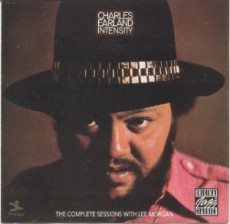
Charles Earland was born in Philadelphia, Pennsylvania on May 24, 1941 and learned to play the saxophone in high school. By age 17 he was playing tenor with Jimmy McGriff and in 1960 started his first group. He didn’t start playing the organ until after a stint with Pat Martino, then joined Lou Donaldson’s band until 1969.
Earland led a successful group in 1970 that included Grover Washington, Jr. and he eventually started playing the soprano saxophone and synthesizer but it was his simmering organ grooves the earned him the nickname “The Mighty Burner”.
In 1978 Earland hit the disco/club scene with “Let the Music Play” written by Randy Muller from Brass Construction. The record hit the U.S. charts for 5 weeks and reached number 46 in the U.K. Singles chart. From 1988 he traveled extensively performing worldwide with one of his many career highlights being to play the Berlin Jazz Festival in 1994.
He continued to perform throughout the U.S. and abroad until his death from heart failure in Kansas City, Missouri at the age of fifty-eight on December 11, 1999. Charles Earland, The Mighty Burner, was a composer, organist, and saxophonist in the soul jazz idiom.