

The Quarantined Jazz Voyager
Not belaboring the point, with all that is going on in the world, I am continuing to remain ever vigilant relative to the pandemic which is ever present in our lives. I can only hope you are doing the same.
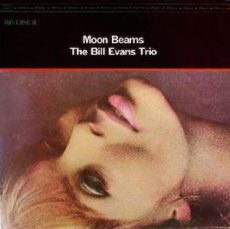
My latest offering for those who enjoy good music comes from Moon Beams, a 1962 album by pianist Bill Evans. It is the first trio album recorded by Evans after the death of Scott LaFaro.
Bassist Chuck Israels replaced LaFaro and Evans recorded several songs on May 17, 1962 (#5,9), May 29, 1962 (#1, 8), June 2, 1962 (#2-4, 6-7) and June 5, 1962 (#10-11) at Sound Makers Studio, New York City. The album was released in December 1962 on the Riverside label and is a collection of ballads recorded during this period.
The recording sessions were produced by Orrin Keepnews, the woman on the album cover is Nico, who would later achieve recognition as a musical artist herself, the photographer was Peter Sahula and the cover design was by Ken Deardorff.
Track Listing: 39:00- Re: Person I Knew (Bill Evans) ~ 5:44
- Polka Dots and Moonbeams (Johnny Burke, Jimmy Van Heusen) ~ 5:01
- I Fall in Love Too Easily (Sammy Cahn, Jule Styne) ~ 2:42
- Stairway to the Stars (Matty Malneck, Mitchell Parish) ~ 4:53
- If You Could See Me Now (Tadd Dameron) ~ 4:29
- It Might as Well Be Spring (Richard Rodgers, Oscar Hammerstein II) ~ 6:05
- In Love in Vain (Leo Robin, Jerome Kern) ~ 5:00
- Very Early (Bill Evans) ~ 5:06
- Bill Evans – piano
- Chuck Israels – bass
- Paul Motian – drums

More Posts: adventure,album,club,genius,jazz,museum,music,piano,preserving,restaurant,travel
Three Wishes
Once Nica questioned Milt Sealey about three wishes he replied with:
-
-
“I wish I could be immortal in jazz. You know, go down with a nice name.”
-
“I’d wish that my family ~ my wife, my child, and myself ~ would live a happy and healthy life.”
-
“I wish that people… that I live to see the day when people will accept one another more humanly. As people, you know? Period. Well, that’s it. You know?”
-

More Posts: baroness,history,instrumental,jazz,music,pannonica,piano,three,wishes

Daily Dose Of Jazz…
Jørgen Emborg was born in Copenhagen, Denmark on March 29, 1953 and was influenced by Bill Evans, Herbie Hancock and Keith Jarrett.
He has played at international festivals since 1975, releasing his first album, Sargasso in 1979 on the Kong Pære label. In the following years he belonged to Six Winds with Marilyn Mazur, Uffe Markussen and Alex Riel and formed with Palle Mikkelborg, Bjarne Roupé, Bo Stief and Ole Theill the ensemble Alpha Centauri.
By1986 he recorded with Bjarne Rostvold and through the Nineties he performed and/or recorded with Thomas Hass and Tomas Franck. Emborg teamed up with Alex Riel again and recorded Over The Rainbow on the Storyville label, with the saxophonist Fredrik Lundin, the bassist Steve Swallow. He played in the Tolvan Big Band and the Per Carsten Quintet.
Jørgen has also composed music for children, rhythmic choir music, big band, a cappella work, ironworks and piano quizzes. He taught piano, theory and composition at the Rytmisk Conservatory of Music from 1988 to 2016.
In 1981, his LP en 20:33 with Alpha Centauri received an award from Statens Kunstfond, the State Art Foundation. He received the Ben Webster Prize with the Frontline Fusion Group as well as others.
Pianist and composer Jørgen Emborg, who ensures there is a Nordic feel to his compositions, continues to perform and compose.
More Posts: bandleader,composer,history,instrumental,jazz,music,piano

Requisites
Giant Steps (In Memory of John Coltrane) ~ Tommy Flanagan | By Eddie Carter
This morning’s choice from the library was recommended to me years ago because of my love of piano trios. I finally acquired a copy and am pleased to submit it for your approval. Giant Steps (Enja Records 4022) is a terrific 1982 album that’s a loving tribute to John Coltrane by pianist Tommy Flanagan. The tenor saxophonist composed all the tunes on this date and five of them appeared on his album Giant Steps (1960). Here, he’s working with an outstanding rhythm section, George Mraz on bass and Al Foster on drums. My copy used in this report is the original German Stereo release.
Side One opens with Mr. P.C., John’s tribute to bassist Paul Chambers who alongside Flanagan first recorded it with him. After the trio swings in unison on the melody, Tommy constructs the first solo vigorously. George gives an inspired statement next, then Al shares the spotlight with the leader on an energetic exchange into the reprise.
Central Park West is the first of two pretty ballads on the album and was first heard on Coltrane’s Sound (1964). Flanagan starts the song tenderly, then the rhythm section joins him to complete the melody. The pianist handles the opening chorus with great sensitivity and delicacy. Next up is Mraz who provides a brief thoughtful expression, then the pianist reappears for a concise comment preceding a gentle ending.
Syeeda’s Song Flute is Coltrane’s original written for his then ten-year-old daughter and returns the ensemble to an upbeat mood with a collective happy theme. Tommy captures the sheer joy of this tune in the opening statement. George responds with a cheerfully carefree interpretation that bounces along into Al’s zesty brushwork on the third performance. The pianist makes a few final points ahead of the ensemble’s culmination.
Side Two gets underway with Coltrane’s song about his Cousin Mary. The group is in perfect harmony on the melody. Flanagan starts it off with a vivaciously spirited solo that’s sure to have the listener tapping their toes to this irresistible beat. Mraz makes an indelible impression next, and Foster dazzles in an exchange with the leader ahead of the trio’s sprightly climax. Naima is John’s gorgeous tribute to his first wife and the trio opens with a heartfelt melody. Tommy paints a beautiful portrait as soft as an affectionate embrace on the song’s only solo with George and Al supplying the subtle support into an enchanting ending.
Giant Steps completes the album in high spirits from the start of the trio’s brisk theme. Flanagan leads off with an exhilarating reading, then Mraz greets the next solo enthusiastically. Foster and Flanagan share a lively exchange ahead of the closing chorus and finish.
Giant Steps was produced by Horst Weber and Matthias Winckelmann, and the album’s recording engineer was David Baker. The sound quality is excellent with superb fidelity across the highs, midrange, and low end that transports the trio to your listening room vividly. Tommy Flanagan was one of the most admired pianists in jazz and it might be easier for me to tell you who he didn’t play with because his discography is so extensive. Flanagan recorded forty albums as a leader, appeared on over two hundred more as a sideman and his career lasted over fifty years. He passed away on November 16, 2001, at the age of seventy-one. If you’re a fan of jazz piano, piano trios, or are new to the music of Tommy Flanagan, I invite you to seek out Giant Steps on your next vinyl hunt. It’s an exceptional album that’s worth checking out for a spot in your library!
~ Coltrane’s Sound (Atlantic 1419/SD 1419), Giant Steps (Atlantic 1311/SD 1311) – Source: Discogs.com ~ Giant Steps, Naima – Source: JazzStandards.com © 2022 by Edward Thomas Carter

More Posts: choice,classic,collectible,collector,history,instrumental,jazz,music,piano

Daily Dose Of Jazz…
Pete Johnson was born Kermit H. Johnson on March 25, 1904 in Kansas City, Missouri. Raised by his mother after the father deserted the family, financially distressed, he was placed in an orphanage at three. Homesick, he ran away and returned home. By the age of 12, finding work to ease the financial burden at home, he dropped out of school in the fifth grade as a result of his efforts.
Beginning his musical career in 1922 as a drummer in Kansas City, Missouri. He began piano about the same time he was learning the drums. His early piano practices took place in a church, where he was working as a water boy for a construction company. From 1926 to 1938, he worked as a pianist, often working with Big Joe Turner. with record producer John Hammond that led to an engagement at the Famous Door in New York City, and an in the From Spirituals to Swing concert at Carnegie Hall. Working locally, touring and recording with Turner, Meade Lux Lewis, and Albert Ammons kept him busy during this period. He appeared in the film short Boogie-Woogie Dream in 1941.
The song Roll ‘Em Pete, composed with and featuring Turner on vocals and Johnson on piano, was one of the first rock and roll records. They went on to record Johnson and Turner Blues and Rocket 88 Boogie.
By 1946 Pete recorded a concept album, Pete Johnson’s Housewarmin’, with J. C. Higginbotham, J. C. Heard, Albert Nicholas, Hot Lips Page, Clyde Bernhardt. Budd Johnson, and a young singer, Etta Jones. It was later re-released as Pete’s Blues.
The Fifties saw Johnson moving to Buffalo, New York, where he suffered health and financial difficulties including being partially paralyzed by a stroke. He held a series of jobs over the next few years supplementing them with occasional gigs. He continued to record, and toured Europe in 1958 with the Jazz at the Philharmonic ensemble, despite the fact that wasn’t in thebest of health. Returning to the States, he accompanied Big Joe Turner, Chuck Berry and Big Maybelle at the Newport Jazz Festival.
Diagnosed with a heart condition, diabetes and plagued with several strokes, Pete lost the mobility in both hands. Four years ater he began losing his eyesight. Royalties were dribbling in from Blue Note and Victor until he was finally accepted into ASCAP, which ensured that some of the royalties would be received on a regular basis.
His final live appearance was the Spirituals to Swing concert at Carnegie Hall in January 1967, his eighth and final appearance at this event. Pianist Pete Johnson, who played jazz and boogie~woogie, transitioned two months later in Meyer Hospital in Buffalo, on March 23, 1967, at the age of 62, two days before his 63rd birthday.
More Posts: bandleader,history,instrumental,jazz,music,piano