

Daily Dose Of Jazz…
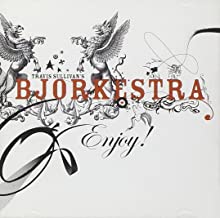
Travis Sullivan was born in 1971 in New York City and founded his 18 piece genre bending jazz orchestra Björkestra in New York City in 2004. Led by the alto saxophonist, musical arrangements are by Sullivan, Kevin Schmidt, and Kelly Pratt. The Björkestra performs the music of eclectic musician Björk.
Since its debut at the Knitting Factory in New York City, the group has performed around the country. In 2007 Sullivan conducted his arrangements with the Sicilian Jazz Orchestra in Palermo, Sicily.
Members of the orchestra, that includes vocalist Becca Stevens, have performed with Arcade Fire, Dr. Dre, Charlie Hunter, Avishai Cohen, Ana Cohen, Jane Monheit, Clark Terry, Rachel Z, Phil Woods, The Spam All Stars, Maria Schneider, and the Saturday Night Live Band, as well as, with Donny McCaslin, Kurt Rosenwinkel and Ben Monder.
His project Altois: The Masters Of Alto Sax interprets the music of the most influential alto saxophonists of the bebop era. Alto saxophonist, pianist, composer and arranger Travis Sullivan continues to further his exploration of jazz.

More Posts: bandleader,composer,history,instrumental,jazz,piano
Daily Dose Of Jazz…
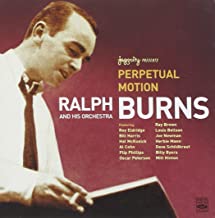
Ralph Jose P. Burns was born on June 29, 1922 in Newton, Massachusetts and began playing the piano as a child. Attending the New England Conservatory of Music, he learned the most about jazz by transcribing the works of Count Basie, Benny Goodman and Duke Ellington. While a student, he lived in the home of Frances Wayne, who was an established big band singer and her brother Nick Jerret was a bandleader who began working with him. He found himself in the company of performers as Nat King Cole and Art Tatum.
Moving to New York in the early 1940s, he met Charlie Barnet and the two men began working together. In 1944, he joined the Woody Herman band with members Neal Hefti, Bill Harris, Flip Phillips, Chubby Jackson and Dave Tough. Together, the group developed Herman’s sound. For 15 years, Burns wrote or arranged many of the band’s major hits including Bijou, Northwest Passage, Apple Honey, and on the longer work Lady McGowan’s Dream and the three-part Summer Sequence.
Herman band member Stan Getz was featured as a tenor saxophone soloist on Early Autumn, a hit for the band and the launching platform for Getz’s solo career. Burns also worked in a small band with soloists including Bill Harris and Charlie Ventura. The success of the Herman band provided Ralph the ability to record under his own name. He collaborated with Billy Strayhorn, Lee Konitz and Ben Webster to create both jazz and classical recordings.
Writing compositions for Tony Bennett and Johnny Mathis led to his later work with Aretha Franklin and Natalie Cole. He was responsible for the arrangement and introduction of a string orchestra on two of Ray Charles’s biggest hits, Come Rain or Come Shine and Georgia on My Mind. In the 1990s, Burns arranged music for Mel Tormé, John Pizzarelli, Michael Feinstein and Tony Bennett.
During the 1960s he quit touring as a band pianist and began arranging and orchestrating for Broadway shows including Chicago, Funny Girl, No, No, Nanette, and Sweet Charity. His first film score was for Woody Allen’s Bananas. He worked with Bob Fosse and won an Academy Award for Cabaret, and went on to compose the film scores for Lenny, New York, New York and All That Jazz, the latter garnered an Academy Award. Besides winning Oscars, Burns won an Emmy, a Tony and a Drama Desk Award. From 1996 until his death, he restored many orchestrations for New York City Center’s Encores! series.
Carefully hiding his homosexuality throughout his life, pianist, composer and arranger Ralph Burns, who was posthumously inducted into the New England Jazz Hall of Fame in 2004, passed away on November 21, 2001 from complications of a stroke and pneumonia in Los Angeles, California.
More Posts: arranger,composer,history,instrumental,jazz,music,piano

Daily Dose Of Jazz…
Clarence Profit was born on June 26, 1912 in New York City. Coming from a musical family, he began studying piano at the age of three and led a ten-piece band in New York City in his teens.
A visit to his grandparents in Antigua resulted in his staying in the Caribbean for five years. He also led a group in Bermuda. Returning to the States, Clarence led a trio. He co-composed Lullaby In Rhythm with Edgar Sampson. He was respected in his era, but after his early death he fell into obscurity. He was born, and died, in New York City.
Pianist and composer Clarence Profit, closely associated with the swing era, passed away in New York City on October 22, 1944.
More Posts: bandleader,composer,history,instrumental,jazz,music,piano
Three Wishes
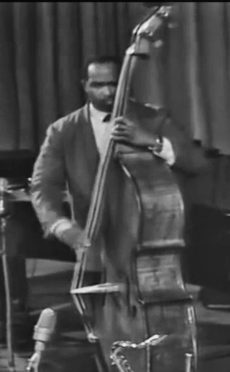
Inquisitive as the Baroness was when she asked Eddie Jones what his three wishes were he told her:
- “I would wish for better health for my daughter. That is really my only wish.”
- “Well, maybe there is one other: more willpower.”
*Excerpt from Three Wishes: An Intimate Look at Jazz Greats ~ Compiled and Photographed by Pannonica de Koenigswarter

More Posts: baroness,bass,history,instrumental,jazz,lyricist,music,pannonica,piano,three
The Quarantined Jazz Voyager
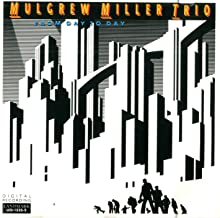
Remaining vigilant as the city and country are open to unmasking and an honor system that I don’t trust, this week I’m pulling out the seventh album by pianist Mulgrew Miller titled From Day To Day.
The trio album was recorded on March 14~15, 1990 at BMG Studios in New York City. It was released the same year on Landmark Records. It was produced by Orrin Keepnews and engineered by Paul Goodman.
Track List | 55:00- La Chambre ~ 7:35
- What A Diff’rence A Day Made ~ 8:08
- Four ~ 7:53
- From Day To Day ~ 7:26
- Playthang ~ 7:01
- Farewell To Dogma ~ 5:06
- One Notch Up ~ 4:50
- More Than You Know ~ 6:15
- Mulgrew Miller ~ piano
- Robert Hurst ~ double bass
- Kenny Washington ~ drums

More Posts: adventure,album,club,genius,jazz,museum,music,piano,preserving,restaurant,travel