

Requisites
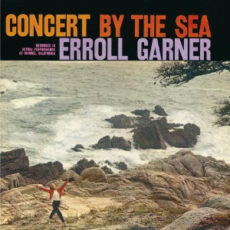
Concert by the Sea is a live album recorded by pianist Erroll Garner on September 19, 1955 in the gothic-revivalist styled assembly hall of Sunset School (now Sunset Arts Center) in Carmel-by-the-Sea, California.
The original U.S. album cover photograph, showing a model in mid-stride with outstretched arms, was shot by music and fashion photographer Art Kane.
There was no plan to record the concert officially. The release came about because Garner’s personal manager, Martha Glaser, spotted backstage that a tape recorder was running. The recording was being made by a recording engineer for the Armed Forces Radio Network, a jazz fan and scholar named Will Thornbury, strictly for the enjoyment of himself and his fellow servicemen. Glaser took the tape, put it into album form, then played it for Columbia’s jazz division head, George Avakian, who decided to release it on October 13, 1955.
It sold over a million dollars’ worth of retail copies by 1958, qualifying for gold record status by the definition of that time but has never been acknowledged as such by the RIAA.
Track Listing Side 1
- I’ll Remember April
- Teach Me Tonight
- Mambo Carmel
- Autumn Leaves
- It’s Alright With Me
- Red Top
- April In Paris
- They Can’t Take That Away From Me
- How Could You Do A Thing Like That To Me
- Where Or When
- Erroll’s Theme
- Erroll Garner ~ Piano
- Eddie Calhoun ~ Bass
- Denzil Best ~ Drums

More Posts: choice,classic,collectible,collector,history,instrumental,jazz,music,piano
Requisites
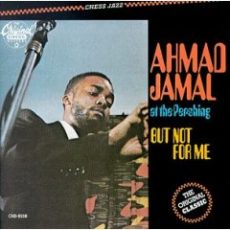
at the Pershing: BUT NOT FOR ME is a 1958 jazz album by pianist Ahmad Jamal. The tapes were made on January 16, 1958, at the Pershing Lounge of Chicago’s Pershing Hotel and each set played that night which was recorded by Malcolm Chisholm, recording engineer. A total of 43 tracks, of which 8 were selected by Jamal for the album. The LP was produced by Dave Usher and was released later that same year on Argo Records as LP-628. Though Jamal had previous releases on Argo, they had been from previously made masters. This, however, was his first release recorded for Argo and his first live recording.
Of the eight composition selected for the album comprised of standards, the 1936 composed Poinciana became the standout, not only for it’s length at eight minutes, seven seconds but also for his emotionally melodic playing.
In August 1958, Jet magazine referred to the album as “a nationwide hit”. The December 1958 Down Beat poll of music retailers showed that the album was the “#1 jazz bestseller“, selling an unprecedented 47,000 copies, it stayed on Billboard Magazine album charts for 107 weeks and eventually sold more than a million copies.
Track List- “But Not For Me” (George Gershwin, Ira Gershwin) – 3:32
- “The Surrey with the Fringe on Top” (Richard Rodgers, Oscar Hammerstein II) – 2:35
- “Moonlight In Vermont” (Karl Suessdorf, John Blackburn) – 3:09
- “Music, Music, Music” (Put Another Nickel In) (Bernie Baum, Stephen Weiss) – 2:56
- “No Greater Love” (Isham Jones, Marty Symes) – 3:26
- “Poinciana” (Buddy Bernier, Nat Simon) – 8:07
- “Woody N’ You” (Dizzy Gillespie) – 3:40
- “What’s New?” (Bob Haggart, Johnny Burke) – 4:11
- Ahmad Jamal – piano
- Israel Crosby – bass
- Vernel Fournier – drums
More Posts: choice,classic,collectible,collector,history,instrumental,jazz,music,piano
Requisites
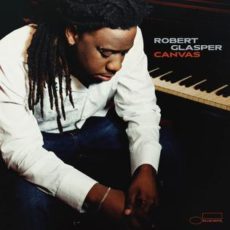
Canvas is an album by jazz pianist and composer Robert Glasper, released on the Blue Note label. The 2005 post bop album was his first for a major label and was produced by Eli Wolf.
Tracks All songs composed by Robert Glasper except “Riot,” composed by Herbie Hancock. Album recording length ~ 64:28 Rise and Shine – 7:37 Canvas – 9:57 Portrait of an Angel – 5:24 Enoch’s Meditation – 8:12 Centelude – 1:06 Jelly’s da Beener– 7:46 Chant – 8:17 Riot – 6:20 North Portland – 5:51 I Remember – 5:58 Personnel
More Posts: choice,classic,collectible,collector,history,instrumental,jazz,music,piano

Requisites
Sweet Love, Bitter is a 1967 album with the soundtrack composed and recorded by Mal Waldron on March 23, 1967 in New York City for the film of the same name. The cover design was created by Robert Flynn/Viceroy. The album was released by Impulse! Records.
Based on the novel Night Song by John Alfred Williams, the story was inspired by the life of jazz musician Charlie Parker. Starring Dick Gregory, Don Murray, Robert Hooks, Diane Varsi and Jeri Archer.
The film opens with Richie “Eagle” Stokes found dead in his bed before showing the journey of how he got there. He is a jazz musician, jaded by how society treats him and seeks to numb himself with drugs, liquor and women. He crosses paths with David Hillary, a white male and former professor, when they both find themselves at a pawn shop. Hillary is distraught by the loss of his wife in a car accident, convinced that he is the cause of her death. They bond over drinks only to be found by Keel Robinson , Stokes’ friend and former reverend. Robinson offers to provide Hillary with a room in exchange for working at the coffee he owns.
The personnel on the date included pianist Mal Waldron, trumpeter Dave Burns, alto and tenor saxophonist George Coleman, baritone saxophonist Charles Davis, bassists Ruchard Davis and George Duvivier and drummer Al Dreares. Thirteen songs comprised the album for a total of 31:28: Loser’s Lament (Theme From “Sweet Love, Bitter”) — 5:11 Della — 2:36 Hillary — 2:23 Espresso Time — 2:11 Keel — 2:40 Smokin’ — 2:06 Della’s Dream — 2:23 The Search — 1:21 Candy’s Ride — 1:18 Bread — 1:47 Eagle Flips Out — 2:14 Brindle’s Place — 3:07 Sleep Baby Sleep — 2:11
More Posts: choice,classic,collectible,collector,history,instrumental,jazz,music,piano
Three Wishes
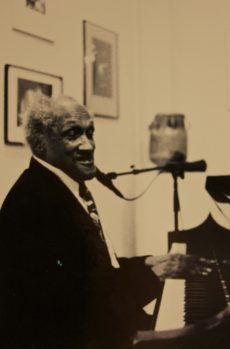
Inquiring about his three wishes by the Baroness Pannonicathe responses from Chris Anderson were:
- “To be situated so that I have nothing whatever to worry about but music for a while.”
- “All the best for the rest of the world – just the way they want it.”
- “To find love. To get ahold of the music. All this is really one and the same thing.”
*Excerpt from Three Wishes: An Intimate Look at Jazz Greats – Complied and Photographed by Pannonica de Koenigswarter
More Posts: baroness,history,instrumental,jazz,musician,pannonica,piano,three,wishes