

Daily Dose Of Jazz…
Michel Sardaby was born on September 4, 1935 in Fort-de-France, Martinique. He moved to Paris, France in 1967, where among other pianists Joe “Stride” Turner, Errol Parker, Claude Bolling, Stuart de Silva, and Aaron Bridgers, accompanied on some tracks by bassist John Lamb. He recorded a 90-minute session known as Tape for Billy, dedicated to Billy Strayhorn, who was in the hospital at the time. Duke Ellington, who was also in Paris, personally supervised the recording.
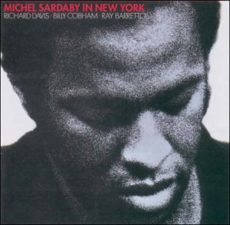
In 1970, he led a trio comprising Percy Heath and Connie Kay, which appeared on his debut album, Night Cap. A 1972 New York recording has him leading a line-up comprising Richard Davis, Billy Cobham and Ray Barretto for Sound Hills Records.
His 1974 album, Gail, won the 1976 Prix Boris Vian. For his 1989 album, Going Places, he was accompanied by Rufus Reid and Marvin “Smitty” Smith, and in 1993, he recorded with his quintet, which comprised Ralph Moore, Louis Smith, Peter Washington and Tony Reedus. Hard bop pianist Michel Sardaby recorded eight albums over the course of his career and plays occasionally at 82 years.

More Posts: piano
Daily Dose Of Jazz…
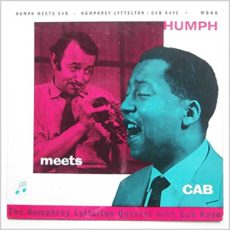
Cab Kaye was born Nii-lante Augustus Kwamlah Quaye on September 3, 1921 on St. Giles High Street in Camden, London to a musical family of Ghanaian ancestry. After his father’s death when he was four months they moved to Portsmouth where he was introduced to the timpani by a soldier who taught him how to count and use the mallets. At fourteen, he began visiting nightclubs where Black musicians were welcome, and where he eventually won first prize in a song contest and a tour with the Billy Cotton band. In 1936, he recorded his first song Shoe Shine Boy under the name Cab Quay.
During 1937 Kaye played drums and percussion with Doug Swallow and his band, the Hal Swain Band and Alan Green’s band. Until 1940 he sang and drummed with the Ivor Kirchin Band, with Steve Race on piano, in the Paramount Dance Hall on Tottenham Court Road. When a guest was refused entrance because of their skin colour, Kaye refused to perform, the incident led to the regular acceptance of black people and the venue grew into a sort of Harlem of London.
He would go on to play with Britain’s first black swing bandleader Ken “Snakehips” Johnson and His Rhythm Swingers, play in several radio broadcasts and joined the British Merchant Navy before his mother and Johnson were killed in bombings during World War II. A move to New York saw him playing in Harlem and Greenwich Village with Roy Eldridge, Sandy Williams, Slam Stewart, Pete Brown, Charlie Parker, Dizzy Gillespie and Willie “The Lion” Smith. Returning to London in 1943 he sang with clarinetist Harry Parry, then formed a band that included 16-year-old saxophonist Ronnie Schatt (Ronnie Scott), Ralph Sharon and Dick Katz on piano. Following this he sang with Vic Lewis, Ted Heath, Tito Burns and Jazz In The Town. Leading his own bands Ronnie Scott, Johnny Dankworth and Denis Rose. Throughout his career he formed several bands that included Mary Lou Williams, Dizzy Reece, Dennis Rose, Denny Coffey, Dave Smallman, Pat Burke and performed with Billy Daniels, Benny Payne Eartha Kitt, and 16 year old Shirley Bassey among numerous others
Opening his own club in Amsterdam he performed with visiting musicians such as Rosa King, Slide Hampton, Aart Gisolf, Dirk-Jan “Bubblin” Toorop, David Mayer, Gerrie van der Klei, Cameron Japp, Max Roach, Oscar Peterson, Pia Beck and others. During this period Cab played all the major festivals until the 1990s when he was diagnosed with mouth floor cancer that resulted in the loss of the ability to speak. On March 13, 2000 vocalist, pianist, guitarist, drummer and composer Cab Kaye, also known as Cab Quay, Cab Quaye and Kwamlah Quaye and who recorded for the Melody Maker label, passed away at the age of 78.

More Posts: composer Instruments Vocals,drums,guitar,piano,vocal
Daily Dose Of Jazz…
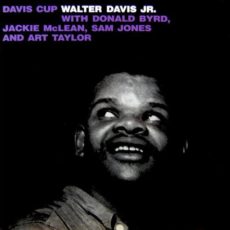
Walter Davis Jr. was born September 2, 1932 in Richmond, Virginia. As a teenager he performed with Babs Gonzales and in the 1950s he recorded with Melba Liston, recorded and played with Max Roach, Charlie Parker, and Dizzy Gillespie. In 1958 he played with trumpeter Donald Byrd at Le Chat Qui Pêche in Paris and shortly after realized his dream of becoming pianist and composer-arranger for Art Blakey’s Jazz Messengers.
He retired from music in the 1960s to work as a tailor, painter, and designer, but returned in the Seventies to perform and record with Sonny Rollins and again with the Jazz Messengers. Walter recorded with Kenny Clarke, Sonny Criss, Walt Dickerson, Teddy Edwards, Slide Hampton, Jackie McLean, Pierre Michelot, Julian Priester, Hank Mobley, Philly Joe Jones, Art Taylor and Archie Shepp.
Known as an interpreter of the music of Bud Powell, he recorded an album capturing the compositional and piano style of Thelonious Monk. Although few of Davis’ recordings as a pianist remain in print, several of his compositions served as titles for albums by Blakey’s Jazz Messengers. Combining traditional harmonies with modal patterns and featuring numerous rhythmic shifts along with internal melodic motifs within operatic, aria-like sweeping melodies, Davis’s compositions included Scorpio Rising, Backgammon, Uranus, Gypsy Folk Tales, Jodi and Ronnie Is a Dynamite Lady.
Occasionally he played the role of the piano player on the CBS television comedy Frank’s Place and contributed to the soundtrack of the Clint Eastwood film Bird. Hard bop pianist Walter Davis Jr. passed away in New York City on June 2, 1990 from complications of liver and kidney disease.
More Posts: piano
Daily Dose Of Jazz…
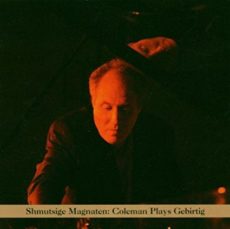
Anthony Coleman was born on August 30, 1955 in New York City and didn’t begin to study piano until the age of thirteen with Jaki Byard. He attended the New England Conservatory of Music and studied with George Russell, Donald Martino and Malcolm Peyton.
Coleman has collaborated with guitarist Elliott Sharp, trumpeter Dave Douglas, accordion player Guy Klucevsek, composer David Shea, former Captain Beefheart band member Gary Lucas, classical and klezmer clarinetist David Krakauer, guitarist Marc Ribot, bassist Greg Cohen, drummer Joey Baron and saxophonist Roy Nathanson.
He has toured with his groups Sephardic Tinge and Selfhaters throughout Europe, in the 1990s and the early 2000s. His Disco by Night was his first major solo record released by Japan’s Avant Records in 1992. He released duo albums, The Coming Great Millenium, Lobster & Friend, and I Could’ve Been a Drum with Roy Nathanson, that typify his free playing style as well as his multi-instrumental capability. Coleman and Nathanson have performed all over the U.S. and Europe. His album The End of Summer features his NEC Ensemble Survivors Breakfast.
Avant-garde pianist Anthony Coleman has released 15 albums as a leader, 33 as a sideman, appeared in four documentaries, has written four compositions, has taught theory and composition at Bennington College, is on the faculty of the New England Conservatory of Music and Mannes College New School for Music, writes articles for All About Jazz and Bomb magazine and continues to perform, compose and record.

More Posts: piano
Daily Dose Of Jazz…
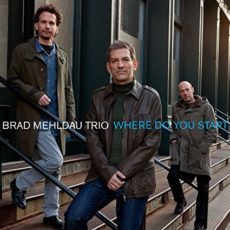
Bradford Alexander Mehldau was born August 23, 1970 in Jacksonville, Florida. His family moved to West Hartford, Connecticut, when he was 10, a move that introduced him to a new piano teacher and classical music an away from playing mostly simple pop tunes and exercises from books. By 14 he was listening more to jazz, including recordings by saxophonist John Coltrane and pianist Oscar Peterson.
Mehldau attended William H. Hall High School, played in its concert jazz band and from the age of 15 until he graduated from high school he had a weekly gig at a local club. He performed at weddings and other parties before winning the Berklee College’s Best All Round Musician Award for school students in his junior year.
Moving to New York City in 1988 he studied jazz and contemporary music at The New School, studied under pianists Fred Hersch, Junior Mance and Kenny Werner and drummer Jimmy Cobb. In 1989 Brad was part of saxophonist Christopher Hollyday’s band that toured for several months and a result assimilated the music of his principle influences Wynton Kelly and McCoy Tyner, and began to develop his own sound. By 20 he was playing in Cobb’s band with fellow student guitarist Peter Bernstein.
During the 1990s Mehldau first recorded on Hollyday’s The Natural Moment and toured of Europe with him, developed his left-hand playing, led his own trio and played at New York’s Village Gate. As a sideman he performed with saxophonist Perico Sambeat on tour and released his debut recordings as co-leader from a May concert in Barcelona, Spain. He went on tour with saxophonist Joshua Redman
Mehldau graduated from The New School in 1993 and formed his first long-term trio in 1994, with bassist Larry Grenadier and drummer Jorge Rossy. He recorded his debut as a leader Introducing Brad Mehldau for Warner Brothers. He went on to work with Lee Konitz, Charlie Haden, contribute to the soundtrack recorded for Midnight in the Garden of Good and Evil, release a compilation of standards on Live at the Village Vanguard: The Art of the Trio Volume Two followed by Songs: The Art of the Trio Volume Three. Not shying away from recording he ultimately has released 33 albums as a leader and has been a sideman on another 61 as well as nie soundtracks. He has performed and recorded with Pat Metheny, Dayna Stevens, Warren Wolf, Michael Brecker, Kurt Rosenwinkel, Joel Frahm, Wayne Shorter, Petra Haden, Vinicius Cantuária, John Patitucci, Charles Lloyd, Fleurine, Willie Nelson, Avishai Cohen, Anthony Wilson, Grant Stewart and Jesse Davis on the short list.
He has won Down Beat’s Readers Poll piano award in 1999, 2000, 2002, 2004, 2007, 2011, and 2012, was the 2006 winner of the Miles Davis Prize, awarded by the Montreal International Jazz Festival, received the Wigmore Medal and has been nominated for seven Grammy Awards. Pianist Brad Mehldau continues to perform, record and tour.
More Posts: piano