

Daily Dose Of Jazz…
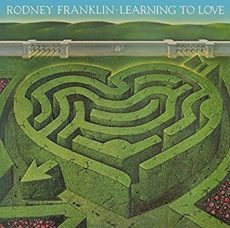
Rodney Franklin was born on September 16, 1958 in Berkeley, California and at the age of six he took jazz piano lessons at Washington Elementary School. He was taught by Dr Herb Wong who was a jazz journalist, disc jockey and music teacher.
Influenced by McCoy Tyner, George Duke, Chick Corea and Lonnie Liston Smith he would develop his own sound. Franklin worked with John Handy in San Francisco, California as well as Bill Summers, Freddie Hubbard and Marlena Shaw. He recorded his debut album in 1978 In The Center on the CBS label at age of 20.
1980 saw the release of the album You’ll Never Know which garnered some major chart success and additional six albums were albums were recorded for CBS during the Eighties and worked with bassist Stanley Clarke. Though Rodney gained some notoriety in the United States he was much more popular in the United Kingdom.
Moving to the BMG record label in 1988 he recorded Diamond Inside Of You, introducing vocals by Jennifer Holliday, who would go on to find fame on Broadway in Dreamgirls. By the Nineties he produced and released one album on the Nova label, however, pianist Rodney Franklin continues to composer and work in various music genres in and out of jazz.

More Posts: piano
Daily Dose Of Jazz…
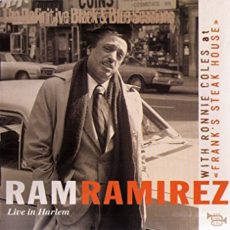
Ram Ramirez was born Roger J. Ramirez on September 15, 1913 in San Juan, Puerto Rico and grew up in New York City. He started learning piano when he was eight and was a professional five years later. In the early Thirties he worked with the Louisiana Stompers, Monette Moore , Rex Stewart, the Spirits of Rhythm and Willie Bryant.
Traveling to Europe with Bobby Martin’s group from 1937 to 1939, when Ramirez returned to New York City and had his own band before working with Ella Fitzgerald, Frankie Newton and Charlie Barnet in the Forties. After a second stint with Newton, he played with the John Kirby Sextet in 1944.
Ram mostly led his own trio from the mid-1940’s on and began doubling on organ in 1953. Active into the 1970’s. playing with the Harlem Blues and Jazz Band at the end of the decade. He became semi-active in the 1980’s and never gaining much fame except among knowledgeable musicians in the swing, bop and trad settings.
Through the years he led sessions for Gotham, Super Disc, Black & Blue, RCA and Master Jazz. He also played with Helen Humes, Putney Dandridge, John Kirby, Ike Quebec, Rex Stewart, Annie Ross, King Pleasure and Duke Ellington’s Small groups. Pianist and composer Ram Ramirez, best known as a co-writer of the classic song Lover Man (Oh, Where Can You Be?, passed away on January 11, 1994 in Queens, New York.

More Posts: piano
Daily Dose Of Jazz…
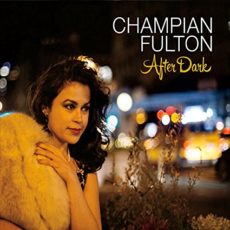
Champian Fulton was born on September 12, 1985 in Norman, Oklahoma to a jazz trumpeter father whose friends were Clark Terry and Major Holley. At five she took piano lessons from her grandmother and after trying trumpet and drums, she returned to piano and singing. When her father was hired to run the Clark Terry Institute for Jazz Studies, the family moved to Iowa. She went to jazz summer camp, where she founded the Little Jazz Quintet.
One of her early influences was Dinah Washington, particularly the album For Those in Love, which she played often as a young girl. She also admired Sarah Vaughan, Nat King Cole, Sonny Clark, Red Garland, Hampton Hawes, Wynton Kelly, Thelonious Monk, and Art Tatum.
Fulton graduated from high school in 2003, then attended State University of New York at Purchase, where she studied with trumpeter Jon Faddis.[4] After graduating, she moved to New York City to pursue a career as a pianist and vocalist. She has performed at various venues playing with Jimmy Cobb, Scott Hamilton, Frank Wess, Lou Donaldson, and Louis Hayes.
She has worked with the Lincoln Center for the Performing Arts, the Litchfield Jazz Camp and Rutgers University. In late 2015, she joined the faculty of the Jazz Arts Academy in association with the Count Basie Theatre Education Department to offer workshops in jazz vocals and jazz piano during the summer. In 2014 she received the Rising Star Female Vocalist Critics Poll from Down Beat Magazine. As a leader she has recorded eight albums and continues to perform and record.

Daily Dose Of Jazz…
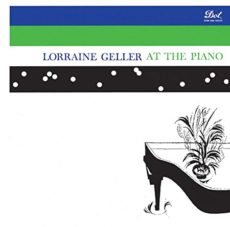
Lorraine Geller was born Lorraine Winifred Walsh on September 11, 1928, in Portland, Oregon. She started out with the all-female big band, Sweethearts of Rhythm, a successor to the International Sweethearts of Rhythm.
In 1950 she met alto saxophonist Herb Geller, who was then playing with Claude Thornhill, and married him the following year. Together they moved to Los Angeles, California where they played with many musicians of the West Coast jazz scene, such as Shorty Rogers, Zoot Sims, Stan Getz, and Red Mitchell to name a few. Lorraine also played on sessions with Charlie Parker and Dizzy Gillespie.
In 1957 she accompanied Kay Starr and performed at the first Monterey Jazz Festival in 1958. She recorded with Miles Davis and Chet Baker with the Lighthouse All Stars, Maynard Ferguson, Leroy Vinnegar and Conte Candoli. Sadly, pianist Lorraine Geller, who only recorded one album as a leader, passed away suddenly of heart failure on October 13, 1958 in Los Angeles at the age of 30.

More Posts: piano
Daily Dose Of Jazz…
John Malachi was born on September 6, 1919 in Red Springs, North Carolina and grew up in Durham, North Carolina. At the age of ten he moved with his family to Washington, D.C., and was a self-taught musician.
Malachi was a member of the Billy Eckstine Bebop Orchestra in 1944 for a year and then again in 1947. He worked with Illinois Jacquet in 1948, Louis Jordan in 1951, and a series of singers including Pearl Bailey, Dinah Washington, Sarah Vaughan, Al Hibbler, and Joe Williams.
Opting out of the traveling life of the touring jazz musician in the 1960s, he lived approximately the last decade and a half of his life in Washington, D.C. freelancing, playing with touring bands and artists when they stopped in the city, and leading music workshops at clubs like Jimmy MacPhail’s Gold Room and Bill Harris’s Pig’s Foot. Malachi’s generosity towards younger musicians was legendary. His workshops with young musicians was referred to as The University of John Malachi.
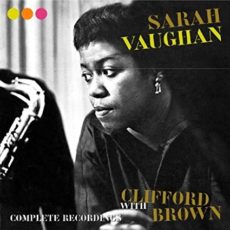
He is credited with creating the nickname “Sassy” for Sarah Vaughan, with whom he worked with the Eckstine Orchestra and later directly with her. Pianist John Malachi, who was fond of categorizing jazz pianists into acrobats and poets, and considered himself among the latter, passed away on February 11, 1987 at the age of 67 in Washington, DC.

More Posts: piano