

Daily Dose Of Jazz…
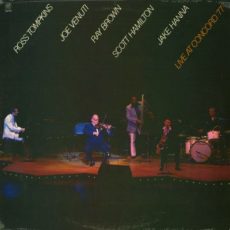
Ross Tompkins was born in Detroit, Michigan on May 13, 1938 and went on to attend the New England Conservatory of Music. This he followed with a move to New York City in 1960 where he worked and recorded with Kai Winding from 1960 to 1967.
During the Sixties he also performed with Eric Dolphy, Wes Montgomery, Bob Brookmeyer & Clark Terry, Benny Goodman, and Bobby Hackett, Al Cohn and Zoot Sims into the Seventies. A move to Los Angeles, California in 1971 found him playing and recording with Louie Bellson, Joe Venuti, and Red Norvo through the 1970s and Jack Sheldon in the 1980s.
He was best known for his longtime association with The Tonight Show Band under the leadership of Doc Severinsen, becoming a member of the band from 1971 until Carson’s retirement in 1992. He recorded for Concord Jazz as a leader in the second half of the 1970s.
He recorded for Concord Records as a leader in the second half of the Seventies decade, and in the eighties and Nineties recorded for Famous Door, Progressive, HD and Arbors record labels, culminating in a dozen albums. As a sideman he recorded 53 albums with J.J. Johnson, Tommy Newsom, Herb Ellis, Snooky Young, Bill Watrous, Joe Newman, Tony Mottola, Howard Roberts, Lorraine FEather, Peanuts Hucko, Red Norvo, Bob Cooper, Harry “Sweets” Edison, Jack Lemmon, Conte Candoli, Polly Podewell and Plas Johnson among others.
Pianist Ross Tompkins passed away of lung cancer at the age of 68 on June 30, 2006.
Sponsored By

Bronze Lens

#preserving genius
More Posts: piano
Daily Dose Of Jazz…
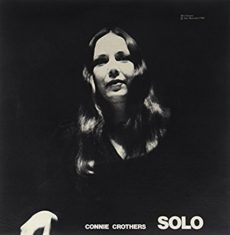
Connie Crothers was born on May 2, 1941 in Palo Alto, California and began studying classical piano at age 9. She went on to major in music and composition at the University of California at Berkeley. While matriculating her teachers put less emphasis on emotional expression and more on procedure, structure and compositional rigor, which did not find a likeable place in her mind.
She subsequently became a student of pianist Lennie Tristano. After Tristano’s death in November 1978, she founded the Lennie Jazz Foundation and recorded a memorial concert album in his honor.
Her debut recording Perception was released in 1974 on the Steeplechase label. She went on to record another twenty albums as a leader over the course of her career and four as a sidewoman. In 1982 she recorded the album Swish with drummer Max Roach for New Artists Records, a label she and Roach founded. She also recorded in groups with, among others, Bud Tristano, Linda Satin, Richard Tabnik and Cameron Brown.
Pianist Connie Crothers, who mainly played in the avant-garde and free jazz genres, passed away of lung cancer in Manhattan, New York City on August 13, 2016.

#preserving genius
More Posts: piano
Daily Dose Of Jazz…
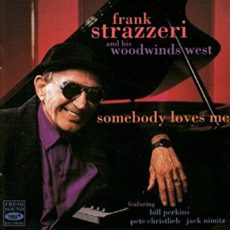
Frank Strazzeri was born April 24, 1930 in Rochester, New York and began his musical journey on tenor saxophone and clarinet at age 12, switching to piano soon after. He attended the Eastman School of Music, then, in 1952, took a job as a house pianist in a Rochester nightclub. While there he accompanied visiting musicians such as Roy Eldridge and Billie Holiday.
Relocating to New Orleans, Louisiana in 1954, he performed with Sharkey Bonano and Al Hirt in a Dixieland jazz setting, though his main focus since has been bebop. He played with Charlie Ventura in 1957-58 and Woody Herman in 1959 before moving to Los Angeles, California in 1960. There he worked extensively as a studio musician on the West Coast jazz scene, and toured with Joe Williams, Maynard Ferguson, Les Brown and Elvis Presle, playing with the latter for the 1973 Aloha from Hawaii concert.
Pianist Frank Strazzeri copiously recorded as a leader and played with Terry Gibbs, Herb Ellis, the Lighthouse All-Stars, Art Pepper, Bud Shank, Cal Tjader, Louie Bellson, Curtis Amy, Red Mitchell, Bill Perkins, Harold Land and Chet Baker. in addition to recording copiously as a leader. He passed away at the age of 84 on May 9, 2014.
Sponsored By

Voices From The Community
#preserving genius
More Posts: piano
Daily Dose Of Jazz…
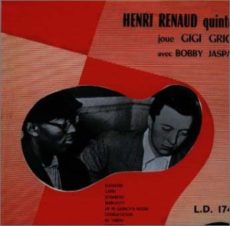
Henri Renaud was born April 20, 1925 in Villedieu-sur-Indre, France. His styles was evolutionary over the decades he was musically active and represented the swing, bebop and cool styles. His international renown came when he served as an ensemble-organizing point-man for visiting jazz performers from the United States.
Moving to Paris in 1946, Renaud established a career as a jazz pianist and joined tenor-saxophonist Jean-Claude Fohrenbach’s combo. During 1949 and 1950 he accompanied Don Byas, James Moody and Roy Eldridge. In 1952 he performed at various times with Lester Young, Sarah Vaughan and Clifford Brown.
Henri would go on to record several times with Brown as well as with Milt Jackson, J. J. Johnson, Al Cohn, Oscar Pettiford, Max Roach, Frank Foster and Bob Brookmeyer. In 1954, he visited the United States and recorded during that time.
He became an executive for French CBS’ jazz division in 1964 and for the most part stopped performing, though he occasionally worked as a film composer. Pianist Henri Renaud passed away in Paris, France on October 17, 2002.
Sponsored By

#preserving genius
More Posts: piano
Daily Dose Of Jazz…
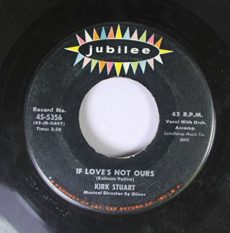
Kirk Stuart was born Charles Kincheloe Stuart on April 13, 1934 in Charleston, West Virginia. He studied at a conservatory before accompanying singers such as Billie Holiday in 1956, Della Reese from 1957–59 and for another two years with Sarah Vaughan beginning in 1961. He also arranged and conducted for these singers.
Stuart led his own unit in Los Angeles, California later in the 1960s, and recorded with Al Grey and once more with Reese along with a few 45 rpm records as a leader on the Josie and Jubilee labels during the decade. In later years he led ensembles in Las Vegas, and accompanied Joe Williams at the Smithsonian Institution in 1982.
Pianist, vocalist and educator Kirk Stuart, who taught at Howard University, passed away during spleen surgery on December 17, 1982.
Sponsored By
#preserving genius