

Daily Dose Of Jazz…
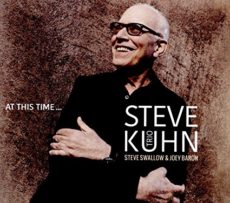
Steve Kuhn was born on March 24, 1938 in Brooklyn, New York City and began studying piano at the age of five. He studied under Boston, Massachusetts piano teacher Margaret Chaloff, mother of jazz baritone saxophonist Serge Chaloff. She taught him the Russian style of piano playing and at an early age he began improvising classical music.
As a teenager Steve appeared in jazz clubs in the Boston area with Coleman Hawkins, Vic Dickenson, Chet Baker, and Serge Chaloff. After graduating from Harvard University, he attended the Lenox School of Music where he became associated with Ornette Coleman, Don Cherry, and Gary McFarland. His professors included Bill Evans, George Russell, Gunther Schuller, and the members of the Modern Jazz Quartet. This experience with some of the most forward-thinking innovators of jazz improvisation and composition culminated with his joining trumpeter Kenny Dorham’s group for an extended time and for a brief time in John Coltrane’s quartet at New York’s Jazz Gallery club.
Kuhn has appeared or recorded with Stan Getz, Art Farmer, Oliver Nelson, Gary McFarland, Art Farmer, Joe Henderson, Scott LaFaro, Harvie Swartz, Pete LaRoca, Sheila Jordan, Billy Drummond, David Finck, and Miroslav Vitous. In 1967 he moved to Stockholm, Sweden where he worked with his own trio throughout Europe until 1971. Moving back to New York City he formed a quartet while continuing to play European gigs and appearing at the Newport Jazz Festival.
Known as an avant-garde pianist in his early career, he was associated with bassist Steve Swallow and drummer Pete La Roca during the Sixties that produced several notable recordings. He was part of the quartet on the landmark recording Sound Pieces led by saxophonist, composer, and arranger Oliver Nelson with bassist Ron Carter and drummer Grady Tate. Among other critically acclaimed recordings there was The October Suite composed by Gary McFarland for Kuhn and an ensemble which included strings, woodwinds, and reeds.
For decades he has led all-star trios that have included such players as bassists Ron Carter and David Finck, and with drummers Al Foster, Jack DeJohnette, and Joey Baron. Pianist Steve Kuhn is the composer of the jazz standard The Saga of Harrison Crabfeathers, has recorded several live albums at New York City jazz clubs and continues to lead a trio and compose.
Sponsored By


#preserving genius
More Posts: piano
Daily Dose Of Jazz…
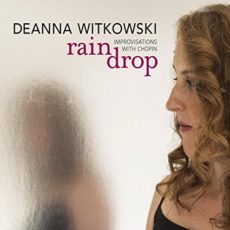
Deanna Witkowski was born on March 20, 1972 in New Hampshire, Ohio but was raised in Pennsylvania and upstate New York. She began her musical journey playing classical flute and piano long before discovering jazz. While studying at Wheaton College, Illinois, she turned to jazz, first as a saxophonist, then as pianist and composer. Jazz so captured her interest that she abandoned later studies at DePaul University, Chicago, to become a full time musician. Subsequently, she studied with Hilario Duran and Chucho Valdés, experiences that developed an interest in Afro Cuban music. In Chicago in the mid-90s she accompanied singer Linda Tate and was involved in the LaSalle Street Church’s annual jazz service.
Forming her first quintet in 1994 Deanna performed with them until a four month trip to Africa found her thousands of miles away teaching piano in Kenya. Two years later she returned to the States landing in Chicago, Illinois and recording a demo with her grant money. During this period she studied with several Cuban jazz musicians and the next year, she moved to New York City and became the music director at All Angels Episcopal Church, crafting jazz/gospel masses.
In 2000 released independently the Having to Ask album and began studying with Brazilian drummer Vanderlei Pereira. Leaving the church to follow her own musical path she continued writing and performing sacred music in her spare time, but she composed a piece for a jazz choir and reactivated her quintet.
In 2002 she won the annual Great American Jazz Piano Competition in Jacksonville, Florida. She backed vocalist Lizz Wright, leading her supporting band on tour in the USA and on a visit to Europe, played a duo with pianist Fred Hersch at New York’s Jazz Gallery, and with multi-instrumentalist James Finn, playing on his Great Spirit.
In the early to years of the new millennium, members of her regular trio have been bass players Jonathan Paul and Dave Ambrosio, and drummers Tom Hipskind and Vince Cherico. She has also taught extensively, including spells at colleges in Germany and Kenya. Post bop pianist Deanna Witkowski continues to compose, perform and record combining jazz, Latin folk, and modern classical composition.
Sponsored By

Voices From The Community
#preserving genius
More Posts: piano
Daily Dose Of Jazz…
Arif Mardin was born on March 15, 1932 in Istanbul, Turkey into a family of privilege that included statesmen, diplomats, leaders and business owners of the Ottoman Empire and the Turkish Republic. He grew up listening to Bing Crosby and Glenn Miller, met jazz critic Cuneyt Sermet, who turned him onto this music and eventually became his mentor. After graduating from Istanbul University in Economics and Commerce, he studied at the London School of Economics. Though never intending to pursue a career in music, influenced by his sister’s music records and jazz, he became an accomplished orchestrator and arranger.
In 1956 fate took him down a different path when he met Dizzy Gillespie and Quincy Jones at a Ankara concert. He sent three demo compositions to his radio friend Tahir Sur who subsequently took these compositions to Jones and Mardin became the first recipient of the Quincy Jones Scholarship at the Berklee College of Music in Boston, Massachusetts. Two years later with fiancé Latife, he relocated to Boston. After graduating in 1961, he taught at Berklee for one year and then moved to New York City to try his luck.
His career began at Atlantic Records in 1963 as an assistant to Nesuhi Ertegün. He rose through the ranks quickly, becoming studio manager, label house producer and arranger. In 1969, Arif became the Vice President and later served as Senior Vice President until 2001. He worked closely on many projects with co-founders Ertegün and Jerry Wexler, as well as noted recording engineer Tom Dowd. The three of them, Dowd, Mardin, and Wexler, became legendary and were responsible for establishing the Atlantic Sound.
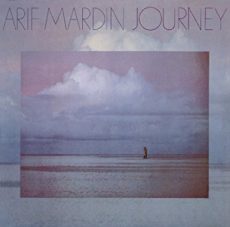
He recorded two solo albums in the Seventies, Glass Onion and Journey, the latter wearing the hats of composer, arranger, electric pianist and percussionist. Mardin performed with Randy and Michael Brecker, Joe Farrell, Gary Burton, Ron Carter, Steve Gadd, Billy Cobham and many others. He composed, arranged, conducted and produced The Prophet in 1974, an interpretation of Kahlil Gibran’s The Prophet voiced by Richard Harris.
Arif produced George Benson, The Manhattan Transfer, Vince Mendoza, and the Modern Jazz Quartet, but not limited to jazz he also produced, among others, Margie Joseph, Roberta Flack, Donny Hathaway, Raul Midón, Patti Labelle, Aretha Franklin, Barbra Streisand, Bette Midler, Diana Ross, Queen, Jeffrey Osborne, and numerous others. In 1975 he discovered Barry Gibb’s distinctive falsetto that became the Bee Gees trademark.
Over a 40 year career Mardin produced forty gold and platinum albums, 11 Grammy Awards, was inducted into the National Academy of Recording Arts and Sciences Hall of Fame, and was a trustee of Berklee and awarded an honorary doctorate
Pianist, percussionist, producer, arranger, studio manager and vice president Arif Mardin passed away at his home in New York City on June 25, 2006 following a lengthy battle with pancreatic cancer.
Sponsored By

#preserving genius
More Posts: arranger,percussion,piano,producer

Daily Dose Of Jazz…
Bix Beiderbecke was born Leon Bismark Beiderbecke on March 10, 1903 in Davenport, Iowa and began playing piano at age two standing on the floor and playing with his hands over his head. At seven he was lauded in the Davenport Daily Democrat tas being able to play any selection he hears. At age ten he slipping aboard one or another of the excursion boats to play the Calliope or at home trying to duplicate the silent matinee melodies.
His love of jazz came from listening to records by the Original Dixieland Jazz Band his brother brought him and from the excursion boats that stopped on the Mississippi. Bix taught himself to play cornet largely by ear listening to Nick LaRocca’s horn lines, leading him to adopt a non-standard fingering creating his original sound.
While attending Davenport High School from 1919 to 1921 he played professionally with various bands, including those of Wilbur Hatch, Floyd Bean and Carlisle Evans, and in 1920 Beiderbecke performed for the school’s Vaudeville Night, singing in a vocal quintet called the Black Jazz Babies and playing his horn. However, due to his inability to read music he never got his union card.
Enrolled at the exclusive Lake Forest Academy, north of Chicago, Bix would often jump a train into Chicago, Illinois to catch the hot jazz bands at clubs and speakeasies, sometimes sit in with the New Orleans Rhythm Kings and go to the Southside to listen to Black musicians who he referred to as real jazz musicians. Soon after, Beiderbecke began pursuing a career in music, moved to Chicago, joined the Cascades Band and gigged around the city until the fall of 1923.
He first recorded with Midwestern jazz ensembles, The Wolverines and The Bucktown Five in 1924, after which he played briefly for the Detroit-based Jean Goldkette Orchestra before joining Frankie “Tram” Trumbauer for an extended gig at the Arcadia Ballroom in St. Louis. In 1926 Beiderbecke and Trumbauer joined Goldkette, touring widely and famously played a set opposite Fletcher Henderson at the Roseland Ballroom in New York City. He made his greatest recordings Singin’ the Blues and I’m Coming, Virginia in 1927 and the following year the pair left Detroit for New York City and the best-known dance orchestra in the country: the Paul Whiteman Orchestra.
During the Whiteman period Bix suffered a precipitous decline in his health, brought on by the demand of the bandleader’s relentless touring and recording schedule in combination with his persistent alcoholism. Support from family and Whiteman along with rehabilitation centers did not help to stem his drinking or decline.
Cornetist, jazz pianist, and composer Bix Beiderbecke, one of the most influential jazz soloists of the Twenties, along with Louis Armstrong and Muggsy Spanier, passed away of lobar pneumonia in his apartment in Sunnyside, Queens, New York on August 6, 1931 at the age of 28.
Sponsored By
#preserving genius

Daily Dose Of Jazz…
Fumio Karashima was born on March 9, 1948 in Oita, Japan and began playing the piano at the age of three. He attended Kyushu University where his father was a music teacher.
He moved to New York City in 1973, staying for one year before returning to Japan. Back home, in 1975 he joined drummer George Ohtsuka’s band. In 1980 Fumio joined Elvin Jones’ Jazz Machine, a relationship that lasted for five years, and included four tours of Europe and the United States.
Switching his playing direction to being principally a solo pianist, however, he also led a quintet from 1988 to 1991. During the 1990s he frequently toured internationally. Pianist Fumio Karashima passed away from cancer at age 68 on February 24, 2017 in Tokyo, Japan.
Sponsored By

#preserving genius
More Posts: piano