

Daily Dose Of Jazz…
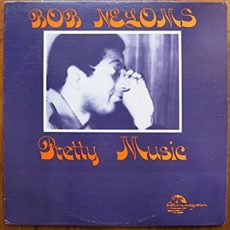
Robert James Neloms was born on March 2, 1942 in Detroit, Michigan and received piano lessons from the age of five and as a youth played in Country & Western Bands. In 1959 he received a scholarship from Downbeat to attend the Berklee College of Music.
From 1961 to 1963 he worked as a studio musician for Motown and afterwards he was active on the West Coast, founding the jazz rock band The Flower in San Francisco, California and also performed with Sly Stone. In 1969 and 1970 Bob returned to continue his studies at Berklee College, then continued to work in the Boston area.
1973 saw his move to New York City and performing with Roy Haynes, Pharoah Sanders, Pepper Adams and Clifford Jordan. Leading his own bands he enlisted Ricky Ford, Eddie Henderson and Bob Mover. In 1977 he became a member of the Charles Mingus band, with whom he went on tour and on whose last albums he participated, like Cumbia & Jazz Fusion and then became a member of the Mingus Dynasty recording of their first album. He worked with Danny Richmond, Billy Bang, Ahmed Abdullah , Allen Lowe, James Newton , Abbey Lincoln , Buddy Tate, and Hamiet Bluiett on the Soul Note label.
In 1981 he recorded his solo album for India Navigation titled Pretty Music. From the mid-1980s onwards he was mainly active as a music teacher, but occasionally performed as a soloist or in a duo with the bassist Vishnu Wood in New York. Currently residing in Birmingham, Michigan, pianist Bob Neloms continues to be active in modern jazz and music education.
Sponsored By

#preserving genius
More Posts: piano
Daily Dose Of Jazz…
Don Randi was born Don Schwartz on February 25, 1937 in New York City and raised in the Catskill Mountains, where he received training in classical music. After his father’s death in 1954, he and his mother moved to Los Angeles, California and the following year he started working at a record distribution company where he heard and became influenced by jazz musicians, particularly Horace Silver.
He began his career as a professional pianist and keyboard player in 1956, gradually establishing a reputation as a leading session musician. By the early 1960s, he was a major contributor, as musician and arranger, to record producer Phil Spector’s Wall of Sound. He became a member of Nancy Sinatra’s touring band for decades and also played piano on These Boots Are Made For Walkin’ as well as every album she recorded, and played on the Beach Boys’ Good Vibrations.
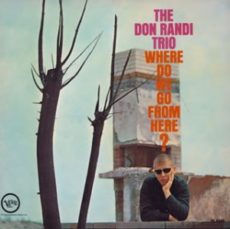
Playing on over three hundred hit records, Don worked with musicians such as Gerald Wilson, Quincy Jones, Cannonball Adderley, Herb Alpert, Sarah Vaughan, Linda Ronstadt and Frank Zappa. He recorded a number albums of piano jazz under his own name and as the leader of a trio with Leroy Vinnegar and Mel Lewis between 1960 and 1968 that included Feelin’ Like Blues, Where Do We Go From Here, Last Night, Revolver Jazz, and Love Theme From Romeo And Juliet. He also wrote film scores for Bloody Mama, Up in the Cellar, J. W. Coop, Stacey, and Santee in the Seventies.
In 1970 he opened The Baked Potato jazz club in Studio City, California, and forming his own group, Quest, serving as the house band. The band subsequently recorded over 15 albums and were nominated for a Grammy in 1980 for the album New Baby. In 2008, as a member of the Wrecking Crew, Randi was inducted into the Hollywood RockWalk.and in 2010 the club was named Best Jazz Club in Los Angeles magazine. Pianist, bandleader and songwriter Don Randi continues to perform, record and releasing his own jazz records.
Sponsored By

#preserving genius
More Posts: piano
Daily Dose Of Jazz…
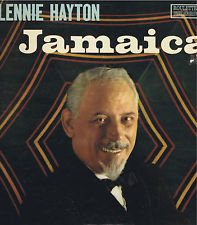
Lennie Hayton was born Leonard George Hayton on February 14, 1908 in New York City, New York and developed a penchant for the piano when six years old, showing unusual interest in the early classics from the rolls of the family player piano. His parents were keen followers of the concert hall and took their son to many concerts, however, disliking jazz, it was not until he was 16 that he really discovered it. He left high school to become pianist with the Broadway Hotel Orchestra of Cass Hagen, a boyhood friend.
In 1928 while playing at the Park Central, Hayton was heard by Paul Whiteman who immediately engaged by him as second pianist, playing piano and celeste as well as acting as a part-time arranger. He played alongside Frankie Trumbauer, Bix Beiderbecke, Red Nichols and Joe Venuti, and became friendly with Bing Crosby. With the ongoing Depression in 1930, theatre audiences fell to the economic problems and he and Eddie Lang were let go as Whiteman streamlined the band. He then joined the Charles Previn Orchestra, which had a weekly assignment on radio in the Camel Pleasure Hour.
Re-joining Bing Crosby who was enjoying tremendous success on record, radio and the stage, in 1932 they embarked on a tour of Paramount-Publix theatres, working across the country to Hollywood where he was to make the film The Big Broadcast. At each location, he continued to broadcast his radio show until he reached the West Coast. He and Lang provided the musical support to Crosby on his theatre appearances and on his radio shows.
His long relationship with Crosby leading his orchestra rendered the singer’s first hit recordings Cabin in the Cotton, Love Me Tonight and Some of These Days and Brother, Can You Spare a Dime? his most famous recordings. which went to the top of the charts of the day. Hayton became the musical director for the Chesterfield radio series Music That Satisfies, again featuring Crosby. He would go on to be musical director for the singer’s film Going Hollywood in 1933, and continue to work with Crosby until he became a musical director for Metro-Goldwyn-Mayer in 1940 and guided it through its prime years as forerunner of the movie musical.
He would be nominated for six Oscars for Best Original Music and won two for On The Town and Hello Dolly!, the latter co-composed with Lionel Newman. He arranged the music for 1952’s Singin’ in the Rain, arranged Frank Sinatra’s first attempt at the Beatles tune Something. Lennie composed Apple Blossoms with Joe Venuti, Frankie Trumbauer and Eddie Lang; as well as Flying Fingers, The Stage is Set, Mood Hollywood with Jimmy Dorsey, and Midnight Mood, and co-arranged the Hoagy Carmichael composition Stardust with Artie Shaw, for a 1940 recording on the Bluebird label.
Hayton met Lena Horne when both were under contract to MGM and married her in 1947 in Paris, France. Throughout their marriage he was her music director but the pressures of an interracial relationship made it tumultuous, and they were separated for most of the Sixties. Always a heavy drinker and smoker, pianist, composer, arranger, musical director and bandleader Lennie Hayton passed away of heart disease while separated from Horne, in Palm Springs, California on April 24, 1971.

#preserving genius
More Posts: piano
Daily Dose Of Jazz…
Sam Allen was born on January 30, 1909 in Ohio and accompanied silent films in movie palaces from the age of ten, and in the next few years seemed to have absorbed plenty of slapstick hi-jinx and derring-do from the Hollywood sagas he accompanied. In 1928 he moved to New York City, where he joined Herbert Cowans’s band at the Rockland Palace. Within a year he moved back to Ohio, where he played with Alex Jackson in 1930. Soon afterward he joined James P. Johnson‘s orchestra as the second pianist, as one piano could not play all the chords in the scores. This engagement he followed with an extended run in Teddy Hill’s band, which occupied him for most of the 1930s and included tours of Europe.
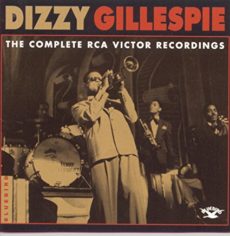
Early in the 1940s Sam worked one of his most musically satisfying collaborations as piano man in the sometimes rowdy combo of violinist Stuff Smith. He then became the pianist for the madcap jive jazz duo of Slim Gaillard and Slam Stewart, the gig for which he was best known, his years in the movie houses came in handy. His talent was further challenged with the bebop hyper-drive of trumpeter Dizzy Gillespie during the same decade.
By the end of the Forties decade Allen moved to Washington and worked locally as a solo pianist for a time, giving up being a touring sideman. Finally he relocated and settled into the Oakland, California, where he often accompanied vocalist Billie Heywood, among others.
Pianist Sam Allen passed away in September 1963.
Sponsored By

Voices From The Community
#preserving genius
More Posts: piano
Daily Dose Of Jazz…
Milt Raskin was born on January 27, 1916 in Boston, Massachusetts and played saxophone as a child before switching to piano at age 11. In the 1930s he attended the New England Conservatory of Music and worked on local Boston-area radio.
Moving to New York City, Milt played with Wingy Manone in 1937 at the Famous Door and with Gene Krupa in 1938-39. He then played with Teddy Powell and Alvino Rey before rejoining Krupa again for a short time. Following this stint, he joined the Tommy Dorsey Orchestra for two years in 1942, replacing Joe Bushkin.
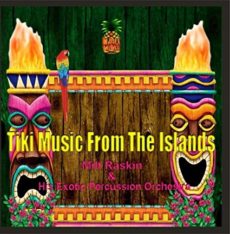
He relocated to Los Angeles, California in 1944, where he occasionally worked in jazz, recording with Artie Shaw, Billie Holiday and Georgie Auld, but concentrated on work as a studio musician and musical director. Much of his studio work from the 1940s on was uncredited, and he never led his own jazz recording session. He did, however, formed and led his Exotic Percussion Orchestra and released a few albums in the 1950s and Sixties.
Swing pianist, composer and arranger Milt Raskin passed away on October 16, 1977 in Manhattan, New York.
Sponsored By

www.whatissuitetabu.com
#preserving genius
More Posts: piano