

Daily Dose Of Jazz…
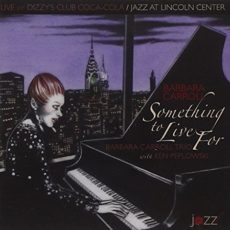
Barbara Carroll was born Barbara Carole Coppersmith on January 25, 1925 in Worcester, Massachusetts. She began her classical piano training at age eight, but by high school decided to become a jazz pianist. She attended the New England Conservatory of Music for a year, but left it as it conflicted with working for bands.
In 1947 Leonard Feather dubbed her “the first girl ever to play bebop piano”. The following year her trio, which featured guitarist Chuck Wayne and Clyde Lombardi on bass, worked briefly with Benny Goodman. Personnel changes would occur later with Charlie Byrd replacing Wayne and Joe Shulman replaced Lombardi. After Byrd’s departure, Carroll decided to have it be a drums, bass, and piano trio.
The 1950s saw Barbara and her trio working on Me and Juliet by Rodgers and Hammerstein. Then the decade saw her career ebb due to changing musical tastes and personal concerns. However, by 1972 she revived her career due to a renewed interest in her work. In 1975 she worked on an A&M recording session with Rita Coolidge and by 1978 she was touring with Coolidge and Kris Kristofferson. In the following two decades she became known as a cabaret performer.
She has recorded for DRG, Venus, Harbinger and Birdland record labels, with her latest of eight albums, Barbara Carroll Plays At Birdland, released in 2016. Pianist and vocalist Barbara Carroll, who received a MAC Lifetime Achievement Award and the Mary Lou Williams Women in Jazz Award, she continues to perform and record until she passed away on February 12, 2017.

Daily Dose Of Jazz…
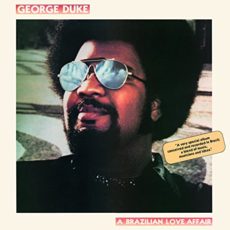
George Duke was born on January 12, 1946 in San Rafael, California and raised in Marin City. It was at the young age of 4 that he first became interested in the piano when his mother took him to see Duke Ellington in concert. He began his formal piano studies at the age of 7, at his local Baptist church. Attending Tamalpais High School in Mill Valley, he went on to earn a bachelor’s degree in trombone and composition with a minor in contrabass from the San Francisco Conservatory in 1967.
Initially he played with friends from garages to local clubs, George quickly eased his way into session work, before getting his master’s degree in composition from San Francisco State University. Although starting out playing classical music, his musician cousin Charles Burrell convinced him to switch to jazz and improvise what he wanted to do.
1967 saw Duke venturing into jazz fusion, playing and recording with violinist Jean-Luc Ponty, as well as performing with the Don Ellis Orchestra, and Cannonball Adderley’s band, and recorded with Frank Zappa and The Mothers of Invention on a number of albums through the 1970s. He also played with Ruth Underwood, Tom Fowler, Bruce Fowler from Zappa’s Overnite Sensation band that he was a part of, along with Johnny “Guitar” Watson and jazz guitarist Lee Ritenour. Lynn Davis and Sheila E recorded with him on his late-1970s solo albums Don’t Let Go and Master of the Game.
During the 1980s he collaborated with bassist Stanley Clarke and produced the Clarke/Duke Project that released three albums, he served as a record producer and composer on two instrumental tracks on the Miles Davis albums Tutu and Amandla, worked with a number of Brazilian musicians, including singer Milton Nascimento, percussionist Airto Moreira and singer Flora Purim, and in the 1992 film Leap of Faith featured gospel songs and choir produced by him and choir master Edwin Hawkins.
Duke was musical director for the Nelson Mandela tribute concert at Wembley Stadium in London, temporarily replaced Marcus Miller as musical director of NBC’s late-night music performance program Sunday Night during its first season, and was a judge for the second annual Independent Music Awards to support independent artists’ careers. He worked with Jill Scott on her third studio album, The Real Thing: Words and Sounds Vol. 3; and put together a trio with David Sanborn and Marcus Miller for a tour across the United States.
His educator side had him teaching a course on Jazz And American Culture at Merritt College in Oakland, California. He was nominated for a Grammy as Best Contemporary Jazz Performance for After Hours in 1999, was inducted into The SoulMusic Hall Of Fame in 2012, and was honored with a tribute album My Old Friend: Celebrating George Duke, produced by long-time friend and collaborator Al Jarreau, that received a NAACP Image Award for Outstanding Jazz Album in 2015.
As leader he recorded some four dozen albums and as sideman he worked with such artists as Third World, The Keynotes, Gene Ammons, Billy Cobham, Eddie Henderson, Alphonse Mouzon, Michael Jackson, Deniece Williams, Miles Davis, Dianne Reeves, John Scofield, Chanté Moore, Joe Sample, Phil Collins, Regina Belle, Teena Marie, Joe Williams, Gerald Wilson and Larisa Dolina among many others.
Keyboard pioneer, vocalist guitarist, trombonist, producer and composer George Duke passed away on August 5, 2013 in Los Angeles, California from chronic lymphocytic leukemia. He was 67. His songs have been sampled by Daft Punk, Kanye West and Ice Cube among numerous others.

Dose A Day-Blues Away

#preserving genius
More Posts: bass guitar,flute,keytar,piano,saxophone,synthesizer,trombone,vocal
Daily Dose Of Jazz…
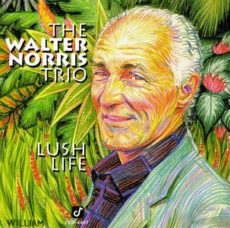
Walter Norris was born in Little Rock, Arkansas on December 27, 1931 and first studied piano at home with his mother. Lessons with John Summers, a local church organist followed. During his junior high and high school years his first professional performances were with the Howard Williams Band in and around Little Rock.
After graduating from high school, Norris went on to briefly play with Mose Allison, then did a two-year tour in the US Air Force. After the military he played with Jimmy Ford in Houston, Texas, then moved to Los Angeles, California and became an integral part of the West Coast Jazz scene. He was enlisted to play on Jack Sheldon’s first album as well as on the 1958 Ornette Coleman’s first album, Something Else! The Music of Ornette Coleman on the Contemporary Records label.
1960 saw Walter relocating to New York City and forming a trio with guitarist Billy Bean and bassist Hal Gaylor. The group made one album before he took a job at the New York City Playboy Club in 1963 and in time became the club’s Director of Entertainment, remaining there until 1970. After Playboy, for the next four years he became a freelance performer and taught in the New York area.
In 1974, he replaced Roland Hanna in the Thad Jones-Mel Lewis Band and after a tour of Scandinavia, he remained in Europe to record a duo album with double bassist George Mraz, titled Drifting.
Returning to the states, he joined the Charles Mingus Quintet in 1976, however, he left the band after an unintentional calling him Charlie instead of Charles with Mingus narrowly escaped confrontation in the dressing room prior to a performance, Norris quit the band. He accepted a job in Berlin, Germany, as pianist with the Sender Freies Berlin-Orchestra, insisting it was his fear of Mingus that was the primary reason for the move to Europe.
Signing a five-album contract with Concord Records in 1990, Walter released three significant albums, Sunburst with saxophonist Joe Henderson, Hues of Blues with George Mraz, and the solo piano album Live at Maybeck Recital Hall. In 1998, he self-financed the album From Another Star, recorded in New York with bassist Mike Richmond, pressing 1,000 copies. He also recorded with Ronnie Bedford, Aladár Pege, Larry Grenadier, Mike Heyman, Larance Marable, Leszek Możdżer.
His autobiography, In Search of Musical Perfection and a method book Essentials for Pianist Improvisers were released in 2005. In July 2006, Norris recorded at his Berlin home with bassist Putter Smith and in 2010 he had a documentary film produced titled Walter Norris, a documentary. Pianist and composer Walter Norris passed away on October 29, 2011 at his home in Berlin, Germany.
Take A Dose On The Road
More Posts: piano
Daily Dose Of Jazz…
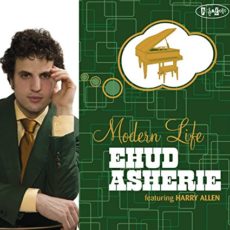
Ehud Asherie was born on December 20, 1979 in Israel and with his family moved to Italy at the age of three. He started playing piano at the age of seven and attended the Sir James Henderson School, now The British School of Milan, before they moved to the United States when he was nine. As a New York City teenager he visited Smalls Jazz Club, taking private lessons from Frank Hewitt, a pianist who often played there and attending the New School University.
Asherie first played at Smalls when he was a high school sophomore. In 2010 he recorded his debut solo piano album, Welcome to New York with a focus on stride and standards. The same year he played Hammond organ on his quartet release, Organic, mixing bop and swing with standards.
He has recorded seven albums as a leader ranging from duo to quintet group configurations on the Arbor and Posi-Tone labels. He has been a sideman recording with Bryan Shaw, Hilary Gardner and Harry Allen. He has performed with Peter Bernstrin, Joe Cohn, Billy Drummond, Bobby Durham, Frank Gant, Paul Gill, Jimmy Green, Dennis Irwin, Jimmy Lovelace, Joe Magnarelli, Bob Mover, Tim Pleasant, Ben Street and Mark Taylor.
Pianist and organist Ehud Asherie has for two years been playing regularly at Smalls with his own trio, the Grant Stewart Quartet and the Neil Miner Quintet. He has also served as a rehearsal pianist for the Village Vanguard Orchestra and Since January 2000 he’s part of Trio65 at New York City’s Rainbow Grill with bassist Joseph Lepore and drummer Tommaso Cappellato. He continues to perform, record and tour.
Sponsored By

Voices From The Community
More Posts: piano
Daily Dose Of Jazz…
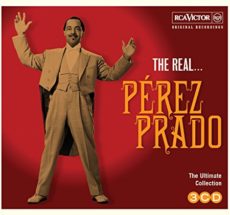
Dámaso Pérez Prado was born on December 11, 1916 in Matanzas, Cuba to a school teacher and a journalist. He studied classical piano in his early childhood, later playing organ and piano in local clubs. For a time, he was pianist and arranger for the popular Cuban band Sonora Matancera and worked with Havana casino orchestras for most of the 1940s.
In 1949 he moved to Mexico to form his own band and record for RCA Victor. Specializing in mambos, the upbeat adaptation of the Cuban danzón, Perez stood out with their fiery brass riffs, strong saxophone counterpoints and his signature grunt ¡Dilo! (Say it!). In 1950 arranger Sonny Burke heard Qué Rico El Mambo while on vacation in Mexico and recorded it back in the United States as Mambo Jambo. The single was a hit, which caused Pérez to launch a US tour, his appearances were 1951 sell-outs and he began recording US releases for RCA Victor.
Prado composed several famous songs Caballo Negro, Lupita, and Mambo no.8 among others, reached #1 with a cha-cha-chá arrangement of Cherry Pink and Apple Blossom White, held the spot for ten consecutive weeks and sold a million copies. The song went on to be danced to by Jane Russell in the 1954 movie Underwater!, and in 1958 his final #1 hit Patricia scaled the Jockeys and Top 100 charts and was introduced onto the Billboard Hot 100.
His popularity outside the Latino communities in the United States came with the peak of the first wave of interest in Latin music during the 1940s, 1950s and early 1960s. He performed in films in the United States, Europe and Mexico until his success waned, his association with RCA ended and music made way for rock and roll and pop music.
The early Seventies saw Prado returning to Mexico City to continue a healthy career in Latin America. He toured and continued to record material released in Mexico, South America and Japan. Revered as one of the reigning giants of the music industry he was a regular performer on Mexican television, was featured in a musical revue titled Sun, and his final United States concert to a pack house was in Hollywood in 1987.
During his lifetime, at one time or another, Ollie Mitchel, Alex Acuña, Maynard Ferguson, Pete Candoli, Beny Moré, Johnny Pacheco, Armando Peraza, Mongo Santamaría, Luisito Jorge Ballan Garay lll performed as part of his orchestra. His music has appeared in the films La Dolce Vita, Goodbye Columbus, Space Cowboys and on television shows The Simpsons, and HBO’s Real Sex series.
With persistent ill health plaguing him for the next two years, pianist, composer, arranger and bandleader Pérez Prado passed away of a stroke in Mexico City, Mexico on September 14, 1989, aged 72.
Put A Dose In Your Pocket
More Posts: piano