

Daily Dose Of Jazz…
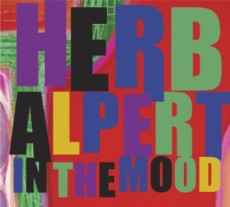
Herbert Alpert was born on March 31, 1935 and raised in the Boyle Heights section of East Los Angeles, California. His family was Jewish, emigrating from Radomyshl, now present day Ukraine and Romania. His father, a talented mandolin player, his mother taught violin, and his older brother a drummer. He began trumpet lessons at the age of eight and played at dances as a teenager. Acquiring an early wire recorder in high school, he experimented on this crude equipment.
Following graduation in 1952, he joined the U.S. Army and frequently performed at military ceremonies. After his service in the Army, Alpert tried his hand at acting, but eventually settled on pursuing a career in music. While attending the University of Southern California he became a member of the USC Trojan Marching Band, and appeared in the un-credited role as “Drummer on Mt. Sinai” in the film The Ten Commandments in 1056. In 1962, he had an un-credited part in a scene in the film Mr. Hobbs Takes A Vacation, playing a solo in a dance band.
In 1957, Alpert teamed up with Rob Weerts, co-wrote a number of Top 20 hits including Baby Talk for Jan & Dean and Wonderful World for Sam Cooke. By 1960 he was signed with RCA Records as a vocalist under the name of Dore Alpert.
In 1962 along with Jerry Moss they founded A&M Records and their very first hit was “The Lonely Bull” adapted from the mariachi bands and the cheers of bullfighting spectators. The title song reached No. 6 on the Billboard Pop Singles chart and became A&M’s first album with the original release number being #101.
By the end of 1964, with top session players he began touring with the Tijuana Brass. Television specials followed by 1967, as well as two albums, Whipped Cream and Other Delights and Going Places. The single “A Taste Of Honey” won a Grammy Award for Record of the Year.
The Brass would go on to perform the title tack to the first movie version of Casino Royale in 1967. His music would be used on The Dating Game, bringing him greater exposure. The band would win six Grammy Awards, fifteen of their albums went gold, fourteen platinum, and in 1966 outsold the Beatles.
Alpert’s only No. 1 single during this period, and the first No. 1 hit for his A&M label, was a solo effort of “This Guy’s In Love With You” by Bacharach/David. In the 1970s, 1980s, and 1990s, Alpert enjoyed a successful solo career. In 1979 he had his biggest instrumental hit titled “Rise”. He would go on to work with Jimmy Jam, Terry Lewis, Janet Jackson and Lisa Keith. He performs with Gato Barbieri, Rita Coolidge, Brian Culbertson, and others. With his wife kani Hall (Sergio Mendes fame), they have released the live album Anything Goes. In 2013, he released a new album, Steppin’ Out which won a Grammy.
Herb and Moss received a Grammy Trustees Award, a Grammy Lifetime Achievement Award, he was awarded the National Medal of Arts by President Obama in 2013, has a star on the Hollywood Walk Of Fame, and received the “El Premio Billboard” for his contributions to Latin music. Trumpeter, pianist, vocalist, composer, arranger, songwriter, record producer of jazz, Latin and pop music continues to perform, record and tour.

Give A Gift Of Jazz – Share
Daily Dose Of Jazz…
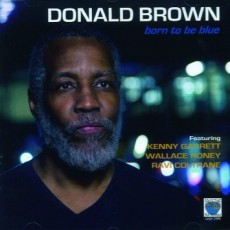
Donald Ray Brown was born on March 28, 1954 in Hernando, Mississippi but was raised in Memphis, Tennessee where he learned to play trumpet and drums in his youth. From 1972 to 1975 he studied at Memphis State University by which time he had made piano his primary instrument.
Donald was inducted into Art Blakey’s Jazz Messengers from 1981 to 1982, then took teaching positions at Berklee College of Music from 1983 to 1985. He went on to accept a position at the University of Tennessee in 1988.
Brown has recorded extensively as a leader amassing eighteen albums for Evidence, Muse, Sunnyside Records and since 1996 for the Space Time record label. As a sideman he was a part of the recording sessions for three Art Blakey albums – Killer Joe, Keystone 3 and Feeling Good. Jazz pianist Donald Brown continues to perform, record and tour.
Give The Gift Of Knowledge
More Posts: piano
Daily Dose Of Jazz…
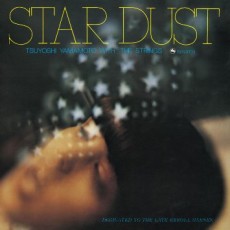
Tsuyoshi Yamamoto was born on March 23, 1948 in Niigata, Japan. He started to play the piano when he was in primary school. In junior high school, he played the trumpet. His interest in jazz began when he first heard Art Blakey’s tunes in the French movie, “Les Liaisons Dangereuses”. It inspired him to return to the piano, to perfect his technique.
Yamamoto was largely self-taught as a pianist, although he did have piano lessons as a child. He attended Nihon University and as a student there, he played professionally, first as an accompanist to pop singer Micky Curtis and the Samurais touring Europe in 1967.
In 1973 Tsuyoshi formed his own band while polishing his piano skills and gleaning influence from Bobby Timmons, Wynton Kelly, Red Garland and Randy Weston. The next year, he became house pianist at Misty, a Tokyo jazz club and recorded his debut as leader.
He played major international festivals in the late 1970s. While living in New York for a year he performed with Dizzy Gillespie, Carmen McRae, Sam Jones, Billy Higgins, Sonny Stitt and Elvin Jones (his favorite drummer) among others. He has recorded fourteen albums as a leader and sideman and continues to perform and record.
Tsuyoshi Yamamoto has a very melodic technique and phrasing with a use of block chords in ballads. The composer and pianist continues to perform and record.
Jazz Is Global – Share
More Posts: piano
Daily Dose OF Jazz…
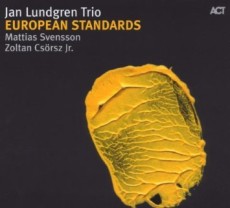
Jan Lundgren was born on March 22, 1966 in Olofstrom, Sweden and raised in Ronneby in the south of the country. He began learning the piano at the age of five and moved to Malmo in 1986 to study at the Academy of Music. He graduated in 1990, later becoming a lecturer at the Academy.
His group, the Jan Lundgren Trio broke through in 1997 with the album Swedish Standards, winning Orkesterjournalen’s Golden Record prize in the same year. In 2007, he became the first Scandinavian jazz pianist to be named an International Steinway Artist.
Since the early ‘90s, Jan has worked with a variety of Sweden’s leading artists both in the studio and/or at concerts such as Povel Ramel, Putte Wickman, Bengan Janson, Jason Diakité, Peter Asplund and Monica Zetterlund to name a few. He has also worked with Johnny Griffin, Mark Murphy, Herb Geller, Joe LaBarbera, Scott Hamilton, Andy Martin, Bill Perkins, Peter Washington, Billy Drummond, Deborah Brown, Lee Konitz, and Stacey Kent among numerous others.
Lundgren has recorded some 40 discs as a leader, under his own name since 1994 on labels including ACT, Fresh Sound, Marshmallow, Sittel, Four Leaf Clover, Volenza, Alfa, Gemini and Bee Jazz. As a sideman, Lundgren has been involved in dozens of other recordings across a broad range of labels.
In 2010, together with Thomas Lantz, Jan founded the annual Ystad Sweden Jazz Festival, for which he is Artistic Director. YSJF, has hosted Quincy Jones, Hugh Masekela, Dee Dee Bridgewater, Hiromi, Pat Martino, Youn Sun Nah, Benny Golson, Enrico Pieranunzi, Tomasz Stanko, Kenny Barron, Elina Duni, Fabrizio Bosso, Kurt Rosenwinkel, Bobo Stenson, Nils Landgren, Benny Green and Eliane Elias, Charles Lloyd, John Scofied, Abdullah Ibrahim, Dianne Schuur, Joshua Redman, Enrico Rava and Roy Hargrove. Pianist Jan Lundgren continues to perform, record and tour.
Put A Dose In Your Pocket
More Posts: piano

Daily Dose Of Jazz…
Eliane Elias was born on March 19, 1960 in Sao Paulo, Brazil and her musical talents began to show at an early age. She started studying piano at age seven, and by age twelve was transcribing solos from the great jazz masters. Fifteen, saw her teaching piano and improvisation and her performing career began at age seventeen, working with Brazilian singer/songwriter Toquinho and the poet Vinicius de Moraes.
In 1981, she headed for New York and a year later landed a spot in the acclaimed group Steps Ahead. In 1988 she was voted Best New Talent in the Critics Poll of Jazziz magazine, together with Herbie Hancock she was nominated for a Grammy in the “Best Jazz Solo Performance” category for her 1995 release, Solos and Duets, received the Downbeat Readers Poll’s “Best Jazz Album” for her recording The Three Americas and has been named in five other categories: Beyond Musician, Best Composer, Jazz Pianist, Female Vocalist, and Musician of the Year.
Elias has recorded with RCA Victor, Bluebird, Denon, Manhattan, Blue Note, EMI, Concord/Picante, ECM and Savoy Jazz spanning over twenty albums to date. She has recorded two albums solely dedicated to the works of the composer, Plays Jobim and Sings Jobim. Her 1998 release, Eliane Elias Sings Jobim, winning Best Vocal Album in Japan and was awarded Best Brazilian Album in the Jazziz Critics Poll. She has been featured in a Calle 54 documentary, received several Grammy nominations for Best Latin Jazz Album, and recorded with Denyce Graves on The Lost Days.
On her first album titled “Amanda” released in 1984 she collaborated with Randy Brecker and shortly thereafter she began her solo career. She has also collaborated with bassist Marc Johnson on the album Swept Away. Pianist, singer, arranger and songwriter Eliane Elias, known for her distinctive blend of her Brazilian roots with voice, jazz and classical music, continues to compose, record, perform and tour.
Dose A Day – Blues Away