

Daily Dose Of Jazz…
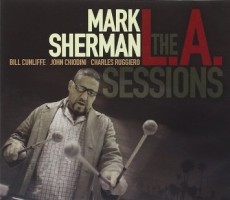
Mark Sherman was born April 17, 1957 in Manhattan, New York City to a Juillliard trained soprano mother who performed with the Cleveland and Boston symphonies, so it was natural that he studied classical piano as a child.
Sherman graduated from The High School of Music and in 1975, then went on to study classical percussion at Juilliard. He performed in ensembles under the direction of Leonard Bernstein, Sir George Solti, Zubin Mehta and Herbert Von Karajan. While there he would jam regularly with Wynton Marsalis. During the course of his career, Sherman also studied with Elvin Jones, Rohland Kohloff, Justin Diccocco, Roland Hanna and Jackie Byard among others.
While still in his teens, Mark played drums in a trio with pianist Kenny Kirkland who he introduced to Wynton. At 21, he began working on Broadway and in New York’s active studio scene, playing percussion, piano, drums and vibraphone. In 1980 he released his first album Fulcrum Point on Unisphere records. The decade saw him in studio working on commercial jingles.
Sherman spent a lot of his time in the studio in the 1980s, working on commercial jingles. Pianist Mike Renzi took him under his wing, connecting him with Peggy Lee and other singers performing with Lee, Tony Bennett, Mel Torme, Lena Horne and Ruth Brown. In 1986 he signed with Columbia Records and released his major label debut, A New Balance.
He continued to perform with Peggy Lee in the early 1990s, began a seven-year playing relationship with Larry Coryell, became an active studio musician, and played on numerous films and Broadway soundtracks. Reemerging as a leader playing vibraphone, he also continued his active career as a sideman, recording with Capathia Jenkins, Jennifer Holiday, Ann Hampton Callaway, Liz Minnelli and others.
Sherman continued to release his own albums on Miles High Records, won the Rising Star (Vibes) category in the Down Beat Critics Poll in 2007, 2008, 2009 and 2010 and has been a Jazz Ambassador for the U.S. State Department and Jazz at Lincoln Center.
Vibraphonist, pianist and drummer Mark Sherman is currently on the faculty of Juilliard jazz program, New Jersey City University and the New York Jazz Workshop.

Inspire A Young Mind
More Posts: drums,piano,vibraphone
Daily Dose Of Jazz…
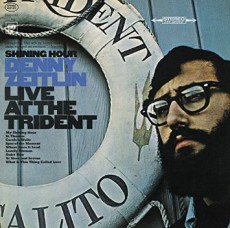
Denny Zeitlin was born on April 10, 1938 in Chicago, Illinois and grew up in the suburb of Highland Park. He began improvising on the piano at age two and was composing before elementary school. His father played piano by ear, his mother was his first piano teacher. He began formal study in Western classical music at age six, switching to jazz in the eighth grade. By the time he was in high school, he was playing professionally in and around Chicago.
While in college at the University of Illinois and Urbana-Champaign he was playing with Ira Sullivan, Johnny Griffin, Wes Montgomery, Joe Farrell, Wilbur Ware and Bob Cranshaw. Denny’s mentors included Billy Taylor and George Russell, while Bil Evans supported him by recording his composition “Quiet Now” and giving title to his 1970 album.
Zeitlin began his recording career when signing with Columbia Records in 1963 while studying medicine at John Hopkins University. His debut as a feature pianist was on the Jeremy Steig album Flute Fever along with Ben Riley and Ben Tucker. After moving to San Francisco in 1964 he recorded four albums as a leader for the label. He stood out from the crowd for the unbridled creativity of his work, the richness of his harmonic palette, and the sheer beauty of his piano tone.
Between 1968 and 1978, Denny ventured into electronic keyboards, synthesizers and sound altering devices, integrated them into his music and resulted in the release of Jazzy Spies in 1969 on the first season of Sesame Street. It featured the voice of Grace Slick. He would go on to be awarded Down Beat’s highest award for his Expansion album, score the music for the 1978 remake of Invasion of the Body Snatchers, and by the end of the decade returned focus to acoustic music.
Since 1968, Zeitlin has been on the teaching faculty at the University of California, San Francisco as a clinical professor of psychiatry, has a private practice, and is the founder of Control-Mastery Theory. He does all this while pursuing his passion for jazz, touring internationally and recording more than thirty-five albums to date tha include upwards of 100 original compositions. He is a first-place winner of the Down Beat International Jazz Critics Poll in 1965 and 1974.
Take A Dose On The Road
More Posts: piano,synthesizer
Daily Dose Of Jazz…
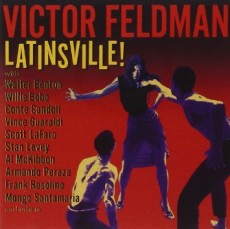
Victor Stanley Feldman was born on April 7, 1934 in Edgware, London, England and caused a sensation as a musical prodigy when he was discovered at aged seven. His family members were all musical and his father founded the Feldman Swing Club in 1942 to showcase his talented sons. His first professional appearance was playing drums at No. 1 Rhythm Club as a member of the Feldman Trio with brothers Robert on clarinet and Monty on piano accordion.
At eight years old the drummer was featured in the films King Arthur Was A Gentleman and Theatre Royal, in 1944 he was featured as “Kid Krupa” at a Glenn Miller AAAF band concert when he was 10, and went on to play vibraphone for Ralph Sharon Sextet and the Roy Fox band. Victor eventually made piano his instrument of choice and became best known.
Feldman recorded with Ronnie Scott’s orchestra and quintet from 1954 to 1955, and then in 1955 came to the U.S. He first worked with Woody Herman, then with Buddy Defranco. He recorded some thirty albums as a leader and recorded with Benny Goodman, George Shearing, Milt Jackson, Blue Mitchell, Lalo Schifrin, John Klemmer Sam Jones, Cannonball Adderley and others, as well as, Miles Davis on Seven Steps To Heaven, having composed the title track. He was a part of the 5-LP recording of Shelly Manne Black Hawk sessions in 1959.
Feldman settled in Los Angeles permanently and specialized in the lucrative session work for the film and recording industry. He also branched out to work with a variety of musicians outside of jazz, working with artists such as Frank Zappa, Steely Dan, Joni Mitchell, Tom Waits and Joe Walsh through the Seventies and Eighties.
Vibraphonist, drummer, percussionist, pianist and composer Victor Feldman died on May 12, 1987 at his home in Woodland Hills, California at age 53, following a heart attack. In 2009, he was inducted into the Musicians Hall of Fame and Museum in Nashville, Tennessee.
Give A Gift Of Jazz – Share
More Posts: drums,percussion,piano,vibraphone
Daily Dose Of Jazz…
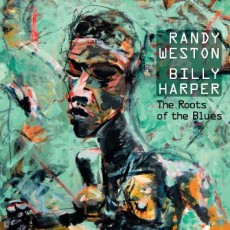
Randy Weston was born April 6, 1926 in Brooklyn, New York of Jamaican heritage and studied classical piano and dance as a child. He attended and graduated from Boys High School in Bedford-Stuyvesant taking piano lessons from Professor Atwell who allowed him to play outside the classical music paradigm. Among his piano heroes are Count Basie, Nat King Cole, Art Tatum, Duke Ellington and his cousin Wynton Kelly but it was Thelonious Monk who had the greatest impact.
After serving in the Army during World War II he ran a restaurant that was frequented by many of the leading bebop musicians. In the late 1940s Weston began gigging with bands including Bullmoose Jackson, Frank Culley and Eddie “Cleanhead” Vinson. He worked with Kenny Dorham in 1953 and Cecil Payne in ’54 before forming his own trio and quartet. That same year he recorded and released his debut as a leader, Cole Porter In A Modern Mood.
In 1955 Randy was voted “New Star Pianist” in Down Beat magazine’s International Critics’ Poll. Several fine albums followed, with the best being Little Niles near the end of that decade for which trombonist Melba Liston provided arrangements for a sextet playing his compositions.
By the 1960s, Weston’s music prominently incorporated African elements, and again teamed up with arranger Melba Liston on two albums, a large-scale suite Uhuru Afrika and Highlife. During these years his band often featured the tenor saxophonist Booker Ervin, traveled throughout Africa, settled in Morocco, running the African Rhythm Club in Tangier from 1967 to 1972 and produced a best-selling record for CTI titled Blue Moses on which he plays electric keyboard.
For a long stretch Weston recorded infrequently on smaller record labels but in 1992 he released a two-CD recording The Spirits of Our Ancestors featuring once again arrangements by his long-time collaborator Melba Liston as well as Dizzy Gillespie and Pharoah Sanders guest playing. He would go on to produced a series of albums in a variety of formats: solo, trio, mid-sized groups, and collaborations with the Gnawa musicians of Morocco.
Among his many honors and awards he has received the French Order of Arts and Letters, Japan’s Swing Journal Award, the Black Star Award, the NEA Jazz Master. Randy has been given honorary degrees from Brooklyn College, City University of New York and Colby College, was the recipient of a Guggenheim Fellowship, has been honored by King Mohammed VI of Morocco, and he has been celebrated in a “Giant of Jazz” concert with all-star musicians Monty Alexander, Geri Allen, Cyrus Chestnut,, Barry Harris, Mulgrew Miller, and Billy Taylor.
After more than five decades devoted to music, pianist and composer Randy Weston continues to perform throughout the Americas, Africa, Asia, the Caribbean, and Europe and uses Ghananian master drummer Kofi Ghanaba’s composition “Love, the Mystery Of…” as his theme song for some 40 years.
Jazz Is Global – Share
More Posts: piano
Daily Dose Of Jazz…
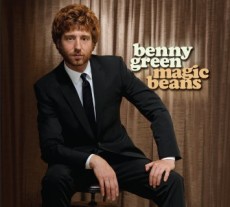
Benny Green was born in New York City on April 4, 1963 and grew up on the West coast in Berkeley, California. From the age of seven he studied classical piano and had an interest in jazz from an early point, as his father played jazz tenor saxophone.
Discovered by Faye Carroll, while still in his teens worked in a quintet led by Eddie Henderson. He attended Berkeley High, participated in the school’s jazz ensemble and in his later school career had a weekly trio gig at Yoshi’s, which marked his entrance to the world of professional jazz.
After graduation he spent time in San Francisco but became more successful on his return to New York. Green joined Betty Carter’s band in 1983 and since 1991 has led his trio, recording for Blue Note, Telarc and Criss Cross.
As an educator Benny frequently teaches in workshops across the United States, such as Jazz Camp West in California, and Centrum/Jazz Port Townsend in Washington. He currently is on faculty at the University of Michigan.
Pianist Benny Green has sixteen albums as a leader, 75 to date as a sideman and has performed and recorded with Art Blakey, Anat Cohen, Ray Brown, Gary Bartz, Bob Belden, Clark Terry, Don Braden, Cecil Brooks III, Arnett Cobb, Mark Elf, Larry Gales, Tim Hagans, Jay Hoggard, Freddie Hubbard and Milt Jackson among many, many others. He continues to perform, record and tour.
Give The Gift Of Knowledge
More Posts: piano