

Daily Dose Of Jazz…
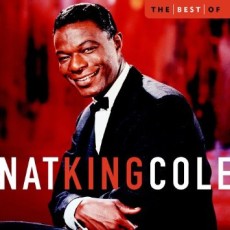
Nat King Cole was born Nathaniel Adams Coles on March 17, 1919 in Montgomery, Alabama, one of four brothers and a half sister. His brothers Ike and Freddy would follow in his footsteps and pursue careers in music. When he was four years old his family moved to Chicago, Illinois where his father became a Baptist minister and where the young lad learned to play the organ from his mother. His first performance was at age four and he began formal lessons at 12, eventually learning jazz, gospel and Western classical. He went to DuSable High School and studied in the music program under Walter Dyeth.
Sneaking out of the house and to hang around outside the clubs, he listening to artists such as Louis Armstrong, Jimmy Noone and Earl Hines, the latter who inspired him. Cole began his performing career in the mid-1930s while still a teenager, adopting the name Nat Cole. His older brother, Eddie, a bass player, joined Cole’s band playing clubs and made their first recording in 1936 under Eddie’s name. They also were regular performers at clubs. He got his nickname, “King”, presumably reinforced by the nursery rhyme “Old King Cole”.
Nat went on to be the pianist in the national tour of Shuffle Along revue about theatre legend Eubie Blake. When it closed in Long Beach, he decided to stay in California. He formed Cole and two other musicians formed the “King Cole Swingsters” that eventual became the King Cole Trio. Their first radio broadcast on NBC’s Blue Network in 1938 led to their Swing Soiree, the Old Gold, Chesterfield Supper Club, Kraft Music Hall and The Orson Welles Almanac.
Cole frequently sang in between instrumental numbers. Noticing that people started to request more vocal numbers, he obliged. There was a customer who requested a certain song one night, but it was a song that Cole did not know, so instead he sang “Sweet Lorraine”. The King Cole Trio signed with the fledgling Capitol Records, known as the “House That Nat Built” in 1943. Revenues from Cole’s record sales fueled much of the label’s success during this period including the construction of the circular building.
Nat would perform in the first Jazz At The Philharmonic, have his revolutionary lineup of piano, guitar, and bass was emulated by many musicians, among them Art Tatum, Oscar Peterson, Ahmad Jamal, Charles Brown and Ray Charles. He played with Lester Young, Red Callender and Lionel Hampton.
Cole’s first mainstream vocal hit was his 1943 recording of one of his compositions, “Straighten Up And Fly Right”, selling over 500,000 copies.
In 1946, the King Cole Trio Time program was on the air, recorded with a string orchestra and his pop stature came with his recording of “The Christmas Song” followed by a string of hits such as Nature Boy, Route 66, Mona Lisa, Too Young and Unforgettable. While this shift to pop music led some jazz critics and fans to accuse Cole of selling out, he never completely abandoned his jazz roots and in 1956 he recorded an all-jazz album After Midnight. He had one of his last major hits in 1963, two years before his death, with “Those Lazy-Hazy-Crazy Days of Summer”, which reached #6 on the Pop chart.
He would go on to have a variety show on NBC without national sponsorship despite appearances of Ella Fitzgerald, Harry Belafonte, Frankie Laine, Peggy Lee and Eartha Kitt. He would record Cole Espanol in Havana, Cuba, retool his final Nelson Riddle arranged album Wild Is Love into an Off-Broadway show titled “I’m With You”. Cole performed in many short films, sitcoms, and television shows such as St, Louis Blues, The Blue Gardenia, the Nat King Cole Story and on of his final appearances in Cat Ballou.
Cole was inducted into the Alabama Music Hall of Fame, the Alabama Jazz Hall Of Fame, the Down Beat Hall of Fame, the Hit Parade Hall of Fame, the Rock and Roll Hall of Fame, the Latin Songwriters Hall of Fame, a Grammy Lifetime Achievement Award, and has an official U.S. postage stamp in his honor.
Pianist, vocalist, composer and bandleader Nat King Cole, whose baritone voice performed in big band and jazz trio settings passed away on February 15, 1965 of lung cancer. He maintains worldwide popularity.

Jazz Is Global – Share
Daily Dose Of Jazz…
Bill Anschell was born on March 12, 1959 in Seattle, Washington and after leaving high school he went on to study for two years at Oberlin College, then transferring to Wesleyan University in Connecticut, where he graduated Phi Beta Kappa with a degree in Music. At Wesleyan, he worked closely with saxophonist Bill Barron and studied semi-privately with South Indian mridangum master T Ranganathan, kindling a passion for rhythmic experimentation that has driven his music ever since.
After leading the life of a jazz vagabond for several years, Bill settled in Atlanta in 1989. He was initially drawn there by the opportunity to serve as Jazz Coordinator for the Southern Arts Federation (SAF), that he fired up virtually from scratch. He launched a host of high-profile programs, published a book on grant writing, and created “JazzSouth,” an internationally syndicated radio show. At night he dove headlong into the city’s thriving jazz scene, working as a sideman with various groups and leading his own trio.
By 1992, Anschell’s left SAF, continuing to produce “JazzSouth” out of his home while focusing on playing and composing. Ascended the jazz ranks he led his trio at major festivals, became a first-call accompanist for visiting jazz greats and enjoyed a lengthy association with vocalist Nnenna Freelon, serving as her pianist, arranger and musical director. His piano work and arrangements were featured throughout Freelon’s 1996 Concord release “Shaking Free,” nominated for a Grammy as the year’s best jazz vocal recording.
Bill has played and/or recorded with a host of jazz greats including Richard Davis, Ron Carter, Benny Golsen and Russell Malone. In 2001, he was selected by the American Composers Forum for its “Composer-in-the-Schools” program; his residency included a commissioned piece for chamber orchestra. Since 2003, his original compositions have been heard on NBC’s “The West Wing,” CBS’s “The Defenders” and “NCIS: LA,” and HBO’s “The Wire.”
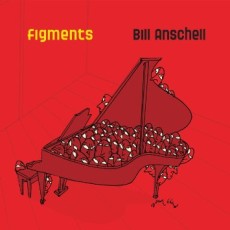
He has performed with the symphony, ventured into electronica, is well-known as a jazz humorist, writing jazz vignettes and a monthly jazz etiquette column. His satirical essay, “Careers in Jazz,” is the all-time most-read piece on leading jazz website allaboutjazz.com, and was prominently featured in a Wall Street Journal story on jazz audiences. He has won numerous awards such as 2005 Northwest Jazz Instrumentalist of the Year 2006 & 2001; Northwest Acoustic Jazz Ensemble of the Year (Bill Anschell Trio) 2010 and Northwest Jazz Recording of the Year for his 2011 “Figments”. He continues to perform, tour and record.
Inspire A Young Mind
More Posts: piano
Daily Dose Of Jazz…
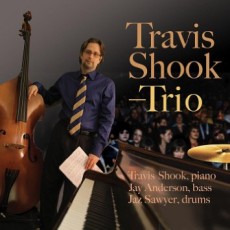
Travis Shook was born on March 10, 1969 in Oroville, California and started learning to play the piano at age seven. His family moved to Olympia, Washington when he was ten, spending his adolescent years in the Pacific Northwest. For a period of time he played rock guitar but soon realized jazz improvisation was his passion. At eighteen he enrolled at William Patterson College and studied under Mabern. After graduating he returned to Washington and joined bassist Buddy Catlett’s band where he learned a lot about the history of jazz.
In 1991 he won the Jacksonville Festival’s Great American Piano Competition that led to a contract with Columbia Records/Sony Music. Two years later he moved to New York City and recorded his debut with a quartet that included tony Williams and Bunky Green. Though receiving critical acclaim both in the U.S. and France for this first effort, it was a short-lived relationship when Sony purged a large percentage of the Columbia jazz roster upon acquiring the label in 1993.
After spending some time in obscurity after being attacked by New York Times critic Peter Watrous who criticized one of his performances, he entered a dark period in his life: alcoholism. A year later he got picked up by Betty Carter and went on tour through Europe, but he sunk deeper and added drugs to his plate of demons. Unemployable, he dropped out of the public eye for a number of years. Travis met, moved in with and ultimately married jazz singer Veronica Nunn who helped him overcome his demons and since 1998 he has been sober.
In 1999 Shook and his wife started their own record label, Dead Horse Records, which has released four recordings to date. Over the years he has performed with Reggie Workman, Eddie Harris, Joe Lovano, toots Thielemans, Rufus Reid, Chuck Israels, Ernestine Anderson, Branford Marsalis, Benny Golson and Clifford Jordan as well as Sonny Simmons, Michael Franks, Gino Vanelli, Bob Hope and Chris Botti among others.
His influences were Ahmad Jamal, McCoy Tyner, Duke Ellington, Harold Mabern, Herbie Hancock and Bill Evans but also John Coltrane, Miles Davis and Elvin Jones.Pianist Travis Shook continues to perform and record while building the catalogue of Dead Horse Records.
Jazz Is Global – Share
More Posts: piano
Daily Dose Of Jazz…
Martin Bejerano was born in Miami, Florida on March 9th of Afro-Cuban heritage and began his professional music career at age fifteen, when he began playing George Gershwin’s “Rhapsody in Blue” concerto with the Mexican-American Bi-National Symphony while still in high school. He went on to graduate from the New World School of the Arts, Florida State University and the University of Miami with a Masters in jazz performance.
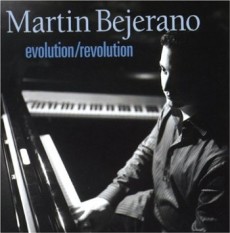
In 2000 Martin moved to New York City and in less than a year joined drummer Roy Haynes’ band and two years later was a part of guitarist Russell Malone’s quartet. He released his debut album as leader, titled Evolution/Revolution in 2007, followed by Potential Energy in 2013. He has done sideman duties as well on six projects.
In 2010 he was awarded a Chamber Music America commission for a new jazz work, has had several compositions published in Ignacio Berroa’s “Groovin’ in Clave” instructional drum book and has attended the Thelonious Monk Institute Jazz Colony.
Martin has also performed with Kenny Garrett, James Moody, Lonnie Plaxico, Jimmy Heath, Ignacio Berroa, Mingus Big Band, Marcus Printup, Marcus Strickland, and even trading choruses with the legendary Chick Corea. In between performing and recording with the Haynes and Malone bands, pianist Martin Bejerano is an Assistant Professor of jazz piano at the University of Miami Frost School of Music.
Put A Dose In Your Pocket
More Posts: piano
Daily Dose Of Jazz…
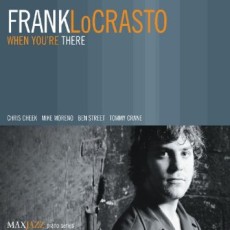
Frank LoCrasto was born and raised in Texas on March 7, 1983. Studying piano during his childhood, his influences include Erroll Garner, Raymond Scott, Ennio Morricone, Kraftwerk and Brian Eno. After moving to New York in 2001 to attend the New School, he went on to work as a sideman with jazz musicians such as Pat Martino, Greg Osby and Jeremy Pelt.
At twenty-three he released his debut album When You’re There on the Maxjazz label and his second release five years later, El Dorado, which he recorded in his Brooklyn basement apartment, is layered with vintage synthesizers and old timey pianos.
An accomplished composer and arranger, he is a member of the Jeremy Pelt Quartet, Frank is also a member of Rumblefoot, Breastfist, Yost, and plays regularly with Kat Edmonson and James Iha. His solos exhibit his ample technique and unfettered expressiveness. At 32, he continues to build his talent as a sideman profusely performing, recording and touring.
Give The Gift Of Knowledge
More Posts: piano