

Daily Dose Of Jazz…
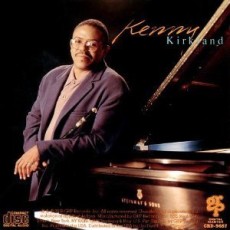
Kenneth David “Kenny” Kirkland was born September 28, 1955 in Newport, New York and when only six sat down at a piano keyboard. Following years of Catholic school Kenny enrolled in the Manhattan School of Music and studied classical piano performance, theory and composition. He first worked professionally touring through Europe with Polish fusion violinist Michal Urbaniak in 1977 and recording with him on “Urbaniak” and “Daybreak”. His next high-profile gig was with Miroslav Vitous with subsequent recording dates on “First Meeting” and “Miroslav Vitous Group”.
In the early 80s, Kirkland toured Japan with trumpeter Terumasa Hino, met Wynton Marsalis and their long association began with him playing on Marsalis’ self-titled debut album and sharing duties with Herbie Hancock. He became the sole pianist on Marsalis’ subsequent releases “Think Of One”, “Hothouse Flowers” and “Black Codes (From The Underground)”. Following this stint he joined Branford’s band After his association with Wynton Marsalis, Kirkland joined Branford Marsalis’ band and is featured on the albums “Royal Garden Blues”, “Renaissance”, “Random Abstract”, “Crazy People Music”, “I Heard You Twice The First Time”, “Buckshot Lefonque”.
Kenny worked for a short period as The Tonight Show pianist during Branford’s tenure but returned to the East coast and session work. Contrary to jazz orthodoxy Kirkland stretched to include keyboards and synthesizers coupled with straying from traditional jazz to work with Sting, on the documentary “Bring On The Night”, and in 1991 released his debut “Kenny Kirkland” for GRP and “Thunder and Rainbows/J.F.K.” on Sunnyside followed.
Leading up to June 1998, Kirkland worked diligently with long-time associate Jeff “Tain” Watts on the drummer’s debut recording “Citizen Tain” but his health was failing due to abuse and neglectful physical exercise. Jazz pianist Kenny Kirkland, most often associated with Sting, Branford Marsalis, Wynton Marsalis, and Kenny Garrett, passed away quietly in his Queens apartment of congestive heart failure on November 12, 1998.
In his more than twenty-year career, Kirkland performed or recorded with such artists as Don Alias, Carla Bley, Terence Blanchard, Michael Brecker, Stanley Clarke, Kevin Eubanks, Charles Fambrough, Chico Freeman, Dizzy Gillespie, Elvin Jones, Arturo Sandoval and the list of jazz greats continues along with Ben E. King, Angela Bofill, Youssou N’Dour, Stephen Stills and David Crosby.
More Posts: piano
Daily Dose Of Jazz…
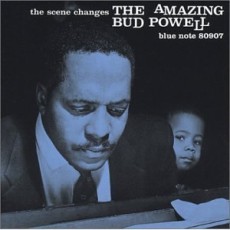
Bud Powell was born Earl Rudolph Powell in New York City on September 27, 1924. Following a family musical legacy, his grandfather a flamenco guitarist, father a stride pianist, older brother William a trumpeter and younger pianist brother Richie, Bud learned classical piano from an early age and by age 8 became interested in jazz. Playing his own transcriptions of Art Tatum and Fats Waller, by 15 he was playing in William’s band. Thelonious Monk was an important early teacher, mentor and close friend who dedicated the composition “In Walked Bud” to him.
The early Forties saw Powell playing in a number of bands, including that of Cootie Williams, who had to become Powell’s guardian because of his youth. His first recording date was with Williams’ band in 1944 and this session produced the first ever recording of Monk’s “Round Midnight”. Monk also introduced him to the circle of bebop musicians starting to form at Minton’s Playhouse and playing on early recording sessions with Frank Socolow, Dexter Gordon, J. J. Johnson, Sonny Stitt, Fats Navarro and Kenny Clarke.
Powell soon became renowned for his ability to play accurately at fast tempos, his inspired bebop soloing, and his comprehension of the ideas that Charlie Parker had found from the chords of “Cherokee” and other song-forms. Powell’s first session as a leader was a trio setting in 1947 with Curly Russell and Max Roach and later recording on a Charlie Parker date with Miles, Max and Tommy Potter. Bud Powell is the most important pianist in jazz and one of the most underrated but his best work is on Blue Note and for Mercury, Norgran, Clef and later Verve Records under Norman Granz. His prolific career had him playing with a who’s who list of musicians like Buddy Rich, Ray Brown, Art Blakey, George Duvivier, Osie Johnson and so on. By the late fifties and into the 60s his playing was far removed from his earlier standard and his talent was in eclipse.
With his health deteriorating he was hospitalized after months of increasingly erratic behavior and self-neglect. Jazz pianist Bud Powell, described as one of “the two most significant pianists of the style of modern jazz that came to be known as bop”, died of tuberculosis, malnutrition, and alcoholism on July 31 1966 in New York City.
More Posts: piano

Daily Dose Of Jazz…
Marlena Shaw was born Marlina Burgess on September 22, 1942 in New Rochelle, New York and was first introduced to music by her jazz trumpet player uncle Jimmy Burgess. She cites Dizzy Gillespie, Miles Davis, Al Hibbler and lots of gospel as her teaching tools.
In 1952, Burgess brought her on stage at Harlem’s Apollo Theatre to sing with him and his band. Shaw’s mother did not want her daughter to go on tour with her uncle at such a young age. Instead, she enrolled Shaw into the New York State Teachers College in Potsdam to study music. She later dropped out, got married, had five children but never gave up on her singing career.
Shaw began making appearances in jazz clubs whenever she could spare the time. This most notable of these appearances was in 1963 when she worked with jazz trumpeter Howard McGhee. That same year, she had an unsuccessful audition due to nervousness with Columbia Records but continued to play at small clubs in 1964 until 1966 when her career took off after landing a gig with the Playboy Club chain in Chicago. It was through this gig that she met with Chess Records, inked a deal, released her first two albums on their subsidiary Cadet and moved to Blue Note by 1972.
With the onset of disco in the 70s, she reinvented herself and recorded “Go Away Little Boy” and one of the era’s biggest hits remaking “Touch Me In The Morning” for Columbia. Her career has touched all forms of music even being sampled by hip-hop artists and commercials. Vocalist Marlena Shaw has continued to record, toured and consistently performing at club dates and festivals like the North Sea Jazz Festival in the Netherlands.

Daily Dose Of Jazz…
Henry Butler was born September 21, 1949 in New Orleans, Louisiana and was blinded by glaucoma in infancy.His musical training began at the Louisiana State School for the Blind where he learned to play valve trombone, baritone horn and drums before focusing his talents on singing and piano. Mentored at Southern University by clarinetist and educator Alvin Batiste. He later earned a masters degree in music at Michigan State University in 1974, and received the MSU Distinguished Alumni Award in 2009.
He is known for his technique and his ability to play in many styles of music. He has been said to revel in fluency and facility, splashing chords all over the keyboard and streaking through solos with machine-gun articulation.Henry has recorded for Impulse, Windham Hill and Basin Street Records putting together a catalogue of eight albums to date.
With his home and vintage Mason & Hamlin piano destroyed by Hurricane Katrina’s floodwaters, Butler left New Orleans and briefly relocated to Boulder, and then Denver, Colorado before a final relocation to New York in 2009.
Butler’s pursuit of photography as a hobby since 1984, has culminated in his methods and photos being featured in an HBO2 documentary, Dark Light: The Art of Blind Photographers, airing in 2010 and has had his Butler’s photographs shown in galleries in New Orleans. The talented pianist and vocalist continues to perform, record and represent his generation of New Orleans pianists.
More Posts: piano
Daily Dose Of Jazz…
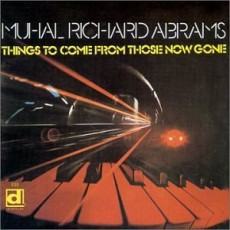
Muhal Richard Abrams was born on September 19, 1930, in Chicago, Illinois. He didn’t start his musical training until his enrollment in Roosevelt University but not hearing what he heard in the streets caused him to study piano on his own. His natural ability to study and analyze things allowed him to read, identify the key the music was in, then the notes and how to play the piano. Listening to Art Tatum, Charlie Parker, Bud Powell, Thelonious Monk and many others, he concentrated on the composition of Duke Ellington and Fletcher Henderson pieces. Although it took a lot of time and sweat, he was soon playing on the scene.
Abrams’ first gigs were playing the blues, R&B, and hard bop circuit in Chicago and working as a sideman with everyone from Dexter Gordon and Max Roach to Ruth Brown and Woody Shaw. In 1950 he began writing arrangements for the King Fletcher Band, and in 1955 played in the hard-bop band Modern Jazz Two + Three, with tenor saxophonist Eddie Harris.
After this group folded he kept a low profile until he organized the Experimental Band in 1962, a contrast to his earlier hard bop venture in its use of free jazz concepts. This band, with its fluctuating lineup, evolved into the Association for the Advancement of Creative Musicians (AACM), emerging in May 1965 with Abrams as its president. Opting not to play in smoky nightclubs they often rented out theatres and lofts where they could perform for attentive and open-minded audiences.
His landmark album “Levels and Degrees of Light” in 1967 saxophonists Anthony Braxton and Maurice McIntyre, vibraphonist Gordon Emmanuel, violinist Leroy Jenkins, bassist Leonard Jones and vocalist Penelope Taylor. However, he never strayed too far from hard bop during this period playing with Eddie Harris, Dexter Gordon and other hard boppers.
Moving to New York in 1975, Abrams became a part of the local Loft Jazz scene and in 1983 he established the New York chapter of the AACM. Over the course of his career he composed for symphony orchestras, classical works, string quartets, solo piano, voice, and big bands in addition to making a series of larger ensemble recordings that include harp and accordion. He has recorded extensively under his own name frequently on the Black Saint label and as a sideman on others’ records, working with the likes of Marion Brown, Chico Freeman, Eddie “Lockjaw” Davis, Art Farmer, Sonny Stitt, Art Ensemble of Chicago, and numerous others.
Muhal Richard Abrams, educator, administrator, composer, arranger, cellist, clarinetist and pianist was given a Lifetime Achievement Award by the Vision Festival, New York City’s premier jazz festival and in 2010 was honored as a NEA Jazz Master. He continues to perform and record.