

Daily Dose Of Jazz…
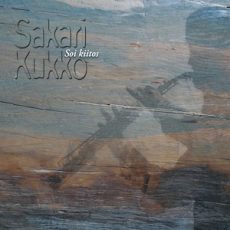
Jyrki Sakari Kukko was born July 8, 1953 in Kajaani, Finlan and started his career in the early 1960s as a singer participating in several singing contests and performing in radio stations, TV programs and other venues. At the age of 7, he began taking piano lessons and soon after started playing guitar and flute, then saxophone. The mid-1960s saw him forming bands, constructing a school band, playing mainly rock and roll, before forming a group of local dance bands.
He embarked his career at sixteen playing with the Kajaani Big Band, Kisu & Uniset, Markku Suominen’s Monopol, Tapiola Big Band, Oulunkylä Big Band, Maarit & Afrikan Tähti, Kalevala, SIMO Big Band, Jukka Tolonen’s band, Heikki Sarmanto’s band, Sensation Band of Addis Ababa, Mahmoud Ahmed’s Ibex Band, Etoile de Dakar, and Espoo Big Band through the Seventies. He founded the group Piirpauke in 1974.
He has performed with Youssou Ndour, John McLaughlin, Pat Metheny, Bob Mose, Lester Bowie, Charlie Mariano, Thad Jones, Paquito d’Rivera, Ted Curson, Walter Bishop Jr., Herbie Hanckock’s HeadHunters, Richie Cole, Juan Carlos Romero, and numerous Finnish musicians.
Working as a studio-musician Kukko performed as a freelancer with the Helsinki Philharmonic Orchestra, Finnish Radio Symphony Orchestra, and the Finnish National Opera. He has composed music for his own bands, EBB, Koiton Laulu and several films and theaters.
Pianist, flutist, guitarist, saxophonist, vocalist and composer Sakari Kukko continues to perform with over forty countries around the globe.
More Posts: bandleader,composer,flute,guitar,history,instrumental,jazz,music,piano,saxophone,vocal

The Jazz Voyager
From NOLA to the Big Apple, the Jazz Voyager is cruising at 30,000 for another jaunt into Manhattan’s theater district. Gotta love New York’s public transportation as taking the bus from LaGuardia into Harlem, getting off at 125th and Lenox and catching the #3 Express downtown to 42nd Street is a breeze. Walking a couple of blocks north up Broadway to Birdland will put me there in time for the 7:00pm show.
Tonight I have the opportunity to hear a pianist who I’ve only seen when he first hit the jazz scene and then about a decade ago. He’s a Steinway Artist and his name is Christian Sands and he has matured with time. I find it so gratifying to hear musicians who age in their playing but maintain the fire in their expressiveness.
The Band:
Christian Sands – bandleader, pianist
Ryan Sands – Drummer
Gilad Hekelsman – Guitar
Scott Colley – Bass
Cover: $40.61 ~ $50.91 | Including Fees
Birdland is located at 315 W 44th Street, #5402, New York City, NY 10036. For more information contact the venue at birdlandjazz.com.
More Posts: adventure,club,genius,jazz,museum,music,piano,preserving,travel
KENNY BANKS JR.
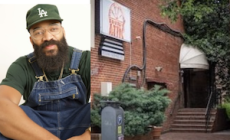
Pianist Kenny Banks Jr., a resident of Atlanta, GA has earned a reputation as one of the most dynamic jazz artists in the Southeast. Kenny was a finalist in the 2019 American Pianists Awards jazz competition and performed to great acclaim in solo and trio formats.
He has traveled abroad performing and recording around the world with a wide variety of artists in the jazz, gospel, Afro-Cuban and hip-hop scenes. These artists include Kurt Elling, Keyon Harrold, Jazzmeia Horn, Theo Croker, Jeff Tain Watts, Stefan Harris, Russell Malone, Gerald Albright, Charlie Hunter, Jennifer Holliday, David Sanchez, Kim Burrell, Dottie Peoples, Phiife from “A Tribe Called Quest”, Eight Ball & MJG and Queen Latifah.
Banks is noted for his blended technique in mixing jazz and gospel styles. Downbeat Magazine describes his playing as “gospel and blues-infused” and calls his arrangements “thrilling, modern and surprising.” Jazziz Magazine notes his “deeply embodied gospel and soul roots” with “supple phrasing and effortless command of late 20th century harmony.”
Kenny Banks Jr expresses himself compositionally from a broad range of music. KJO’s Live at Lucille’s states, “His music is at once sophisticated, spirited, spontaneous and brilliantly executed.” “Embrace the sound” says Kenny. “This way of thinking aids me in my approach, helping me to view situations from a state of optimism, on and off the bandstand.”
Cover: $32.26
More Posts: adventure,club,genius,instrumental,jazz,music,piano,preserving,travel

HIDDEN NOMINATION
Hidden Nomination is a genre-defying ensemble that emerged from the lustrous Blue Llama Jazz Club after a particularly electrifying set. The band has quickly become a force to be reckoned with in the Midwest music scene and brings together four exceptionally talented musicians with a shared passion for exploration and innovation.
Their sound is a thrilling fusion of jazz, funk, R&B, gospel, and neo-soul, creating a sonic tapestry that is as soulful as it is dynamic. With high-energy performances and delicate, melodic interplay, Hidden Nomination captivates audiences, taking them on a journey that transcends traditional genre boundaries. The band’s philosophy is rooted in the pursuit of the unseen and the unheard—always searching for what lies hidden beneath the surface of music and emotion.
Recently completing a celebrated residency at Cliff Bell’s, one of Detroit’s most iconic jazz clubs, Hidden Nomination has solidified its reputation as a must-see live act. Their ability to blend technical mastery with raw, heartfelt expression has earned them a dedicated following and critical acclaim. As they prepare to record their debut album in summer of 2025, the band is poised to share their unique sound with an even wider audience.
The Band:
Houston Patton ~ saxophone
Andre Crawford ~ piano
Dylan Sherman ~ bass
Brian Allen ~ drums
Cover: $25.00
More Posts: adventure,bandleader,bass,club,drums,genius,instrumental,jazz,piano,preserving,saxophone,travel
CYRUS CHESTNUT
Chestnut’s playing, deeply rooted in gospel and blues, infuses each performance with profound emotional depth. As The New York Times notes, his “crisp articulation and blues-inflected harmony evoke another era… multifaceted and dynamic,” seamlessly blending tradition with fresh innovation to captivate audiences. Chestnut’s artistry has earned him widespread acclaim as one of the most distinctive and compelling jazz pianists of his generation. As The New York Daily News aptly describes him, he is “the rightful heir to Bud Powell, Art Tatum, and Erroll Garner.”
At age nine Chestnut was enrolled in the prep program at the Peabody Institute in Baltimore. He later headed to Berklee College of Music in Boston, where he received the Eubie Blake fellowship, the Oscar Peterson scholarship, and the Quincy Jones scholarship.
After graduating from Berklee in 1985, Chestnut went on to work with vocalist Jon Hendricks and trumpeter Terrence Blanchard before joining jazz legend Wynton Marsalis. He toured for two years as the pianist for the Betty Carter Trio and has often said that playing with Carter was a form of graduate school.
By 1994, Chestnut had graduated from being an accompanist and band member by forming and leading his own trio, then releasing his major label debut album Revelations. The album, voted Best Jazz Album by the Village Voice, soared on the charts.
Chestnut has worked with such leading artists as saxophonists Donald Harrison and Joe Lovano; trumpeters Roy Hargrove and Freddie Hubbard; pianist Chick Corea, the Chicago Symphony Orchestra, the Boston Pops, and opera singer Kathleen Battle, as well as vocalists Vanessa Williams, Anita Baker, Bette Midler and Isaac Hayes.
Today he tours continually, playing at jazz festivals, clubs and concert halls around the world. He is a first call for the piano chair in such groups as the Lincoln Center Jazz Orchestra and the Dizzy Gillespie All-Star Big Band. The NY Daily News has hailed Cyrus Chestnut as the rightful heir to Bud Powell, Art Tatum and Erroll Garner.
Cover: $35.00 ~ $50.00 +$7.00 fee | $15 food/beverage minimum per person not included in ticket price
More Posts: adventure,bandleader,club,instrumental,jazz,music,piano,preserving,travel