

Daily Dose Of Jazz…
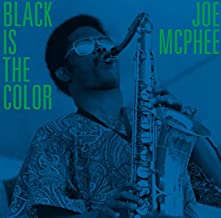
Joe McPhee was born November 3, 1939 in Miami, Florida and grew up in Poughkeepsie, New York. He began playing trumpet when he was eight, before learning other instruments. He played in various high school and then military bands before starting his recording career. His first recording came in 1967 when he appeared on the Clifford Thornton album titled Freedom and Unity.
McPhee taught himself saxophone at the age of 32 after experiencing the music of John Coltrane, Albert Ayler, and Ornette Coleman. During the late 1960s and early 1970s, he lectured on jazz music at Vassar College.
In 1975, Werner Uehlinger started the Swiss label Hathut Records with the specific intent of showcasing McPhee’s music. In the 1980s, he met Pauline Oliveros, began studying her musical theories, and worked with her Deep Listening Band.
Not having been signed with any major label in his native United States, Joe was better known throughout Europe until the 1990s. His 1996 album As Serious As Your Life, which takes its title from the jazz book by Val Wilmer, has been said to arguably be the finest of his solo recordings, according to the AllMusic review.
He has recorded or performed with Ken Vandermark, Peter Brötzmann, Evan Parker, Mats Gustafsson, Jeb Bishop, The Thing, Clifton Hyde, Jérôme Bourdellon, Raymond Boni, and Joe Giardullo. Since 1998, he, Dominic Duval, and Jay Rosen have performed and recorded as Trio X. In the 1990s Dominique Eade and McPhee had a jazz ensemble called Naima.
He has written reviews and commentary for Cadence magazine and was awarded the Resounding Vision Award by Nameless Sound. Multi-instrumentalist Joe McPhee, who plays tenor, alto, and soprano saxophone, trumpet, flugelhorn and valve trombone, is most notable for his free jazz work done from the late 1960s to the present day.

More Posts: bandleader,flugelhorn,history,instrumental,jazz,music,saxophone,trumpet,valve trombone
Daily Dose Of Jazz…
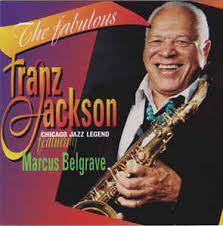
Born in Rock Island, Illinois on November 1, 1912 Franz Jackson got his first lessons on saxophone from Jerome Don Pasquall and later studied at the Chicago Musical College.
Early in his career, Jackson played with Albert Ammons’s band and for much of the 1930s he was based in Chicago, Illinois. He toured with Fletcher Henderson in 1938, then played with Roy Eldridge’s band in New York City. In 1940 he toured with Fats Waller and then went to work with Earl Hines.
Following small band work back in New York City, Franz joined Cootie Williams’s big band, played in Boston, Massachusetts with Frankie Newton, toured with Eldridge, and worked with Wilbur De Paris at Jimmy Ryan’s in the city.
Jackson formed his own band in Chicago in 1957, the Original Jass All Stars and with this group he made overseas tours, including playing in Vietnam. Moving to Dowagiac, Michigan in 1975, he formed another band, the Jazz Entertainers, in 1980.
Saxophonist and clarinetist Franz Jackson, who played in the Chicago jazz school, passed away on May 6, 2008 in Niles, Michigan. The Franz Jackson Collection at the Chicago Jazz Archive contains his papers and oral history material.
More Posts: bandleader,clarinet,history,instrumental,jazz,music,saxophone
Requisites
View Post
Impressions ~ Buck Hill Quartet | By Eddie Carter
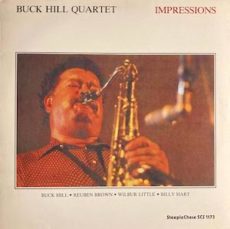
The Buck Hill Quartet steps into the spotlight for this morning’s discussion with the second of two live albums from The North Sea Jazz Festival. Impressions (SteepleChase Records SCS 1173) is a 1983 release that was recorded on July 11 & 12 during the quartet’s 1981 performance. The remainder of their concert appears on Easy To Love (1982). The tenor saxophonist is working again with Reuben Brown on piano, Wilbur Little on bass, and Billy Hart on drums. Buck began his professional career in 1943 while working as a mailman in Washington D.C. He’s collaborated with Charlie Byrd, Miles Davis, Dizzy Gillespie, Shirley Horn, Alan Houser, Max Roach, Shirley Scott, and Sonny Stitt, and was also proficient on the clarinet and soprano sax. My copy used in this report is the 1983 Netherlands Stereo album sharing the Danish catalog number.
Side One begins with the jazz standard, Alone Together by Arthur Schwartz, and Howard Dietz. It was written in 1932 and began life as a show tune in the Broadway musical, Flying Colors. The quartet takes off with a brisk workout on the melody. Buck swings swiftly into the opening statement. Reuben speaks his peace next vigorously. Billy has a brief conversation with both soloists, then generates some heat on the closer into the reprise and exit. Hill makes a few announcements anchored by just the piano, then the group travels to Penn Station, a medium-paced blues by Reuben Brown. The ensemble comes into the station leisurely on the melody. Brown starts the soloing with a comfortable groove. Hill emanates a funky, down-home feeling on the second statement. Little sparkles on the third reading with a thoroughly relaxed performance into piano and tenor sharing an exchange before the closing chorus.
Side Two gets underway with Yesterdays by Jerome Kern and Otto Harbach. The trio makes a brief introduction, then Buck begins the opening chorus at midtempo. He turns the temperature up with a scintillating reading of concentrated heat. Reuben starts the next statement at a slow pace, then proceeds to an aggressive workout. Wilbur wraps up the solos with a concise comment ahead of the ensemble’s climax. John Coltrane’s Impressions ends the set on an uptempo note with the foursome swinging from the opening notes of the high-spirited melody. Buck and Reuben are the featured soloists and Brown energetically prances through the first solo with authority. Hill delivers the final word with an intense interpretation of astonishing voracity and electrically charged passion leading to the quartet’s exit and crowd’s ovation.
Impressions was produced by Nils Winther and Ronald Prent was the recording engineer on this album and its companion, Easy To Love. The sound is stunning throughout the album and the record is quiet until the music starts. Buck Hill was a tremendous talent on the tenor sax that could swing hard in an uptempo setting but could also show his tender side with a gorgeous tone on a ballad or standard. A tribute mural of him playing his sax in his mailman uniform by artist Joe Pagac resides at 1925 14th Street, NW in Washington, D.C. He passed away at age ninety on March 20, 2017. If you’re just discovering the music of Buck Hill and enjoy the tenor sax, I invite you to check out Impressions by The Buck Hill Quartet. It’s an album that’s sure to make you smile and if you’re already a fan should make a welcome addition to your jazz library!
>~ Easy To Love (SteepleChase Records SCS-1160) – Source: Discogs.com
~ Alone Together, Yesterdays – Source: JazzStandards.com
~ Impressions – Source: Wikipedia.org
© 2021 by Edward Thomas Carter

More Posts: choice,classic,collectible,collector,history,instrumental,jazz,music,saxophone
Daily Dose Of Jazz…
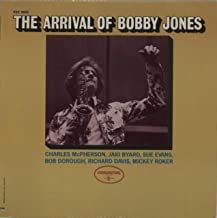
Bobby Jones, born October 30, 1928 in Louisville, Kentucky and played drums as a child, started on clarinet at age 8, and his father encouraged him to explore jazz. He studied with Simeon Bellison, Joe Allard, Charlie Parker, and George Russell.
He played with Ray McKinley from 1949 into the mid-1950s, and then with Hal McIntyre before rejoining McKinley later in the decade. During a stint in the Army he met Nat and Cannonball Adderley as well as Junior Mance. After his discharge he played country music and rock & roll as a studio musician, and did time with Boots Randolph. He worked with Glenn Miller in 1950 before returning to McKinley from 1959 to 1963.
He spent a brief time with Woody Herman and Jack Teagarden in 1963, and after the latter’s death he retired to Louisville and started a local jazz council there in addition to teaching at Kentucky State College. In 1969 he moved to New York City and played with Charles Mingus from 1970 to 1972, touring Europe and Japan with him. He also recorded sessions under his own name in 1972 and 1974.
Late in his life he moved to Germany, where he ceased performing due to emphysema. Saxophonist Bobby Jones passed away on March 6, 1980 in Munich, Germany.

More Posts: bandleader,history,instrumental,jazz,music,saxophone
Daily Dose Of Jazz…
Rudy Powell was born in New York City on October 28, 1907 and learned piano and violin while young before taking on the clarinet and saxophone. In the late 1920s, he played with June Clark, Gene Rodgers’s Revellers, and Cliff Jackson’s Krazy Kats.
Rudy worked extensively as a sideman throughout his career. Among his credits in the 1930s are Elmer Snowden, Dave Nelson, Sam Wooding, Kaiser Marshall, Rex Stewart, Fats Waller, Edgar Hayes, and Claude Hopkins. The Forties saw him playing with Teddy Wilson, Andy Kirk, Fletcher Henderson, Eddie South, Don Redman, Chris Columbus, Cab Calloway, Lucky Millinder and Hopkins again.
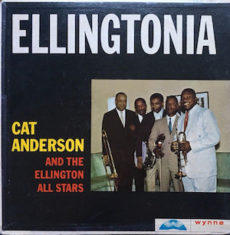
By the 1950s and through the Sixties Powell was with Jimmy Rushing, Buddy Tate, Benton Heath, Ray Charles, and Buddy Johnson. Never recording as a leader, he did record with Cat Anderson, Al Casey, Duke Ellington, Cliff Jackson, Jo Jones, Lucky Millinder, Jimmy Rushing, and Saints & Sinners. He continued playing intermittently into the 1970s and was a part of the photo A Great Day In Harlem.
Clarinetist and saxophonist Rudy Powell, who later changed his name to Musheed Karweem when he joined the Ahmadiyya Muslim Community, passed away at age 69 on October 30, 1976.
More Posts: clarinet,history,instrumental,jazz,music,saxophone