

Daily Dose Of Jazz…
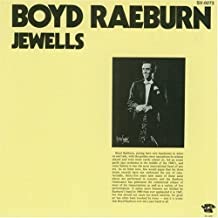
Boyd Albert Raeburn was born in Faith, South Dakota on October 27, 1913 and attended the University of Chicago, where he led a campus band. Gaining his earliest experience as a commercial bandleader at 1933~1934 Chicago’s World Fair, for the rest of the decade, he worked in and often led dance bands.
In the Forties the group passed through swing before becoming identified with the bop school. He went on to start a big band, which was active from 1944 to 1947, performing arrangements comprable to those used by Woody Herman and the progressive jazz of Stan Kenton during the same period. The compositions arranged by George Handy were the most contemporary, and after Handy’s departure Johnny Richards joined in 1947 and for the next year he wrote 50 compositions.
He composed Rip Van Winkle for his second wife, singer Ginny Powell, who sang with her husband’s group, as well as with Harry James and Gene Krupa. Boyd left music in the mid-1950s and they moved to Nassau, Bahamas where his wife transitioned.
Settling in New Orleans, Louisiana for a time, he ran a furniture store. Bass saxophonist and bandleader Boyd Raeburn passed away of a heart attack at age 52 on August 2, 1966 in Lafayette, Indiana.
More Posts: bandleader,history,instrumental,jazz,music,saxophone

The Quarantined Jazz Voyager
For Musicians Only is an album by Dizzy Gillespie, Stan Getz and Sonny Stitt incorporating bebop influences. Produced by Norman Granz, it was recorded on October 16, 1956 at Radio Recorders in Hollywood, California. It wasn’t released until 1958 on the Verve label. It has been described as the real thing, no pretense.
The story behind this session from Stan Levy’s point of view is that everything was done in one take, no 2nd takes, no overdubbing. It was virtually a live, real bebop session, nothing worked out, just play by the seat of your pants or get off the bandstand. Like it or not, that was the way it was with Bird and those cats, the real thing, no pretense.
The album is known for the front line’s winding, intricate solos. This has led to praise for the back line, particularly bassist Ray Brown, for keeping some semblance of the original tune going behind the solos.
Track List | 42:59- Bebop (Gillespie) ~ 12:48
- Dark Eyes (Traditional) ~ 12:10
- Wee (Allen’s Alley) (Denzil Best, Gillespie) – 8:28
- Lover Come Back to Me (Sigmund Romberg, Oscar Hammerstein II) ~ 9:33
- Dizzy Gillespie ~ trumpet
- Sonny Stitt ~ alto saxophone
- Stan Getz ~ tenor saxophone
- John Lewis ~ piano
- Herb Ellis ~ guitar
- Ray Brown ~ bass
- Stan Levey ~ drums

More Posts: adventure,album,club,genius,jazz,museum,music,preserving,restaurant,saxophone,travel,trumpet
Daily Dose Of Jazz…
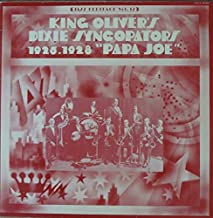
Paul “Stump” Evans was born in Lawrence, Kansas on October 18, 1904. He experimented with several instruments: alto horn, trombone, and alto saxophone. In the 1920s, he played baritone saxophone in Chicago, Illinois as a member of the Creole Jazz Band led by King Oliver and the Dixie Syncopators.
He played C melody saxophone when he backed singer Priscilla Stewart. With Oliver he played soprano saxophone, then alto saxophone with the Red Hot Peppers led by Jelly Roll Morton. Stump also worked as a sideman for Erskine Tate and Jimmy Wade.
Saxophonist Stump Evans passed away from tuberculosis on August 29, 1928. In Douglas County, Kansas at the age of 23.
Share a dose of a Lawrence saxophonist to inspire inquisitive minds to learn about musicians whose legacy lends their genius to the jazz catalog…
More Posts: history,instrumental,jazz,music,saxophone
Daily Dose Of Jazz…
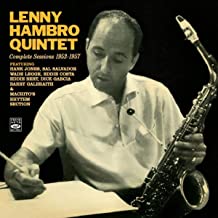
Lenny Hambro was born on October 16, 1923 in the Bronx, New York, the younger of two children. As a teenager, his brother-in-law introduced the 15 year old to woodwinds, giving him a soprano saxophone and introductory music lessons and taking every music class in which he could enroll. While in high school he took private lessons from Bill Sheiner, one of the leading music teachers and session musicians in New York City. During his later high-school years, Hambro played alto sax, tenor sax, clarinet, and flute in an assortment of teen dance bands, including a summer in the Catskills.
During the Second World War, at just 18, Hambro auditioned and got the empty seat in Gene Krupa’s band in 1942. However, he left the band in December of that year for the Army, there joining Ivan Mogul, Shorty Rogers and approximately 40 other musicians from the Bronx who had agreed to man the 379th Army Service Forces Band in Newport News, Virginia, where he stayed for three years. Post war he worked and recorded with Billy Butterfield and Bobby Byrne, before rejoining Gene Krupa as lead alto sax and featured jazz soloist through 1950.
He would go on to play and /or record with the Latin jazz ensembles of Vincent Lopez, Pupi Campo, Machito and his Afro-Cuban Orchestra, Ray McKinley Band. the Chico O’Farrill Orchestra, tour with The Gene Krupa Orchestra, Charlie Ventura’s Orchestra and Joe Loco’s band. He did studio work, worked as a music copyist, and taught private lessons.
In 1954 he formed the Lenny Hambro Quintet, and in 1955 he again played in and managed the Ray McKinley Band, and toured the United States routinely during this period as well as England, Poland, Iron Curtain Europe, and North Africa in 1957 and 1958. He was a booking agent, opened up an advertising company, then returned to music. He recorded his final tracks at the Clinton Recording Studio at 653 10th Avenue in New York City in February, 1995 for Chico O’Farrill’s album, Pure Emotion for Milestone Records.
Lenny Hambro, who played alto, baritone and tenor saxophone, flute, and clarinet, passed away of a blood clot following open heart surgery on September 26, 1995, at Shore Memorial Hospital, Somers Point, New Jersey, a month shy of his 72nd birthday.
More Posts: bandleader,clarinet,flute,history,instrumental,jazz,music,saxophone
Daily Dose Of Jazz…
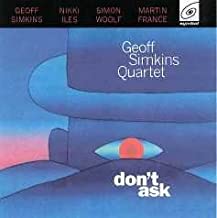
Geoff Simkins was born on October 13, 1948 in London Borough of Ealing, England. He started playing jazz in his early teens and his first instrument was drums, but he quickly changed to the alto saxophone.
In 1977 Geoff turned professional and his early work included time with the Harry Strutters Hot Rhythm Orchestra and the Temperance Seven. His principal stylistic influences have been the altoist Lee Konitz and tenor saxman Warne Marsh.
Simkins has played at concerts, clubs and festivals in all parts of the UK, in Europe and beyond. Often working with visiting American musicians his list has included Art Farmer, Bobby Shew, Al Cohn, Tal Farlow, Slide Hampton, Warren Vache, Al Grey, Howard Alden, Ruby Braff, Bill Coleman and Conte Candoli, among others. He has recorded with UK tenor saxophonist Danny Moss and US trumpeters Billy Butterfield and Yank Lawson. Since the 1980s he has worked regularly with UK guitarist Dave Cliff.
As an educator Geoff is a respected teacher, and runs improvisation courses in Brighton, UK. He has been a regular tutor at the famous Glamorgan Jazz Summer School in Wales before moving it to Trinity College of Music in London. Since 2012 he has taught at the Royal Welsh College of Music and Drama in Cardiff.
Alto saxophonist Geoff Simkins, who has recorded as a leader also eight albums as a sideman with Nikki Iies, Dave Cliff, Allan Ganley and Howard Alden, continues to perform, record and teach.
More Posts: bandleader,history,instrumental,jazz,music,saxophone