

Daily Dose Of Jazz…
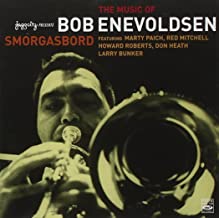
Robert Martin Enevoldsen was born on September 11, 1920 in Billings, Montana. He recorded sessions with Art Pepper and Shorty Rogers, and later extensively played with Shelly Manne.
Enevoldsen did most of the arranging for Steve Allen’s Westinghouse show in the early-1960s. During the 1970s, he performed with Gerry Mulligan. In the mid-1970s Bob taught arranging and directed the jazz band at Los Angeles Pierce College in Woodland Hills.
Tenor saxophonist and valve trombonist Bob Enevoldsen, who mainly played in the West Coast genre and was known for his work with Marty Paich, passed away on November 19, 2005 in Woodland Hills, Los Angeles, California.

More Posts: instrumental,jazz,music,saxophone,trombone
The Quarantined Jazz Voyager
With rising cases of the Delta variant continuing to fill hospital beds to capacity with the unvaccinated causing other procedures to be postponed and medical staff walking out, I remain even more vigilant in protecting myself from those whose sole purpose is to put themselves and others in harm’s way. Remaining masked, socially distanced and secluded.
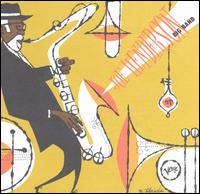
This week I’m pulling out the classic 1997 album Big Band by saxophonist Joe Henderson, the fourth of the five albums he recorded for Verve Records during the end of his career. The album was recorded at the Power Station ~ Berklee, New York City over a four year period between March 16, 1992 ~ June 26, 1996 and was released in 1997.
The sessions were produced, written and arranged by Joe Henderson, along with executive producer Richard Seidel, and producers Bob Belden (2,3,4,6,7,9), and Don Sickler (1,5,8). The production coordinator was Patricia Lie. The recording was mastered by Allan Tucker, mixed by Jim Anderson, photography by Jim Katz, and the iIllustration was created by Edwin Fotheringham.
Track List | 60:05 All tracks are composed by Joe Henderson, except where noted.- Without a Song (Vincent Youmans, Billy Rose, Edward Eliscu) ~ 5:24
- Isotope ~ 5:20
- Inner Urge ~ 9:01
- Black Narcissus ~ 6:53
- A Shade Of Jade ~ 8:22
- Step Lightly ~ 7:19
- Serenity ~ 5:52
- Chelsea Bridge (Billy Strayhorn) ~ 4:30
- Recordame (Recuerdame) ~ 7:25
- Joe Henderson ~ tenor saxophone, arranger (tracks 1, 2, 5, 8)
- Slide Hampton ~ conductor, arranger (tracks 3, 7))
- Dick Oatts ~ soprano saxophone, alto saxophone
- Pete Yellin, Steve Wilson, Bobby Porcelli, John O’Gallagher ~ alto saxophone
- Craig Handy, Rich Perry, Tim Ries, Charles Pillow ~ tenor saxophone
- Joe Temperley, Gary Smulyan ~ baritone saxophone
- Freddie Hubbard, Raymond Vega, Idrees Sulieman, Jimmy Owens, Jon Faddis, Lew Soloff, Marcus Belgrave, Nicholas Payton, Tony Kadleck, Michael Mossman, Virgil Jones, Earl Gardner, Byron Stripling ~ trumpet
- Conrad Herwig, Jimmy Knepper, Robin Eubanks, Keith O’Quinn, Larry Farrell, Kiane Zawadi ~ trombone
- David Taylor, Douglas Purviance ~ bass trombone
- Chick Corea, Helio Alves, Ronnie Mathews ~ piano
- Christian McBride ~ bass
- Joe Chambers, Al Foster, Lewis Nash, Paulinho Braga ~ drums
- Michael Mossman ~ arranger (track 9)
- Bob Belden ~ arranger (tracks: 4, 6)

More Posts: adventure,album,club,genius,jazz,museum,music,preserving,restaurant,saxophone,travel

Daily Dose Of Jazz…
Virgil Gonsalves was born in Monterey, California on September 5, 1931. In 1950 he took the baritone saxophone chair in the Alvino Rey Orchestra and then with Tex Beneke in 1952. In 1954 he formed an ensemble with Bob Enevoldsen, the tenor saxophonist Buddy Wise, Lou Levy, Harry Babasin, and Larry Bunker. They recorded the album Virgil Gonsalves Sextet that same year on Nocturne Records 8. Later members were Leo Wright, Junior Mance, Ron Crotty, and Eddie Khan.
Working mainly in the San Francisco, California area as a freelance musician, he ventured into rock during the Sixties and Seventies, and became a member of the Pacific Gas & Electric rock band from 1971 to 1972. Baritone saxophonist Virgil Gonsalves passed away in Salinas, California on October 20, 2008.
More Posts: bandleader,history,instrumental,music,saxophone
Three Wishes
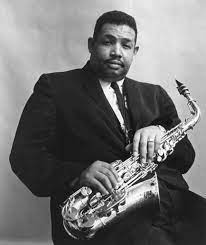
Julian “Cannonball” Adderley told the Baroness that his three wishes were:
- “I wish that racial discrimination would be eliminated from the face of the earth, in all directions.”
- “I wish for some sort of subsidy for the jazz art, so that those truly dedicated artists may create music, let’s say unscathed or distorted because of social and economic necessity. Only under these circumstances may there exist jazz expression free from bitterness, jealousy, grief, and the put-down syndrome.”
- “I must honestly confess that I would wish for certain various and sundry circumstances indigenous to healthy and happy home life for my wife and myself.”

More Posts: baroness,history,instrumental,jazz,music,pannonica,saxophone,three,wishes
Requisites
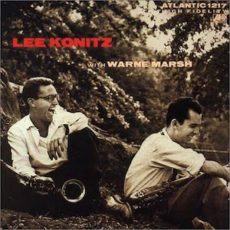
Lee Konitz With Warne Marsh ~ Lee Konitz & Warne Marsh | By Eddie Carter
This morning’s choice from the library is an album bringing together two of the best musicians from the Cool Jazz school, Lee Konitz on alto sax and Warne Marsh on tenor sax. Lee Konitz With Warne Marsh (Atlantic 1217) was recorded and released in 1955. Ronnie Ball (track: B3), Sal Mosca (tracks: A2, A4 to B2, B4) on piano, Billy Bauer on guitar, Oscar Pettiford on bass, and Kenny Clarke on drums round out the stellar supporting cast. My copy used for this report is the 2018 Speakers Corner Mono audiophile reissue sharing the original catalog number.
Side One begins with Topsy by Edgar Battle and Eddie Durham. Oscar starts an elegant bass introduction segueing into a collective subtle theme minus both pianists. Lee opens with a relaxing informality on a lyrical, soft-spoken statement. Oscar delivers the next reading with exquisite skill and Warne excels on the final solo before both saxes take the closing chorus into a soft climax. The sextet turns the beat upward on There Will Never Be Another You by Harry Warren and Mack Gordon. It opens with a quick collective theme led by Konitz who also cooks briskly on the opening statement. Marsh follows with a passionately assertive solo, then Pettiford delivers something special on the next vigorous reading. Both horns return to share the final solo ahead of the close.
I Can’t Get Started by Vernon Duke and Ira Gershwin tells the story of a man who’s achieved great success in everything, except the affection and love of the woman he desires. Both pianists lay out on this tune also. Lee takes the lead this time with a dreamy melody and reading that’s delicately crafted. Warne approaches the next solo with tender sincerity. Oscar walks a short distance on the closer leading to a gentle exit. Donna Lee by Miles Davis is named for the daughter of bassist Curly Russell and begins with an expedient theme that’s breathtaking. Konitz opens with a very impressive reading, then Mosca takes over for an energetic interpretation. Marsh charges into the next searing statement and Clarke shares a fiery conversation with both saxes into the reprise and abrupt ending.
Side Two opens with Two Not One by Lennie Tristano that gets underway a vibrant opening chorus. Lee takes off first like a jolt of electricity traveling through the body. Warne adds some additional power on an inspired solo as steady as the rock of Gibraltar. Sal responds with an exhilarating reading shadowed closely by both saxes in the background. Kenny shares a brief statement with the principal soloists into the climax. Don’t Squawk is by Oscar Pettiford, a blues he makes his presence felt on the introduction and the melody with the rhythm section. Konitz takes the first solo for a slow stroll, then Mosca swings softly and smoothly into the next interpretation. Marsh also makes his point in a relaxed manner, followed by Pettiford who gives a slow, easy groove gently sailing over the rhythm section.
Ronnie Ball takes over the piano chair on his uptempo original, Ronnie’s Line. Lee begins with an upbeat, energetic theme, then adds exuberant vitality to the opening solo. Ronnie takes the next spot for a swiftly paced statement. Marsh swings into the next performance vigorously, and the front line energizes the closing chorus with a spirited ride ending with an attractive exit. The album ends with a little Background Music by Warne Marsh opening with a collective theme. Lee applies some serious blowing to the opening statement. Sal gives an exhilarating reading next, followed by Warne who executes the third solo with high-voltage precision. Oscar and Kenny exchange their ideas on the finale into a soft summation. Lee Konitz With Warne Marsh was produced by Nesuhi Ertegun and engineered by Tom Dowd.
Speakers Corner reissues are remastered using pure analog components only, from the master tapes through to the cutting head. The soundstage on this album is immense and absolutely stunning, drawing you in completely the moment your stylus touches the lead groove. You don’t just hear the musicians and their instruments; you almost feel their presence in your listening room. In my opinion, the album’s not only remarkable for its musicianship, but an underrated jewel of fiery and relaxed tempos by both saxophonists. If you’re a fan of Cool Jazz and in the mood for some great sax, I invite you to check out, Lee Konitz With Warne Marsh for your library. It’s a terrific album of pure bliss that’s perfect in every way!
~ Tom Dowd – Source: Discogs.com ~ Donna Lee, I Can’t Get Started, There Will Never Be Another You, Topsy – Source: JazzStandards.com © 2021 by Edward Thomas Carter

More Posts: choice,classic,collectible,collector,history,instrumental,jazz,music,saxophone