

Daily Dose Of Jazz…
George F. Clarke was born on August 28, 1911 in Memphis, Tennessee. He attended Manassas High School, where he was Jimmie Lunceford’s pupil before joining the orchestra and playing with Lunceford until 1933.
Relocating to Buffalo, New York, there he played with Guy Jackson, Lil Armstrong and Stuff Smith in 1935. He and Smith worked together again on tour in 1939-1940 and in the recording studio. Returning to Buffalo, Clarke led an ensemble at a local club from 1942 to 1954.
Following this he moved to New York City and worked with Wild Bill Davis and Jonah Jones, and toured internationally in Europe in 1959 with Cootie Williams and Africa with Cozy Cole in 1962. He was occasionally active through the ‘60s in New York City. Tenor saxophonist George Clarke passed away in September 1985 in the Bronx, New York.
More Posts: history,instrumental,jazz,music,saxophone
Requisites
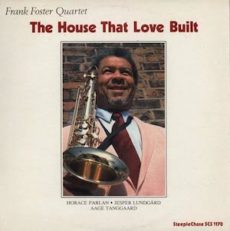
The House That Love Built ~ Frank Foster Quartet | By Eddie Carter
Frank Foster steps into the spotlight this morning with an underrated, exceptional album titled The House That Love Built (SteepleChase Records SCS-1170). Frank was adept as an arranger, bandleader, composer, and multi-instrumentalist. Horace Parlan on piano, Jesper Lundġard on bass, and Aage Tanggaard on drums complete the quartet. Foster wrote all five selections and my copy used in this report is the 1982 Danish Stereo album. Frank was born in Cincinnati, Ohio and educated at Central State College, and Wilberforce University. He led his own big band in the fifties and was a member of The Count Basie Orchestra. Several of his songs became huge hits for the band and are now jazz standards, and his resume reads like a Who’s Who of Jazz.
>Side One takes off with I Remember Sonny Stitt, an uptempo tribute to the saxophonist that gets underway with an enthusiastic melody by the foursome. Frank kicks off the solos with a vibrant statement of pure jubilation. Aage engages in a brisk exchange with Foster fueled by Horace and Jesper’s lively foundation preceding the closing chorus. The House That Love Built is a tender ballad with a quaint melody and the tenor sax providing a lead solo of graceful elegance. Horace marks the beginning of a beautiful romance on the next reading with an intimate conversation of beauty and warmth. The saxophonist returns, expressing a few final moments of thoughtfulness over the rhythm section’s delicate support into the soft climax.
A neatly paced toe-tapper titled John R and Garfield closes Side One with the quartet’s opening chorus in a light groove with everyone swinging easy. Horace opens with an exemplary performance on the lead solo. Frank is completely carefree on the second statement and Aage keeps perfect time with an impeccable swing on the closer. A concise drum introduction by Aage grows into a collective melody march to begin Side Two with Lightly Stroking. Jesper gets the first spot this time and executes an invigorating interpretation. Frank has the last word plenty to say on the next with a light, effervescent work that flows along efficiently. Horace gets the last word and ends with an exceptionally relaxing finale before the quartet’s exit.
Dunbar’s Delight cooks from the opening notes of the quartet’s vigorous theme and allows Foster a lengthy energetic first reading. Parlan meets the challenge with some high-voltage on the next solo followed by Tanggaard who supplies sharp brushwork for a propulsive showcase into ends on an upbeat note. The album was produced by Nils Winther and engineered by Niels Erik Lund. The album has a breathtaking soundstage with each instrument possessing remarkable clarity. If you’re in the mood for Hard-Bop on your next vinyl hunt, I invite you to check out The House That Love Built by The Frank Foster Quartet. It’s a very satisfying session from one of jazz’s best musicians and worthy of a spot in any library!
© 2021 by Edward Thomas Carter
More Posts: choice,classic,collectible,collector,history,instrumental,jazz,music,saxophone
Requisites
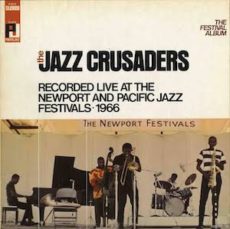
The Festival Album ~ The Jazz Crusaders | By Eddie Carter
This morning’s discussion is a 1966 live album by four friends from Houston, Texas who began performing locally in 1956. After moving to Los Angeles in 1961, they became The Jazz Crusaders, one of the best West Coast jazz groups. I became a fan of their music listening to Chuck Lansing of Cleveland’s jazz station, WCUY 92.3 FM. His opening theme was The Young Rabbits, taken from their second LP, Lookin’ Ahead (1962). The Festival Album (World Pacific Jazz ST-20115) contains two performances from The Pacific Jazz Festival and The Newport Jazz Festival. The quartet consists of Wayne Henderson on trombone, Wilton Felder on tenor sax, Joe Sample on piano, and Stix Hooper on drums. Jimmy Bond (tracks: A1, A2) and Herbie Lewis (tracks: B1, B2) on bass, complete the group. My copy used in this report is the 1967 Stereo reissue (Pacific Jazz ST-20115).
Trance Dance by Kenny Cox opens Side One with a collective soulful theme. Wayne goes first with a noteworthy contribution offering a relaxing informality. Wynton follows with an excellent solo of his own, then Joe gives a spirited closing reading ahead of the ensemble’s reprise and ending. A Summer Madness is the collaborative creation of Sample, Henderson, and Felder. Wayne leads the quintet on the mid-tempo melody, then entices the listener with a captivating first statement. Wilton builds a satisfying groove with inspired lines next. Joe unfolds the next reading with a mellow tone effortlessly, and Jimmy makes a brief remark into the finale and crowd’s ovation.
Henderson’s Young Rabbits is off to the races from the intensely hot opening notes of the melody. Felder takes the first solo at breakneck speed with electrically charged excitement. Sample steps up next for a high-octane statement. Stix provides an energetic interpretation leading to the vigorous ending. Sample’s Freedom Sound was the title tune of their debut album (1961). The trio begins this midtempo swinger with a march-like introduction developing into the quintet’s theme. Felder takes the lead with a cheerfully, light-hearted reading. Henderson swings comfortably into the next statement, and Joe wraps the album with a leisurely-paced performance powered by Herbie and Stix’s excellent groundwork.
This was The Jazz Crusaders’ twelfth LP for World Pacific Jazz and Pacific Jazz Records. *They were extremely popular and well known on the West Coast, but their first trip to The Newport Jazz Festival was significant because it introduced them to a whole new group of fans and brought them to the attention of the New York City jazz clubs. I only wish it would have been released as a two-record set with each festival highlighted on one LP. The Festival Album was produced by Richard Bock, and the sound quality of each session is quite good with an exquisite soundstage. For those fans that only know of The Crusaders’ music from the seventies and eighties, The Festival Album shows the group in excellent form live and gives a snapshot of the Hard-Bop sound they created when Jazz was their middle name! ~ *AllMusic Review by Thom Jarek – Source: AllMusic.com
~ Freedom Sound (Pacific Jazz PJ-27/ST-27), Lookin’ Ahead (Pacific Jazz PJ-43/ST-43) – Source: Discogs.com © 2021 by Edward Thomas Carter
More Posts: bass,choice,classic,collectible,collector,drums,history,instrumental,jazz,music,piano,saxophone,trombone
Requisites
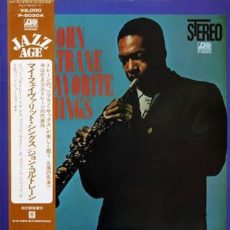
My Favorite Things ~ John Coltrane | By Eddie Carter
I was reading a few nights ago and wanted something to listen to before heading to bed, so I pulled out an old favorite that always transports me back to my childhood and still blows me away every time I hear it. This morning’s subject of discussion is My Favorite Things (Atlantic 1361/SD 1361) by John Coltrane that hit the stores in 1961. It is one of the most important albums in his discography and is a beloved record in my library. The personnel is a stellar one, Coltrane on soprano sax (tracks: A1, A2), tenor sax (tracks: B1, B2), McCoy Tyner on piano, Steve Davis on double bass, and Elvin Jones on drums. My copy used in this report is the 1971 Atlantic Jazz Age Series Japanese Stereo reissue (Atlantic P-6030A) by Warner-Pioneer Corporation.
Side One starts with a show tune from The Sound of Music (1959), My Favorite Things by Richard Rodgers and Oscar Hammerstein II. It became a huge hit for Coltrane and his signature song whenever he performed live. The trio opens with a highly contagious introduction, segueing into a beautifully constructed melody by the saxophonist. McCoy kicks off the first solo with a captivating reading that is a feast for the ears. John comes in slowly, then takes flight into the stratosphere with a joyously unrestrained statement that swings until it returns to earth for the climax. Everytime We Say Goodbye by Cole Porter is a beautiful song that Coltrane adapts as if it was written just for him with an elegantly graceful melody and opening statement. Tyner speaks with delicacy on the closing reading ahead of the foursome’s gentle ending.
Side Two takes off with a spirited version of Summertime by George and Ira Gershwin, and DuBose Heyward. John is ablaze from the start of the melody and ascends to an exhilarating height on the opening chorus. McCoy supplies the high-octane fuel for the second performance. Steve executes the next reading meticulously with great precision, and Elvin delivers a fierce attack on the finale into the quartet’s exit. But Not For Me by George and Ira Gershwin first appeared in the musical, Girl Crazy (1930). The quartet kicks off this energetic cooker with a vigorous theme. John builds the first interpretation with blazing heat to Steve’s bass and Elvin’s impressive timekeeping, then Tyner adds his imaginative ideas on the next statement into Trane’s aggressive improvisation during the closing chorus.
Nesuhi Ertegun supervised My Favorite Things, and the engineers are Phil Lehle and Tom Dowd. Together, both men provide a solid soundstage that is good enough to transport the listener to the studio with the musicians. For me, this album is an intriguing examination of the thin lines between Hard-Bop, Modal, and Free Jazz that still sounds as fresh today as when first released sixty years ago. If you are a fan of tenor sax or are just discovering the music of John Coltrane. I offer for your next vinyl hunt, My Favorite Things. An album of soothing and swinging music that I am sure will become a welcome addition to your library.
~ Everytime We Say Goodbye, Summertime, But Not For Me – Source: JazzStandards.com ~ My Favorite Things – Source: Wikipedia.org © 2021 by Edward Thomas Carter
More Posts: choice,classic,collectible,collector,history,instrumental,jazz,music,saxophone
Daily Dose Of Jazz…
Barbara Gracey Thompson was born on July 27, 1944 in Oxford, England. She studied saxophone and classical composition at the Royal College of Music, but it was the music of Duke Ellington and John Coltrane that made her shift her interests to jazz and saxophone.
Around 1970, Thompson was part of Neil Ardley’s New Jazz Orchestra and appeared on albums by Colosseum. Beginning in 1975, she was involved in the foundation of three bands: United Jazz and Rock Ensemble, a group of bandleaders; Barbara Thompson’s Jubiaba, a nine piece Latin/rock band; and Barbara Thompson’s Paraphernalia, her most recent band with pianist Peter Lemer, vocalist Billy Thompson, bassist Dave Ball, and the late Jon Hiseman on drums.
Awarded the Most Excellent Order of the British Empire (MBE) in 1996 for her services to music, due to Parkinson’s disease diagnosed in 1997, she retired as an active saxophonist in 2001 with a farewell tour. After a period of working as a composer exclusively, she returned to the stage in 2003.
Following hospitalization with atrial fibrillation, she landed a role in an accident and emergency department featured in an episode of the Channel 4 fly-on-the-wall television documentary “24 Hours in A&E” in October 2020.
Thompson has worked closely with Andrew Lloyd Webber on musicals such as Cats and Starlight Express, his Requiem, and Lloyd Webber’s 1978 classical-fusion album Variations. She has written several classical compositions, music for film and television, a musical of her own and songs for the United Jazz and Rock Ensemble, Barbara Thompson’s Paraphernalia and her big band Moving Parts.
She played the incidental music in the ITV police series A Touch of Frost starring David Jason, and flute on Jeff Wayne’s Musical Version of The War of the Worlds. Saxophonist and flutist Barbara Thompson remains active.
More Posts: bandleader,flute,history,instrumental,jazz,music,saxophone