Requisites
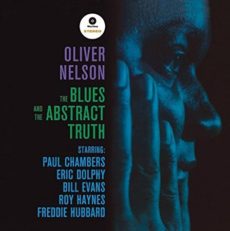
The Blues And The Abstract Blues is an album by jazz composer/arranger and saxophonist Oliver Nelson recorded in 1961 for the Impulse label. Rudy Van Gelder was the recording engineering, Chuck Stewart took the photograph and Pete Turner designed the cover.
The albums length is a mere 36 minute and 33 seconds long but remains Nelson’s most acclaimed album. It is an exploration of the mood and structure of the blues, though only some of the tracks are structured in the conventional 12-bar blues form.
All the songs are composed by Nelson Stolen Moments, Hoe-Down, Cascades, Yearnin’, Butch and Butch and Teenie’s Blues. The musicians on the session were Oliver Nelson on alto and tenor saxophone, Eric Dolphy on flute and alto saxophone, George Barrow on baritone saxophone, Freddie Hubbard on trumpet, pianist Bill Evans, bassist Paul Chambers and drummer Roy Haynes.
The most famous composition from the album, Stolen Moments, is also his most recorded and performed, both instrumental and vocal, by numerous artists such as Phil Woods, J.J. Johnson, Carmen McRae, Betty Carter, Frank Zappa, Mark Murphy, Ahmad Jamal, Booker Ervin, New York Voices, the United Future Organization and the Turtle Island Quartet, to name just a few.

More Posts: arranger,choice,classic,collectible,collector,composer,history,instrumental,jazz,music,saxophone
Daily Dose Of Jazz…
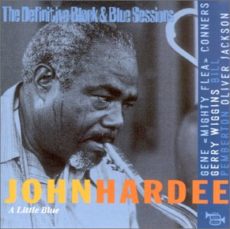
John Hardee was born in Corsicana, Texas on December 20, 1918 and began touring with Don Albert from 1937 to 1938 while still in college. He graduated in 1941 and started directing a local Texas school band, then served in the Army during World War II.
In 1946 he played with Tiny Grimes, then recorded as a bandleader for the Blue Note label between 1946 and 1948, issuing eight releases. Later in the Forties and early 1950s John performed with Clyde Bernhardt, Cousin Joe, Russell Procope, Earl Bostic, Billy Kyle, Helen Humes, Billy Taylor, and Lucky Millinder.
Essentially retiring from music in the Fifties Hardee then became a schoolteacher. In 1959, what may well be known as his last recording dates was with the Dallas R&B group The Nightcaps’ Vandan Records album “Wine,Wine,Wine” where he was credited as “John Hardtimes” but was not actually a member of the group.
Tenor saxophonist John Hardee passed away on May 18, 1984 in Dallas, Texas.

More Posts: saxophone
Requisites
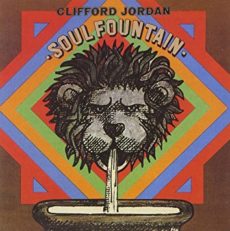
Soul Fountain is an album featuring saxophonist Clifford Jordan which was recorded in 1966 and but not released on the Atlantic Records subsidiary Vortex label until 1970.
All compositions were composed by Clifford Jordan with the exception as noted: T.N.T. composed by Ben Tucker, Grady Tate and Bob Dorough, I’ve Got a Feeling for You, H.N.I.C. composed by Tate and Tucker, I Got You (I Feel Good) by James Brown, Caribbean Cruise, Señor Blues by Horace Silver, Eeh Bah Lickey Doo and Retribution composed by Abbey Lincoln.
The personnel included Clifford Jordan on tenor saxophone, flute, piano, Jimmy Owens – trumpet, flugelhorn, Julian Priester – trombone, John Patton – organ (tracks 6-8), Frank Owens – piano, organ (tracks 1-5), Ben Tucker – bass (tracks 1-5), Bob Cranshaw – bass, electric bass (tracks 1-5), Bobby Durham (tracks 1-5), Billy Higgins (tracks 6-8) – drums, Ray Barretto – congas (tracks 6-8), Joe Wohletz – bongos, percussion and Orestes Vilato – percussion (tracks 1-5)
More Posts: collectible,saxophone

Daily Dose Of Jazz…
Esa Pietilä was born on December 9, 1964 in Finland and started learning the saxophone as a youth, taking his inspiration from Eric Dolphy, Albert Ayler, Ornette Coleman and John Coltrane. He studied saxophone and composition in the Sibelius- Academy jazz department in Helsinki and privately in United States with David Liebman.
Pietilä started his career as a jazz musician and later on expanded his expression to many different musical genres. Performing with his jazz groups Liberty Ship and Esa Pietilä 3, he also has duo collaborations with contemporary classical & new music chamber musicians, and has soloed with chamber orchestras and other larger ensembles. He performs totally free improvisations at his solo concerts.
He has worked with conductors Esa-Pekka Salonen, Santtu-Matias Rouvali, with Avanti! Chamber Orchestra. Esa has premiered the saxophone concerto of Kalevi Aho, Eero Hämeenniemi and Pietilä´s concerto Graffiti Play for chamber orchestra & contemporary jazz trio.
His jazz collaborators have been Paal Nilssen-Love, Harvey Sorgen, Michael Jefry Stevens, Mathias Eick, Jeff Siegel, Karl Berger, Mark Helias, Brian Melvin, Heiri Kaenzig, Christoph Baumann, Baenz Öster, Franziska Baumann, Mike Nock, Ron McClure, Claudio Fasoli, Anders Begcrantz, Odean Pope, Hilmar Jensson, Raoul Björkenheim. Markku Ounaskari, Ulf Krokfors, Iro Haarla.
Saxophonist and composer Esa Pietilä, who in his home country, received the Yrjö Jazz award in 2016 for his original, genre-defying work in the field of avant-garde jazz, continues to work diversely in the field of contemporary music.

More Posts: saxophone
Daily Dose Of Jazz…
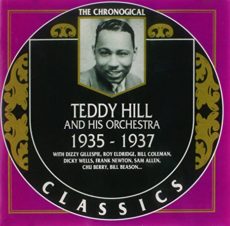
Teddy Hill was was born on December 7, 1909 in Birmingham, Alabama. After moving to New York City, he had early gigs with the Whitman Sisters, George Howe and Luis Russell’s orchestra in the Twenties. He later put together his own band in 1934, which found steady work over the NBC radio network.
Over several years it featured such major young musicians as Dizzy Gillespie, Bill Coleman, Roy Eldridge, Bill Dillard, Dicky Wells, Russell Procope, Howard E. Johnson, Chu Berry, Sam Allen, John Smith, Richard Fullbright, Bill Beason, Shad Collins, Bill Dillard, Frank Newton, Kenneth Hollon, Cecil Scott, Beatrice Douglas and Robert Carroll.
They played at the Savoy Ballroom regularly, and toured England and France in the summer of 1937. In 1935, he recorded a four song session for the American Record Corporation. In 1936, he recorded two sessions for Vocalion, then signed with Bluebird the following year and recorded 18 songs over three sessions.
After leaving the band business, Hill began managing Minton’s Playhouse in 1940, which became a Harlem hub for the bebop style, featuring such major musicians as Thelonious Monk and Kenny Clarke. Leaving Minton’s in 1969, long after its musical significance had waned, he then became the manager of Baron’s Lounge.
Married twice, Teddy had two daughters, Gwendolyn and Beatrice, one by each wife. Beatrice would later emerge as the successful actress and singer known by her stage name, Melba Moore.
Drummer, clarinetist, soprano and tenor saxophonist Teddy Hill, who was also a big band leader and the manager of Minton’s Playhouse in Harlem, passed away on May 19, 1978 in Cleveland, Ohio.