

Daily Dose Of Jazz…
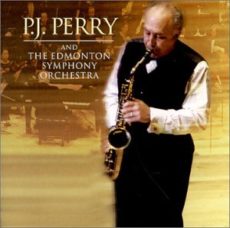
P. J. Perry CM was born Paul John Guloien to saxophonist Paul Guloien, who performed under the name Paul Perry and Margaret Yeo, on December 2, 1941 in Calgary, Alberta, Canada. Early in life they moved around Canada between Medicine Hat, Regina, Sylvan Lake and Vancouver. He learned to play the clarinet and piano before becoming a saxophonist for his father’s band when he was 14.
Spending most of his time in Canada, as a young man, Perry played at Sylvan Lake and in various Vancouver night clubs. Her recorded and released his debut album My Ideal on the Unity label in 1989, following with his sophomore project Worth Waiting For on Jazz Alliance. He has gone on to record for Unity/Page, Cellar Live, Royalty record labels, and for Justin Time Records he has twice recorded with the Edmonton Symphony Orchestra.
He has received several accolades and honors among others, two Juno awards, an honorary doctorate of law from the University of Alberta and is a member of the Order of Canada. Alto saxophonist P. J. Perry continues to perform, record and tour.
More Posts: saxophone
Daily Dose Of Jazz…
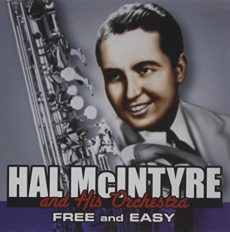
Hal McIntyre was born Harold William McIntyre on November 29, 1914 in Cromwell, Connecticut. McIntyre played extensively as a teenager and led his own octet in 1935. Shortly thereafter, he was offered a temporary slot as an alto saxophonist behind Benny Goodman, but this lasted only ten days. However, Glenn Miller heard of his ability and drafted him as a founding member of the Glenn Miller Orchestra, where he played from 1937 to 1941.
Miller encouraged him to start his own group again, and the McIntyre Orchestra first hit the stage in New Rochelle, New York in 1941. The group included vocalists Gloria Van, Ruth Gaylor, and Al Nobel, bassist Eddie Safranski, and saxophonist Allen Eager. Playing the major ballrooms throughout the United States, they also performed overseas for the troops during World War II.
At the beginning of 1945, Hal and his orchestra had a weekly broadcast on the Blue Network. One feature of the program was that on each program the orchestra would play the theme song of one of America’s college fraternities, saluting some member who had distinguished himself in the war.
Touring extensively with songstress Sunny Gale until the summer of ’51, he maintained the orchestra well into the decade, backing The Mills Brothers for their 1952 smash hit Glow Worm. Hal co-wrote the song Daisy Mae with Billy May which was recorded by Glenn Miller and His Orchestra.
Critically injured in an apartment fire in 1959, saxophonist, clarinetist, and bandleader Hal McIntyre passed away at a hospital a few days later on May 5, 1959 in Los Angeles, California.

Daily Dose Of Jazz…
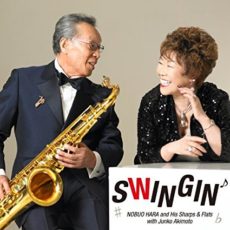
Nobuo Tsukahara, better known as Nobuo Hara was born November 19, 1926 in Toyama, Japan. He played in a military band during World War II and in a Tokyo officer’s club after the war. Realizing classical music was not going to pay a living wage he ventured into jazz and joined the ensemble Sharps and Flats, taking leadership in 1952, a position he held for over six decades. This band helped to make jazz popular in Japan after WWII and they recorded copiously as well as appearing at the Newport Jazz Festival in 1967.
In 2007 at 80 years old he still the led Nobuo Hara and His Sharps and Flats, the 17-piece big band. Sharps and Flats have accompanied Chiemi Eri and included sidemen such as Norio Maeda, Shotaro Moriyasu, and Akitoshi Igarashi. Noted for their sweet rhythms and their swing they have continued to mesmerize audiences even today.
He has performed and/or recorded with Quincy Jones, Count Basie, Miles Davis, Sammy Davis Jr., Perry Como, Henry Mancini, Silvie Vartan, Nat King Cole, Yves Montand, Sarah Vaughan, Diana Ross, and the list goes on and on.
Saxophonist Nobuo Hara passed away from pneumonia on June 21, 2021 in Tokyo, Japan

More Posts: saxophone
Daily Dose Of Jazz…
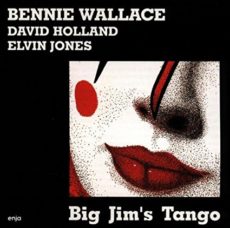
Bennie Wallace was born November 18, 1946 in Chattanooga, Tennessee and began playing in local clubs with the encouragement of East Ridge, Tennessee High School band director and drummer Chet Hedgecoth and professional reed player Billy Usselton, who appeared as a guest at a stage band festival and heard Wallace with the East Ridge High School Swing Band.
After studying clarinet at the University of Tennessee, Wallace settled in New York in 1971 with the encouragement of Monty Alexander, who hired him and recommended him to the American Federation of Musicians local, which virtually guaranteed his entry. He went on to play with Barry Harris, Buddy Rich, Dannie Richmond and he released his debut recording with Flip Phillips and Scott Hamilton in 1977.
Bennie has cited Sonny Rollins and Coleman Hawkins among many major saxophone influences. He recorded on the Blue Note label in 1985 that had given him much of the key music of his formative years. The eclectic cast on the album Twilight Time reflects the mix of musical styles he encountered in the local club scene of Chattanooga.
He toured and recorded with trombonist Ray Anderson, exploring a broad repertoire not always associated with jazz, and also provided original music for Ron Shelton’s films Blaze and White Men Can’t Jump. Tenor saxophonist Bennie Wallace has released twenty albums as a leader, has recorded with George Gruntz, Eric Watson, Mose Allison and Franco Ambrosetti as well as continuing to perform, record and tour leading his own band.
More Posts: saxophone
Daily Dose Of Jazz…
Eggy Ley was born Derek William Ley on November 4, 1928 in London, England and first played drums and boogie-woogie piano. During his military service in the Royal Air Force he discovered and began playing the soprano saxophone.
In 1952 he played with Mick Collier’s Chicago Rhythm Kings followed by stints with Eric Silk and Stan Sowden. Then he put together his own Trad-Jazz band, which received a long guest appearance at the New Orleans Bar in Hamburg, Germany in 1955. Eggy kept the band going throughout Germany and Scandinavia until 1962, and recorded several records, with Benny Waters and for different labels, of which the Blues for St. Pauli became a hit in Germany.
Playing regularly with his band in London, Ley also produced for Radio Luxembourg and between 1969 and 1983 he produced for the British Forces Broadcasting Service. During the 1970s he co-directed the band Jazz Legend with Hugh Rainey and also recorded together with Cy Laurie.
In 1982, he founded his band Hot Shots, ran the Jazzin’ Around newspaper and toured overseas before emigrating to Canada in the late 1980s. Soprano and alto saxophonist Eggy Ley, considered one of the first British soprano saxophonists in jazz, passed away as a result of a heart attack on December 20, 1995 in Delta, British Columbia, Canada.