

Daily Dose Of Jazz…
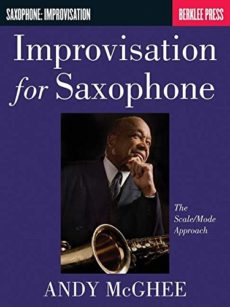
Andy McGhee was born on November 3, 1927 in Wilmington, North Carolina. Graduating from the New England Conservatory in 1949 the saxophonist worked for a short time with trumpeter Roy Eldridge and local Boston musician Fat Man Robinson. After marrying in 1950, McGhee served in the Army in Korea and at Fort Dix, New Jersey where he played in an Army band and gave lessons to other musicians.
From 1957 to 1963 McGhee worked with Lionel Hampton’s band, touring the United States, Europe, and the Far East. During his tenure with Hampton, he composed the song, McGhee, that was recorded on The Many Sides of Lionel Hampton. He went on to work with Woody Herman from 1963 to 1966.
Joining the faculty of Berklee College of Music in 1966, Andy taught saxophonists Bill Pierce, Javon Jackson, Donald Harrison, Antonio Hart, Sam Newsome, Richie Cole, Greg Osby, and Ralph Moore. While devoting his time to teaching, McGhee wrote the instruction books Improvisation for Saxophone and Flute: The Scale/Mode Approach and Modal Strategies for Saxophone.
In the late Seventies he teamed again with Lionel Hampton and the Lionel Hampton Alumni Band as part of The Boston Globe Jazz Festival, performing with Bob Wilber, Ernie Wilkins, Teddy Wilson, Alan Dawson and Terri Lynne Carrington. and Hampton on vibraphone. The early 1990s, saw McGhee touring again with Lionel Hampton as member of the Golden Men of Jazz tour with Harry “Sweets” Edison, Clark Terry, Benny Bailey, Al Grey, and Benny Golson.
In 2006 he was awarded an Honorary Doctorate of Music from Berklee College of Music. On October 12, 2017, tenor saxophonist and educator Andy McGhee passed away at the age of 89.

More Posts: saxophone

Daily Dose Of Jazz…
Theodore Malcolm Nash was born on October 31, 1922 in the Boston suburb of Somerville, Massachusetts. His goal was to become a classical flutist until he began playing saxophone in his early teens. His professional career began when he went on the road with a succession of dance bands, landing the solo tenor chair with the Les Brown band in 1944 where he rapidly made a name for himself.
His playing was notable for his mastery of the extreme altissimo register of the saxophone. He authored Ted Nash’s Studies in High Harmonics for Tenor and Alto Saxophone published in 1946, that is still in print.
In the late 1940s Ted became part of the thriving Hollywood movie and television recording industry. In 1956 he recorded with Paul Weston’s orchestra the hit album Day by Day, with vocals by his former colleague and close friend, Doris Day.
He was featured on The Music from Peter Gunn soundtrack album performing the bluesy, high-energy alto sax solo on the theme as well as the wistful alto sax solo on the second bridge of Dreamsville. Henry Mancini composed The Brothers Go to Mother’s from Peter Gunn as a feature for Ted and and his trombonist Dick.
From the mid 50s through the end of the Sixties he recorded sixteen albums with Georgie Auld. Henry Mancini, Elmer Bernstein, Pete Rugolo, Lalo Schifrin. Saxophone, flute and clarinet Ted Nash, who was a first-call session musician in the Hollywood recording studios, passed away on May 12, 2011.


Requisites
Blue Serge is an album by jazz baritone saxophonist Serge Chaloff, that was released by Capitol Records in 1956. It was recorded on March 14 and 16, 1956 at Capitol Studios in Los Angeles, California. The session included pianist Sonny Clark, bassist Leroy Vinnegar and drummer Philly Joe Jones.
The album is comprised of eight tunes and among the recognizable standards are a Serge original and an Al Cohn composition. Leading off the session is A Handful Of Stars, followed by The Goof and I (Cohn), Thanks For The Memory, All The Things You Are, I’ve Got The World On A string, Susie’s Blues (Chaloff), Stairway To The Stars and How About You.
This album exhibits plenty of improvisation and melodic variations to make this an important session and has been added to the Penguin Guide and Definitive Records “Core Collection” with a four star rating.

More Posts: collectible,saxophone
Daily Dose Of Jazz…
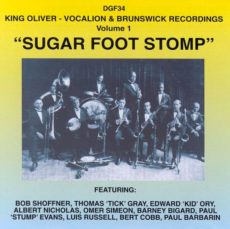
Paul Evans was born on October 18, 1904 in Lawrence, Kansas. Picking up the nickname Stump, originated in his petite size, he was largely taught music by his father, an alto horn player named Clarence Evans. He started out on the same instrument, stretching into trombone for a position in the Lawrence High School Band.
Switching back to alto saxophone not too far into his professional career, he soon became known as one of the better baritone sax players on the scene. He had a reputation for brandishing the full array of saxophones through his many band jobs, even playing the justifiably obscure C-Melody saxophone.
A move to Chicago saw him gigging with a variety of groups including King Oliver’s Original Creole Orchestra, Jelly Roll Morton, Kid Ory and Erskine Tate. He had to quit the latter band due to tuberculosis. Saxophonist Stump Evans passed away from tuberculosis at age 24 on August 29, 1928 in Douglas County, Kansas.

More Posts: saxophone
Requisites
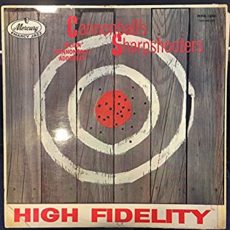
Released in 1959, it is the 7th album for Cannonball and his second on the Mercury Records subsidiary label, Emarcy. He is joined on the recording session by his brother Nat, Junior Mance, Sam Jones and Jimmy Cobb. Excellent bebop by the altoist’s original quintet.
Songs: Our Delight, Jubilation, What’s New, Straight No Chaser, If I Love Again, Fuller Bop Man and Stay On It.
More Posts: collectible,saxophone