

Daily Dose Of Jazz…
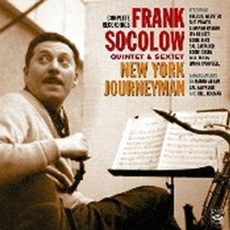
Frank Socolow wa born on September 18, 1923 in New York City and began his career in the early 40s playing in swing bands led by Georgie Auld, Ted Fio Rito, Roy Stevens, Van Alexander and Shep Fields. In 1944 he landed the first of three stints that spanned into the late Fifties with the Boyd Raeburn Orchestra and recording a number of records.
1945 saw Frank recording his first of two sessions as a leader with Freddie Webster and a young Bud Powell for Duke Records. He would go on to join Buddy Rich’s short-lived big band, toured Scandinavia 1947-48 with Chubby Jackson, then joined Artie Shaw’s big band 1949-50. Throughout the late 40s and the 50s he recorded with a wide variety of artists including Johnny Bothwell, Charlie Ventura, Gene Krupa, Sal Salvador, Maynard Ferguson, Terry Gibbs, Phil Woods, Cecil Payne, Manny Albam, Hal McKusick, Johnny Richards, Bill Russo, Joe Morello, and Bobby Scott.
His second record session as leader and only full album release, Sounds by Socolow, came in 1956 for Bethlehem Records, with arrangements by Bill Holman, Manny Albam, and Sal Salvador, the latter also contributing guitar. Tenor saxophonist and oboist Frank Socolow passed away on April 30, 1981 in New york City.

Daily Dose Of Jazz…
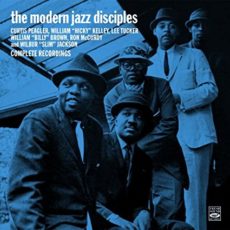
Curtis Peagler was born September 17, 1929 in Cincinnati, Ohio and in his childhood his playing on the alto saxophone was influenced by Charlie Parker, Eddie Cleanhead Vinson and Louis Jordan . At the age of 13 he started playing the C-Melody-Saxophone and played alto with the Sons of Rhythm as well as with Territory Bands.
Prior to being drafted into the Army in 1953 Curtis was a member of the backing band of the singer Big Maybelle. After his release from the army in 1955 he studied for two years at the Cincinnati Conservatory and played there with local bands.
In 1959/60 he recorded with Eddie Lockjaw Davis on his first recording for Prestige titled Disciples Blues. Peagler then recorded with Lem Winchester and performed and recorded with his band Modern Jazz Disciples, on the Columbia label. In 1962 he moved to Los Angeles, California where he worked as a freelance musician, and then played in 1966-1967. By 1969 he was accompanying Ray Charles and Big Black.
Between 1971 and 1978 he went on tour with the Count Basie Band and accompanied Ella Fitzgerald . Curtis then settled in Los Angeles and founded the label Sea Pea Records, recording with his own groups and playing on albums for Pablo Records with Harry Sweets Edison and Big Joe Turner. He played with Jeannie and Jimmy Cheatham’s Sweet Baby Blues Band in the mid-1980s, playing the Concord label’s swing band on several albums. In 1989, he worked with Jimmy Smith, in 1990 with Freddie Redd, and he recorded in 1999 on Frank Wess ‘s Concord album Entre Nous. Alto and tenor saxophonist Curtis Peagler passed away of heart trouble on December 19, 1992 in Los Angeles, California.

More Posts: saxophone
Daily Dose Of Jazz…
Jay Cameron was born on September 14, 1928 in New York City and began as an alto saxophonist only to later record with bass and B-flat clarinet and baritone saxophone.
He began his career in the early 1940s in Hollywood with Ike Carpenter‘s band, with whom he played until 1947. He moved to Europe near the end of the decade and played with Rex Stewart, Bill Coleman, Roy Haynes and Henri Renaud in France and Italy. In the early 1950s Cameron gigged around Belgium, Germany, and Scandinavia and by 1955 he played steadily in Paris, France with a band that included Bobby Jaspar, Barney Wilen and Jean-Louis Chautemps.
Returning to the United States in 1956, Jay played in bands led by Woody Herman and Slide Hampton as well as collaborations with Chet Baker, Dizzy Gillespie, Maynard Ferguson, Freddie Hubbard, Candido Camero, Bill Barron, André Hodeir, Hal McKusick, and Les and Larry Elgart.
He was the leader of the International Sax Band and the Third Herdsmen. And in the late 1960s he toured with Paul Winter. He continued to be an active musician and advocate for jazz programming and education throughout his life. Baritone saxophonist and reed player Jay Cameron passed away on March 20, 2001 in San Diego, California.

Daily Dose Of Jazz…
Jim Tomlinson was born September 9, 1966, in Sutton Coldfield, Warwickshire, England. He grew up in Northumberland and did not study music formally until well into his 20s. He played saxophone and ran a band as a hobby whilst studying for his degree he attended Oxford University where he studied philosophy, politics and economics while playing clarinet and saxophones, mostly the tenor, and developing his interest in jazz.
As a postgrad at London’s Guildhall School of Music and Drama he establish himself on the local jazz scene. With his reputation quickly spreading he was soon working with noted musicians Matt Wates, David Newton and Michael Garrick, recording with the latter on his 1997 session For Love Of Duke And Ronnie.
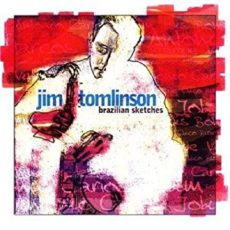
In the 90s he led his own quartet, touring the UK extensively in the UK and was often in the musical company of singer Stacey Kent. They married in 1991 and he appeared on her albums for Candid Records. Singed to Candid also, Jim released his debut album as leader, Only Trust Your Heart in 2000 giving him not only a UK but and international audience as well. This was followed by his sophomore project in 2003 titled Brazilian Sketches in 2003.
Tomlinson has gone on to work in a wide variety of groups, from Brian Ferry to experimental big band composer, Michael Garrick to leading and touring with his own quartet.
Tenor saxophonist Jim Tomlinson has released three albums, has been nominated for a Grammy and continues to compose, record and perform.
More Posts: saxophone
Daily Dose Of Jazz…
Leroy “Hog” Cooper was born on August 31, 1928 in Dallas, Texas and started his career touring with Ernie Fields’ territory band from 1948 to 1951. With his childhood friend David “Fathead” Newman, the two played together in 1954 in the saxophone section backing Lowell Fulson on his first single Reconsider Baby for Chess Records.
In 1957, Newman recommended Cooper to Ray Charles who joined the band the same summer as bassist Edgar Willis, both musicians staying on with Charles for some twenty years. He also played, recorded or toured with Lightnin’ Hopkins, Clarence “Gatemouth” Brown, The Righteous Brothers, Dr. John, Del Shannon, Joe Cocker and Bobby Short..
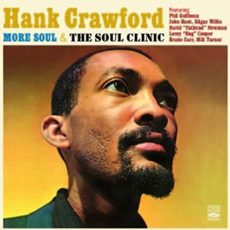
Leroy recorded not only with Ray Charles but also with Newman, Hank Crawford, Curtis Amy, Kenny Neal, Noble “Thin Man” Watts and Nat Adderley. Moving to Orlando, Florida baritone saxophonist Leroy Cooper performed locally in Orlando till he passed away on January 15, 2009 with the Smokin’ Torpedoes & Josh Miller Blues Band.
More Posts: saxophone