

Daily Dose Of Jazz…
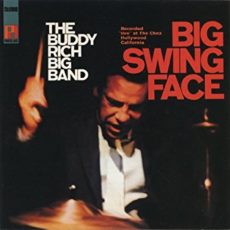
Born Martin Flachsenhaar, Jr. in New York City on October 7, 1924, Marty Flax played flute, clarinet and trombone in addition to baritone saxophone. He was a mainstay in the bands of Louis Jordan, Dizzy Gillespie, Perez Prado, and Tito Puente. He was also a member of the bands that performed on the soundtracks composed by Raymond Scott.
Marty worked with Les Elgart and Claude Thornhill in the late 1950s, then with Quincy Jones, Melba Liston and Gillespie, including on the State Department tours of the Middle East and South America.
Early in the 1960s he again toured South America with the Woody Herman Orchestra. When not on tour he led a house band at the Cafe Society and worked with Sammy Davis, Jr. and Buddy Rich recording on the Reprise, Norgran and Verve labels.
Baritone saxophonist Marty Flax, a consummate sideman and bandleader who never recorded under his own name, passed away on July 3, 1972.

Dose A Day-Blues Away

More Posts: saxophone
Daily Dose Of Jazz…
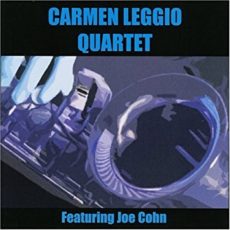
Carmen Leggio was born on September 30, 1927 in Tarrytown, New York. His last name literally translates to “music stand” and he taught himself to play at the age of nine. He began on clarinet, imitating Artie Shaw on the radio. At 14, he switched to tenor sax and began playing in clubs in his hometown of Tarrytown, a suburb just north of New York City.
He quit high school because he knew he was destined to be a musician and after playing the local scene, he moved to New York City in 1950. There he first worked with Terry Gibbs and became a studio musician.
His notable associations from the Fifties through the Seventies were with Marty Napoleon, Sol Yaged, Benny Goodman, the Maynard Ferguson Orchestra, Woody Herman and the Thad Jones/Mel Lewis Orchestra.
He went on to play with Gene Krupa, Buddy Rich, Dizzy Gillespie, and Doc Severinsen. Carmen has appeared on television, in movies, at the Newport Jazz Festival, Birdland and Carnegie Hall. Since 1961 and for the rest of his career Leggio played the same instrument, a Gold Medal SML made in France by Strasser, Marigaux & Lemaire with a Selmer D mouthpiece. He continued to perform Stardust, Nightmare and Begin the Beguine on an old King metal clarinet.
In his final years, he performed in various clubs and restaurants throughout Westchester. Tenor saxophonist Carmen Leggio passed away in Tarrytown on April 17, 2009.
More Posts: saxophone
Daily Dose Of Jazz…
Raymond Kenneth Warleigh was born on September 28, 1938 in Sydney, New South Wales, Australia. He migrated to England in 1960, where he quickly established himself as an in-demand session player.
He played and recorded with many major figures and bands of the UK jazz and blues scene, including Alexis Korner, Tubby Hayes, Humphrey Lyttelton, Terry Smith, Ronnie Scott, Long John Baldry, John Mayall, Allan Holdsworth, Soft Machine, Georgie Fame, Mike Westbrook, Dick Morrissey and Kenny Wheeler, as well as Mike Oldfield, Nick Drake, and Charlie Watts. He accompanied visiting artists such as Champion Jack Dupree and his successful 30-year career partnered him with Dusty Springfield, Marianne Faithfull, Scott Walker and Stevie Wonder, among others.
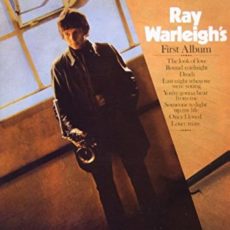
Warleigh’s First Album was released in 1968 and in 1971 he played saxophone and clarinet with the loosely connected UK folk group P. C. Kent. In 1973 he joined Latin fusion band Paz, led by vibist and composer Dick Crouch. He featured with the band for 8 years playing a weekly Sunday residency at the Kensington, a pub in Holland Park.
He recorded seven albums as a leader as well as his sideman sessions with for Spotlite, Magnus and Paladin Record labels producing Kandeen Love Song, Paz Are Back , Paz Live at Chichester Festival and Look Inside. Members of the band were Dick Crouch leader and vibes, guitarist Ed Speight, Geoff Castle on keyboards, bass guitarist Ron Mathewson, drummer Dave Sheen and percussionist Chris Fletcher. His critically acclaimed last album Rue Victor Massé was issued in 2009 and is an improvisation with free-jazz drummer Tony Marsh.
In his leisure time he was an accomplished yachtsman before serious illness struck in 2011. Alto saxophonist and flautist Ray Warleigh passed away of cancer on September 21, 2015.
Sponsored By

Voices From The Community
Daily Dose Of Jazz…
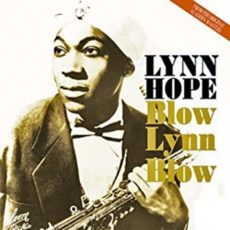
Lynn Hope was born on September 26, 1926 in Birmingham, Alabama and was noted for his apparel and instrumental remakes of established pre-rock pop anthems. He joined King Kolax’s band when he graduated from high school during the 1940s. He later converted to Islam becoming known for wearing a turban, though few ever called him by his Muslim name, Al Hajji Abdullah Rascheed Ahmed.
He signed with Miracle Records in 1950, but the contract proving invalid moved to Premium Records, There he cut Tenderly, a song that was later picked up by the Chess label. Hope recorded often for Aladdin Records between 1951 and 1957, doing interpretations of such jazz standards as September Song and Summertime. While these numbers were often performed with little or no melodic embellishment or improvisation, the flip sides were often fierce up tempo blues or jump tunes.
Tenderly earned him his only hit in 1950, reaching number eight R&B and #19 pop charts. He made his last sessions for King in 1960, then fell from sight. Tenor saxophonist Lynn Hope passed away on February 24, 1993.
Inspire A Young Mind
More Posts: saxophone
Daily Dose Of Jazz…
John Wallace Carter was born on September 24, 1929 in Fort Worth, Texas and attended I.M. Terrell High School. He played music with schoolmates Ornette Coleman and Charles Moffett in the 1940s.
From 1961, he was based mainly on the West Coast, where he met Bobby Bradford in 1965 and went on to work together on a number of projects, most notably the New Jazz Art Ensemble. He also played with Hampton Hawes and Harold Land. In the Seventies he became well known for his extraordinary solo concerts.
At New Jazz Festival Moers 1979 he and the German clarinetist Theo Jörgensmann performed for three days. This catapulted him to garnering wide recognition from around the world. He and Jörgensmann met again in 1984. The program of the Berlin Jazz Fest was built around the clarinet and after Carter’s solo performance, he and Jörgensmann also played together.
Between 1982 and 1990 Carter composed and recorded Roots and Folklore: Episodes in the Development of American Folk Music, five albums focused on African Americans and their history. The complete set was acclaimed by jazz critics as containing some of the best releases of the 1980s.
A clarinet quartet with Perry Robinson, Jörgensmann and Eckard Koltermann was planned for 1991, but Carter did not recover from a nonmalignant tumor. Later that same year he was inducted into the Down Beat Jazz Hall of Fame.
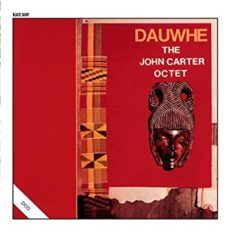
He recorded fourteen albums as a leader on the Black Saint, Flying Dutchman, Revelation, Dark Tree, Emanem, and Gramavision record labels. As a sideman he recorded with Horace Tapscott, Vinny Golia, and the Clarinet Summit. Clarinetist, saxophonist and flutist John Carter passed away on March 31, 1991.
Dose A Day-Blues Away