

Daily Dose Of Jazz…
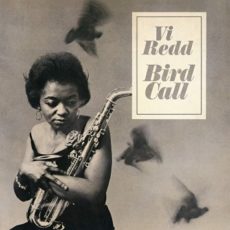
Elvira “Vi” Redd was born September 20, 1928 in Los Angeles, California to New Orleans drummers and Clef Club co-founder Alton Redd. She was deeply influenced during her formative years by her father, who was one of the leading figures on the Central Avenue jazz scene, as well as her other important musical mentor, her paternal great aunt Alma Hightower.
After working for the Board of Education from 1957 to 1960, Redd returned to jazz. She played in Las Vegas, Nevada in 1962, toured with Earl Hines in 1964 and led a group in San Francisco, California in the mid-1960s with her husband, drummer Richie Goldberg. During this time Vi also worked with Max Roach.
She toured as far as Japan, London, that included an unprecedented 10 weeks at Ronnie Scott’s, Sweden, Spain and Paris. In 1969, she settled back in Los Angeles where she played locally while also working as an educator. She recorded albums as a leader for United Artists and Atco and her 1963 album Lady Soul features Bill Perkins, Jennell Hawkins, Barney Kessel, Leroy Vinnegar, Leroy Harrison,Dick Hyman, Paul Griffin, Bucky Pizzarelli, Ben Tucker and Dave Bailey, with liner notes by Leonard Feather. She also performed with Count Basie, Rahsaan Roland Kirk, Linda Hopkins, Marian McPartland, Dizzy Gillespie, Gene Ammons and Dexter Gordon.
A graduate of California State University, Los Angeles, she earned a teaching certificate from University of Southern California. She taught and lectured for many years from the ’70s onward upon returning to Los Angeles. She served on the music advisory panel of the National Endowment for the Arts in the late 1970s. In 1989 she received the Lifetime Achievement Award from the Los Angeles Jazz Society. In 2001 she received the Mary Lou Williams Women in Jazz Award from the Kennedy Center.
Bebop, hard bop and post bop alto saxophonist, vocalist and educator Vi Redd remained active, performing and recording until 2010. Retiring from music she passed away on February 6, 2022 at 93 years old.

Put A Dose In Your Pocket

More Posts: saxophone
Daily Dose Of Jazz…
Denys Baptiste was born on September 14,1969 in London, England. He studied music at school from the age of 13 and then at the West London Institute, aka Brunel University. In 1992, he continued his music education at London’s Guildhall School of Music, studying under former Jazz Messenger, Jean Toussaint and is a graduate of Tomorrow’s Warriors.
Baptiste played with Gary Crosby and Nu Troop, McCoy Tyner, Andrew Hill, Ernest Ranglin, Bheki Mseleku, Marvin “Smitty” Smith, Michael Bowie, Courtney Pine, Manu Dibango, Gary Crosby, Steve Williamson, Julian Joseph, Jason Rebello, Martin Taylor, Lonnie Plaxico, Ralph Moore, Billy Higgins, Jerry Dammers, Sean Oliver, Jean Carne, Marlena Shaw, Noel McCoy, Juliet Roberts, Incognito and Jazz Jamaica.
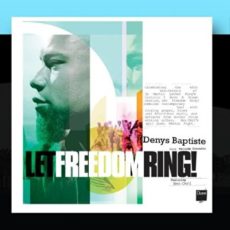
He released his debut album in 1999, Be Where You Are, and received a nomination for a Mercury Music Prize, and won the MOBO award for Best Jazz Act 1999. Denys has released two albums since, garnering another nomination for the MOBO award for Best Jazz Act, the BBC Jazz Awards for Best New Work and Best Album, and the Parliamentary Jazz Award for Best Album for his third album Let Freedom Ring! Was in 2004.
Tenor and soprano saxophonist, composer and arranger Denys Baptiste continues to embark on new projects in addition to performing.
Inspire A Young Mind
More Posts: saxophone
Daily Dose Of Jazz…
Shep Fields was born Saul Feldman in Brooklyn, New York on September 12, 1910, He played the clarinet and tenor saxophone in bands during college. In 1931 he played at the Roseland Ballroom and by 1933 he led a band that played at Grossinger’s Catskill Resort Hotel. In 1934 he replaced the Jack Denny Orchestra at the Hotel Pierre in New York City. He left the Hotel Pierre to join a roadshow with the dancers,Veloz and Yolanda. In 1936 his performance at Chicago’s Palmer House was broadcast on the radio.
The sound of his wife was blowing bubbles into her soda became his trademark that opened each of his shows. Holding a contest in Chicago for fans to suggest a new name for the band and with “rippling” suggested in more than one entry, Fields came up with “Rippling Rhythm.”
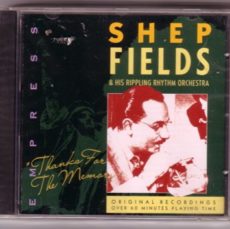
By 1936 he received a recording contract with Bluebird Records and had hits Cathedral in the Pines, Did I Remember? and Thanks for the Memory. In 1937 Fields replaced Paul Whiteman in his time slot with a radio show called The Rippling Rhythm Revue with Bob Hope as the announcer. In 1938, Fields and Hope were featured in his first feature-length motion picture, The Big Broadcast of 1938.
In 1941 Fields revamped the band into an all-reeds group, with no brass section. “Shep Fields and His New Music,” featuring band vocalist Ken Curtis. He reverted to Rippling Rhythm in 1947.
He disbanded the group in 1963, moved to Houston, Texas and became a disc jockey, later worked at Creative Management Associates with his brother Freddie. Shep Fields, who made a mark during the Big Band era, passed away on February 23, 1981 at Cedars-Sinai Medical Center in Los Angeles, California from a heart attack.
Dose A Day-Blues Away
Daily Dose Of Jazz…
Norris Turney was born on September 8, 1921 in Wilmington, Ohio. He began his career in the Midwest, playing in territory bands such as the Jeter-Pillars Orchestra. He played with Tiny Bradshaw in Chicago, Illinois before moving to New York City, where he played with the Billy Eckstine Orchestra from 1945 to 1946.
Turney had little luck in New York and returned to Ohio to play in local ensembles through the 1950s. He toured with Ray Charles in 1967, then was hired by Duke Ellington, staying from 1969 to 1973. He was hired to play alto saxophone as an “insurance policy” due to the failing health of Johnny Hodges. He also played tenor saxophone and was the first flute soloist to ever play in Ellington’s orchestra.
Following his tenure with Ellington, he joined the Savoy Sultans, the Newport All-Stars and played in several pit orchestras. By the 1980s, he toured and recorded as a member of the Oliver Jackson Quintet, with Ali Jackson, Irvin Stokes, and Claude Black.
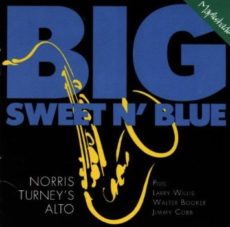
He recorded as a leader between 1975 and 1978, with I Let A Song with Booty Wood, Aaron Bell, Sam Woodyard and Raymond Fol. He released Big, Sweet ‘n Blue in 1993 with Larry Willis, Walter Booker and Jimmy Cobb. As a sideman he recorded with Randy Weston, Oliver Jackson and Red Richards. Flautist and saxophonist Norris Turney passed away of kidney failure on January 17, 2001, Kettering, Ohio.
Put A Dose In Your Pocket
Daily Dose Of Jazz…
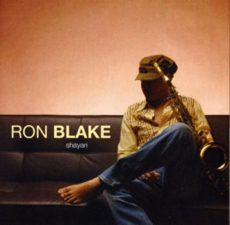
Ron Blake was born on September 7, 1965 in San Juan, Puerto Rico. He was eight when he began studying the guitar, and at the age of ten, he started learning to play the saxophone after being exposed to the record collection of his father, who was seriously into hard bop, soul-jazz and organ combos.His first saxophone was an alto, but eventually, he learned the tenor, soprano, and baritone saxes, as well as the flute.
After leaving home for the Midwest, Ron graduated from the Interlochen Arts Academy in Michigan before moving to the Chicago area and attending Northwestern University in Evanston, Illinois. Though studying classical saxophone with Dr. Frederick Hemke, jazz ultimately won out. By the late Eighties he was playing a lot of bop gigs in Chi-Town, crossing paths with tenor man Von Freeman and pianist Jodie Christian.
Blake moved to Florida in 1991 to accept a teaching position at the University of South Florida. Then it was off to New York City the following year where he spent five years in trumpeter Roy Hargrove’s quintet and seven years in flugelhornist Art Farmer’s group. By the early 2000s, he was leading his own quartet, which included pianist Shedrick Mitchell, bassist Reuben Rogers, and drummer Greg Hutchinson.
Releasing his first album as a leader, Up Front & Personal on the Tahmun label in 2000, was followed in 2003 with a Christian McBride-produced Lest We Forget on the Mack Avenue release that found Ron paying tribute to three soul-jazz greats who had died: saxophonists Grover Washington, Jr. and Stanley Turrentine, and organist Charles Earland.
He is a member of the Saturday Night Live Band, Dion Parson & 21st Century Band and the Grammy-winning Christian McBride Big Band. As an educator he holds a position as professor of Jazz studies at The Juilliard School. His discography has four albums as a leader/co-leader and has more than fifty credits as a sideman for Roy Hargrove, Art Farmer, Reuben Rogers, Joey DeFrancesco, Razor & Tie, Ropeadope, Gerald Wilson, Latin pop group, Yerba Buena, Jack DeJohnette, Michael Cain, Regina Carter, among others.
Saxophonist Ron Blake is also a band leader, composer and music educator who continues to compose, record, and perform.

More Posts: saxophone