

Daily Dose Of Jazz…
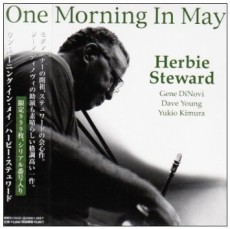
Herbie Steward was born Herbert Bickford Steward on May 7, 1926 in Los Angeles, California. He was widely known for being one of the tenor saxophones in the Four Brothers, alongside Stan Getz, Zoot Sims and Serge Chaloff in Woody Herman’s Second Herd.
Having a nice tone, Steward interacted well and was an above-average soloist. He also played alto saxophone, soprano saxophone and clarinet and was active from the 1940s to the Sixties and played in the swing and big band jazz genres. During his active years he recorded or performed with Earle Spencer, Smith Dobson, Tecumseh “Tee” Carson, Eddie Duran, John Mosher, Eddie Moore, Gene DiNovi, Sir Charles Thompson, David Young, Yukio Kimura, Kohnosuke Saijoh, Al Cohn, Stan Kenton, Chaloff and Sims.
Tenor saxophonist Herbie Steward, who has only a few albums as a leader in print at present, passed away on August 9, 2003 in Clearlake, California.

Take A Dose On The Road

More Posts: saxophone
Daily Dose Of Jazz…
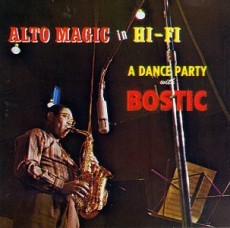
Earl Bostic was born in Tulsa, Oklahoma on April 25, 1912. He turned professional at the age of 18 when he joined Terence Holder’s Twelve Clouds of Joy. He then performed on the riverboats of New Orleans with Frank Marable before graduating from Xavier University.
He worked with territory bands as well as with Arnett Cobb, Hot Lips Page, Rex Stewart, Don Byas, Charlie Christian, Thelonious Monk, Edgar Hayes, Cab Calloway and others His first recording session was with Lionel Hampton in 1939 along with Charlie Christian, Clyde Hart and Big Sid Catlett. In 1938, and again in 1944, Earl led the house band at Smalls Paradise and while there he doubled on guitar and trumpet. During the early 1940s, he was a well-respected regular at the famous jam sessions held at Minton’s Playhouse.
Forming his own band in 1945, Bostic made his first recordings as a leader on the Majestic label. In the late Forties turned to rhythm and blues and had his biggest hits with Temptation, Sleep, You Go To My Head, Cherokee and his signature hit Flamingo. At various times his band included Keter Betts, Jaki Byard, Benny Carter, John Coltrane, Teddy Edwards, Benny Golson, Blue Mitchell, Tony Scott, Cliff Smalls, Sir Charles Thompson, Stanley Turrentine, Tommy Turrentine and others who rose to prominence in jazz.
He would go on to record Jazz As I Feel It with Shelly Manne, Joe Pass and Richard “Groove” Holmes. He wrote arrangements for Paul Whiteman, Louis Prima, Lionel Hampton, Gene Krupa, Artie Shaw, Hot Lips Page, Jack Teagarden, Ina Rey Hutton and Alvino Rey. His songwriting hits include Let Me Off Uptown that was performed by Anita O’Day and Roy Eldridge, and Brooklyn Boogie, which featured Louis Prima and members of the Booklyn Dodgers.
During the early 1950s Earl lived in Addisleigh Park in St. Albans, Queens before moving to Los Angeles, California where he opened his club, the Flying Fox. Suffering a heart attack he concentrated on writing arrangements. Alto saxophonist Earl Bostic, whose recording career encompassed small group swing-based jazz, big band jazz, jump blues, organ-based combos and a string of commercial successes, passed away October 28, 1965 from a heart attack while performing with his band in Rochester, New York. He was inducted into the Oklahoma Jazz Hal of Fame in 1993.
Uplift Someone’s World
More Posts: saxophone
Daily Dose Of Jazz…
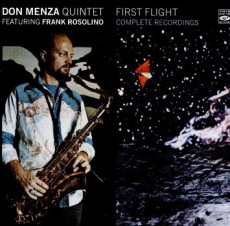
Don Menza was born on April 22, 1936 and raised in Buffalo, New York where he began playing tenor saxophone when he was 13. He studied with musician and teacher John Sedola.
After serving in the U. S. Army, Menza went to work in 1960 with the Maynard Jackson Orchestra for two years as both a soloist and an arranger. A short tenure with Stan Kenton and a year leading a quintet in Buffalo preceded a four-year period living in Germany (1964–68).
Later, he returned to the United States and joined Buddy Rich’s 1968 big band in the jazz tenor chair, recording the famous solo cadenza on Channel One Suite live at Caesar’s Palace in Las Vegas, Nevada. His utilization circular breathing during that performance has become known as a classic among music educators and musicians alike.
In the late 1960s, Don settled in California and performed with Elvin Jones and Louie Bellson. He also recorded with Keely Smith, Natalie Cole, Nancy Sinatra, Cold Blood, Pat Boone and Leonard Cohen.
Menza’s compositions, specifically Groovin’ Hard and Time Check have become standard repertoire in jazz studies programs at colleges and universities worldwide. He continues to be a prolific sideman and has recorded as a leader In addition to numerous recordings as a sideman Menza has recorded as a leader for Saba, Discwasher, Realtime, Palo Alto and Verve, working with John Klemmer, Carmen McRae, Lalo Schifrin, Bobby Shew, Lanny Morgan, Les Demerle, Frank Strazzeri, Don Rader, SWR Big Band and his own big band.
In 2005 Don Menza was inducted into the Buffalo Music Hall of Fame. He continues to perform, record and tour.
Inspire A Young Mind
More Posts: saxophone
Daily Dose Of Jazz…
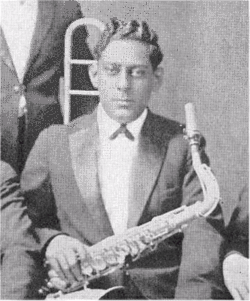
Lorenzo Tio Jr. was born on April 21, 1893 in New Orleans, Louisiana and raised in Bay St. Louis, Mississippi. Following in the footsteps of his father Lorenzo Sr. and his uncle Louis “Papa”, he also became a master clarinetist. Their method of playing the instrument, which involved the Albert system, a double-lip embouchure and soft reeds, was seminal in the development of the jazz solo.
Tio Jr.was instrumental in bringing classical music theory to the ragtime, blues and jazz musicians of New Orleans and he eventually played jazz himself. His main instrument was clarinet also played the oboe and joined Manuel Perez’s band in Chicago, Illinois in 1916 and Armand J. Piron’s from 1918 to 1928, recording with Piron, Bechet, Jelly Roll Morton and Clarence Williams.
As an educator among the reed players to impact early jazz who studied under Lorenzo’s direction were Sidney Bechet, Barney Bigard, Johnny Dodds, Omer Simeon, Louis Cottrell Jr., Jimmie Noone and Albert Nicholas. He taught Bigard what would become the main theme to the famous Ellington tune Mood Indigo.
Tio gigged in legendary New Orleans large ensembles such as the Lyre Club Symphony Orchestra during the late 19th century. He played in smaller combos, traditional brass bands, had a standing collaboration with Papa Celestin whenever he was in the Big Easy, and performed with the Tuxedo Brass Band.
Despite his strong ties to New Orleans, he regularly played the New York jazz scene on steamboats running between the state capitol in Albany and the Big Apple. During the late ’20s and early ’30s, He had a regular stint at The Nest Club in New York City. Clarinetist and educator Lorenzo Tio Jr., who also played oboe and tenor saxophone, passed away on December 24, 1933.
Dose A Day-Blues Away
Daily Dose Of Jazz…
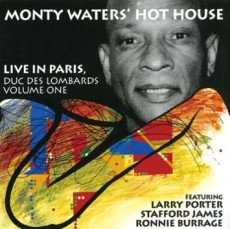
Monty Waters was born on April 14, 1938 in Modesto, California. He received his first musical training from his aunt and first played in the church. After college, he was a member of a rhythm & blues band and in the late 1950s he worked with musicians like B.B. King, Lightnin’ Hopkins, Little Richard and James Brown on tour.
In San Francisco Monty played with King Pleasure and initiated in the early 1960s a “Late Night Session” at Club Bop City. There he came into contact with musicians such as Miles Davis, John Coltrane, Art Blakey, Red Garland and Dexter Gordon, who visited this club after their concerts. In addition, he and Pharoah Sanders, Dewey Redman and and Donald Garrett formed a big band.
By 1969 Waters had made a move to New York City and toured with Jon Hendricks. During the 1970s he participated in the Loft Jazz scene and recorded as a sideman with Billy Higgins, Joe Lee Wilson, Sam Rivers, and Ronnie Boykins. Like many other jazz musicians, he eventually left the States in the 1980s for Paris, where he worked with Chet Baker, Johnny Griffin and Sanders again.
Following Mal Waldron and Marty Cook to Munich, he continued to work with musicians such as Embryo, Gotz Tanferding, Hannes Beckmann, Titus Waldenfels, Suchredin Chronov and Joe Malinga. Saxophonist, flautist and singer Monty Waters passed away on December 23, 2008 in Munich, Germany.
Inspire A Young Mind