

Daily Dose Of Jazz…
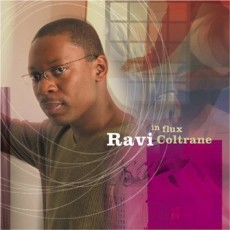
Ravi Coltrane was born August 6, 1965 in Long Island, New York to saxophonist John and pianist Alice Coltrane and was named after sitar player Ravi Shankar. Raised in Los Angeles, California, he was not yet two years old in 1967 when his father died.
Ravi graduated from El Camino Real High School in 1983 and three years later was studying music with a focus on the saxophone at the California Institute of the Arts. He worked extensively with M-Base guru Steve Coleman, who influenced his musical conception.
Coltrane has played and recorded as a sideman with Geri Allen, Kenny Barron, McCoy Tyner, Pharoah Sanders, Herbie Hancock, Carlos Santana, Stanley Clarke, Branford Marsalis and many others. In 1997, after performing on over thirty recordings as a sideman, Ravi entered the studio to record his first album as leader Moving Pictures, with drummer Jeff “Tain” Watts, bassist Lonnie Plaxico and pianist Michael Cain.
This led to extensive touring and a series of recording sessions as a leader producing his sophomore project From the Round Box, followed by Mad 6 and In Flux. He has performed in India as part of a State Department tour delegation to promote HIV/Aids awareness. He has played Monterey , Montreux, Newport and the Vienna jazz festivals, is a part of the Blue Note 7, and has worked with Renee Rosnes, Drew Gress, Luis Perdomo, E.J. Strickland, Al Jarreau, Earl Klugh, David Gilmore, Ralph Alessi and the late George Duke. Post-bop saxophonist Ravi Coltrane continues to perform, record, tour and produce.

Give A Gift Of Jazz – Share
More Posts: saxophone

Daily Dose Of Jazz…
Rickey Woodard was born August 5, 1950 in Nashville, Tennessee and picked up his first music experiences playing saxophone in the family band. He went on to attend Tennessee State University and following graduation joined the Ray Charles band, spending seven years with him.
Woodard became a member of the Clayton-Hamilton Jazz Orchestra, has recorded with Frank Capp, and is a member of Jeanine and Jimmy Cheatham’s Sweet Baby Blues Band. In 1988 he moved to Los Angeles and started playing sessions for Concord Records that soon led to a recording contract.
By 1993 Rickey embarked on a series of yearly visits to the Peterborough Jazz Club in England. There he was billed with veteran British jazz musicians such as Dick Morrissey, John Burch and Tony Archer. In 1994 he was a part of the recording session Seven Sensational Saxophones – Fujitsu-Concord 26th Jazz Festival with Jesse Davis, Gary Foster, Bill Ramsay, Ken Peplowski, Chris Potter and Frank Wess.
He recorded his debut album The Frank Capp Trio Present Rickey Woodard in 1991 and has released seven more as a leader or co-leader in the company of Joe Chambers, Eric Reed, Cedar Walton, Ernie Watts, Pete Christlieb, Gerry Wiggins, Chuck Berghofer, Tony Dumas, Roy McCurdy, James Williams, Christian McBride and Ray Brown. As a sideman he has another ten projects as a sideman working with Horace Silver, Kenny Rogers, Nnenna Freelon and Diana Krall.
Saxophonist Rickey Woodard continues to lead his own quartet, perform and tour with the Clayton-Hamilton Jazz Orchestra, The Juggernaut and The Cheathams.
Inspire A Young Mind
More Posts: saxophone
Daily Dose Of Jazz…
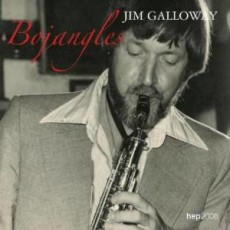
Jim Galloway was born James Braidie Galloway in Kilwinning, Ayrshire, Scotland on July 28, 1936. Since emigrating from Scotland in the mid-1960s he had based his career in Canada.
Galloway recorded several albums as a leader and in the late 1970s formed an ensemble, the Wee Big Band. One of his many albums, Walking On Air, was nominated for Best Jazz Album at the 1980 Juno Awards.
He was the artistic director of the Toronto Jazz Festival from 1987 to 2009. In 2002 Jim was honored when made a Chevalier of the French Ordre des Arts et des Lettres. His musical performances continue to be listed on the Toronto Jazz Festival website.
Bandleader, songwriter, clarinet and saxophone player Jim Galloway died in palliative care in Toronto, Ontario, Canada on December 30, 2014.
Give The Gift Of Knowledge
Daily Dose Of Jazz…
Jean Toussaint, born July 27, 1960 in St. Thomas, U.S. Virgin Islands and grew up in St. Thomas and New York City. He learned to play calypso as a child and attended Berklee College of Music in the late 1970s, studying under saxophonist Billy Pierce.
In 1979 Jean formed a group with Wallace Roney and from 1982 to 1986 was a member of Art Blakey and The Jazz Messengers alongside Terence Blanchard, Donald Harrison, Mulgrew Miller and Lonnie Plaxico. With Blakey he recorded three studio albums, including New York Scene, which won a Grammy for Best Jazz Instrumental Performance.
Toussaint moved to London in 1987, following an invitation from Professor of Jazz, Lionel Grigson, to be artist-in-residence at the Guildhall School of Music. Since then he has maintained a consistent profile as a band leader in the UK and Europe, playing with British musicians who include, among others, Steve Williamson, Courtney Pine, Julian Joseph, Jason Rebello and Cleveland Watkins.
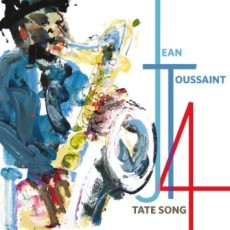
He has also performed in the groups led by McCoy Tyner, Gil Evans, Kirk Lightsey, Cedar Walton, Max Roach, Horace Silver, Jeff “Tain” Watts, and has collaborated with Lionel Loueke. Soprano and tenor saxophonist Jean Toussaint has compiled a catalogue of ten albums as a leader with his latest release being Tate Song for Lyte Records. He continues to perform and record.
Put A Dose In Your Pocket
More Posts: saxophone
Daily Dose Of Jazz…
Charles Lacy Tyler was born on July 20, 1941 in Cadiz, Kentucky and spent his childhood years in Indianapolis, Indiana. He played piano as a child and clarinet at 7, before switching to alto in his early teens, and finally settled with the baritone saxophone. During the summers, he visited Chicago, New York City and Cleveland, Ohio that he met the young tenor saxophonist Albert Ayler at age 14.
After a stint in the army from 1957–1959, Tyler relocated to Cleveland in 1960 and began playing with Ayler, commuting between New York and Cleveland. During that period he got to jam with Ornette Coleman and Sunny Murray. In 1965 he recorded with Ayler’s group Bells and Spirits Rejoice.
Charles recorded his first album as leader in 1966 for ESP-Disk, returned to Indianapolis to study with David Baker at Indiana University between 1967 and 1968, then recorded a second album for ESP titled Eastern Man Alone. In 1968 he transferred to the University of California, Berkeley to study and teach. In Los Angeles, he worked with Arthur Blythe, Buddy Bradford and David Murray before heading back to New York in 1974, to lead his own freebop groups with Blythe, trumpeter Earl Cross, drummer Steve Reid and others.
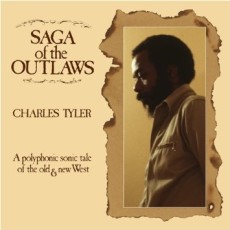
During this period he recorded on his Akba label the album Voyage from Jericho. By 1975, Tyler enrolled at Columbia University and made an extensive tour of Scandinavia releasing his second Akba album Live in Europe. The next year he performed the piece Saga of the Outlaws at Sam Rivers’ Studio Rivbea that was released two years later. He would go on to perform sideman or co-leader duties with Steve Reid, Cecil Taylor, Hal Russell, Wilbur Morris and Billy Bang.
In 1982, during a European tour with the Sun Ra Orchestra, he relocated to Denmark and three years later moved to France, recording with other expatriates like Khan Jamal in Copenhagen and Steve Lacy in Paris. Free jazz alto and baritone saxophonist CharlesTyler died in Toulon, France of heart failure on June 27, 1992.
Put A Dose In Your Pocket
More Posts: saxophone