

Daily Dose Of Jazz…
Charles Lacy Tyler was born on July 20, 1941 in Cadiz, Kentucky and spent his childhood years in Indianapolis, Indiana. He played piano as a child and clarinet at 7, before switching to alto in his early teens, and finally settled with the baritone saxophone. During the summers, he visited Chicago, New York City and Cleveland, Ohio that he met the young tenor saxophonist Albert Ayler at age 14.
After a stint in the army from 1957–1959, Tyler relocated to Cleveland in 1960 and began playing with Ayler, commuting between New York and Cleveland. During that period he got to jam with Ornette Coleman and Sunny Murray. In 1965 he recorded with Ayler’s group Bells and Spirits Rejoice.
Charles recorded his first album as leader in 1966 for ESP-Disk, returned to Indianapolis to study with David Baker at Indiana University between 1967 and 1968, then recorded a second album for ESP titled Eastern Man Alone. In 1968 he transferred to the University of California, Berkeley to study and teach. In Los Angeles, he worked with Arthur Blythe, Buddy Bradford and David Murray before heading back to New York in 1974, to lead his own freebop groups with Blythe, trumpeter Earl Cross, drummer Steve Reid and others.
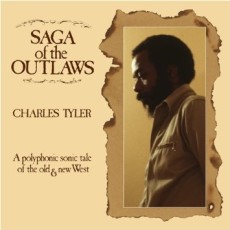
During this period he recorded on his Akba label the album Voyage from Jericho. By 1975, Tyler enrolled at Columbia University and made an extensive tour of Scandinavia releasing his second Akba album Live in Europe. The next year he performed the piece Saga of the Outlaws at Sam Rivers’ Studio Rivbea that was released two years later. He would go on to perform sideman or co-leader duties with Steve Reid, Cecil Taylor, Hal Russell, Wilbur Morris and Billy Bang.
In 1982, during a European tour with the Sun Ra Orchestra, he relocated to Denmark and three years later moved to France, recording with other expatriates like Khan Jamal in Copenhagen and Steve Lacy in Paris. Free jazz alto and baritone saxophonist CharlesTyler died in Toulon, France of heart failure on June 27, 1992.

Put A Dose In Your Pocket
More Posts: saxophone
Daily Dose Of Jazz…
William C. “Buster” Bailey was born July 19, 1902 in Memphis, Tennessee and was educated on the instrument by classical teacher Franz Schoepp, the man who taught Benny Goodman. He got his start with the W.C. Handy Orchestra in 1917 when he was just fifteen years old. After two years of touring with Handy, he quit while the band was in Chicago and in 1919 Bailey joined Erskine Tate’s Vendome Orchestra.
1923 saw Buster joining up with Joe “King” Oliver as part of his King Oliver’s Creole Jazz Band. It was here that he met and became friends with fellow band mate Louis Armstrong. In 1924, when Armstrong left King Oliver’s Jazz Band to join the Fletcher Henderson Orchestra in New York. It was less than a month that Armstrong extended an invitation for Bailey to join the band and accepting, he moved to New York City.
During the late 1920s Bailey became a highly respected sideman with Perry Bradford, Clarence Williams and others, Recording both clarinet and soprano saxophone. He toured Europe with Noble Sissle’s orchestra in 1927, returned and performed with Edgar Hayes and Dave Nelson, rejoined Sissle in 1931. By 1934 he was back with Henderson and then settled in with the John Kirby Band. Off and on he would perform with the mills Blue Rhythm Band, Midge Williams and Her Jazz Jesters and record as a leader as Buster Bailey and His Rhythm Busters.
In 1947 he joined Wilbur de Paris and performed with him until 1949. During the early 1950s Bailey was with Big Chief Russell Moore but for most of the decade he played with Henry “Red” Allen. From 1961 to 1963 he performed with Wild Bill Davison, the Saints And Sinners, and rejoined his old friend Armstrong and became a member of Louis Armstrong and His All-Stars.
Buster appeared on film three times during his career in That’s The Spirit in 1933, Sepia Cinderella in 1947 as part of John Kirby’s band and in When The Boys Meet The Girls in 1965 with Louis Armstrong. He also appeared in 1958 in the DuMont TV series Jazz Party and in 1961 on the TV program The Dupont Show of the Week in an episode titled “America’s Music – Chicago and All That Jazz”.
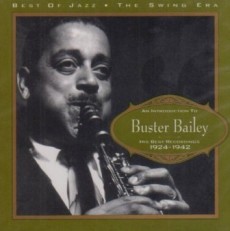
Clarinetist Buster Bailey, who was also well versed on saxophone and one of the most respected session players of his era, passed away in Brooklyn, New York on April 12, 1967 of a heart attack.
Jazz Is Global – Share
Daily Dose Of Jazz…
Albert Ayler was born on July 13, 1936 in Cleveland Heights, Ohio and was first taught alto saxophone by his father Edward, who was a semiprofessional saxophonist and violinist. They played alto saxophone duets in church and often listened to jazz records together, including swing era jazz and then-new bop albums. He attended John Adams High School adding oboe to his instruments, followed after graduation with studies at the Academy of Music with jazz saxophonist Benny Miller. It was during his teenage years that he picked up the nickname “Little Bird” because of his understanding of bebop style and mastery of standard repertoire.
In 1952, at the age of 16, Ayler began playing bar-walking, honking, R&B style tenor with blues singer and harmonica player Little Walter, spending two summer vacations with the band. By 1958 he was in the Army, switched from alto to tenor sax, playing in the regiment band and jamming with other enlisted musicians, including tenor Stanley Turrentine. Stationed in France a year later, he was further exposed to the martial music that would be a core influence on his later work. After his discharge from the army, Ayler tried to find work in Los Angeles and Cleveland, but his increasingly iconoclastic playing, which had moved away from traditional harmony, was not welcomed by traditionalists.
In 1962 Albert relocated to Sweden, where his recording career began, leading Swedish and Danish groups on radio sessions, and jamming as an unpaid member of Cecil Taylor’s band. It was here in Copenhagen that he recorded My Name Is Albert Ayler with Niels-Henning Orsted Pedersen and Ronnie Gardiner. 1963 saw his return to settle in New York City, develop his personal style, record his debut as a leader titled Witches and Devils and begin a relationship with ESP-Disk Records in 1964, recording his breakthrough album Spiritual Unity with Gary Peacock and Sunny Murray, which was also the label’s first jazz album. His trio would go on to record with Don Cherry, John Tchicai and Roswell Rudd on the soundtrack to New York Eye and Ear Control, which was followed by a tour with his trio plus Cherry producing the albums The Copenhagen Tapes, Vibrations, and The Hilversum Session.
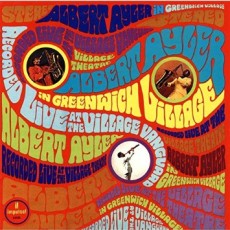
In 1966 Ayler signed with Impulse Records at the urging of Coltrane but his radically different music never found a sizable audience. However his first set titled Albert Ayler in Greenwich Village with his brother Donald, Michael Samson, Beaver Harris, Henry Grimes and Bill Folwell too Ayler back to the alto on his tribute tune “For John Coltrane”. He first sang on a recording in a version of “Ghosts” performed in Paris in 1966. He would go on to record three albums of lyrics and vocals of his girlfriend Mary Maria Parks and introduce regular chord changes, funky beats and electronic instruments.
Avant-garde jazz saxophonist, singer and composer Albert Ayler disappeared on November 5, 1970, and he was found dead in New York City’s East River on November 25,1970, a presumed suicide. In tribute, Swedish filmmaker Kasper Collin was so inspired by hiss music and life that he produced a documentary by the name of My Name is Albert Ayler, which includes interviews with ESP-Disk founder Bernard Stollman, along with interviews with his family and band mates.
Give The Gift Of Knowledge
More Posts: saxophone
Daily Dose Of Jazz…
Elias Haslanger was born on July 9, 1969 in Austin, Texas. Growing up during the 1980s he listened to the Marsalis Brothers, Mark Whitfield and Roy Hargrove among others. In sixth grade he picked up the saxophone, and by the time he was in high school, he was playing gigs around his hometown and San Antonio.
After graduating from high school he attended the University of Texas at Austin studying with Harvey Pittel, then moved to New York to matriculate the Manhattan School of Music. From there his education took him back to study at Southwest Texas State University (TSU), during which time he received the Downbeat Student Music Award for College Outstanding Tenor Saxophone Performance.
His 1994 debut album Standards is a collection of straight-ahead bop and swing tunes featuring the top Austin area musicians. His second project titled For The Moment followed by his 1998 release of Kicks Are For Kids that brought the Marsalis patriarch in to collaborate. That same year Elias put on his educators cap and began teaching theory and composition at TSU.
A move to Brooklyn, New York in 2000 got the attention of Maynard Ferguson and in short order Haslanger was sitting in the same chair that Wayne Shorter once occupied. This experience help shaped him as a bandleader and performer.
In 2004 he returned to Austin, started his own label Cherrywood Records, released it debut release Dream Story. He has performed with Harry Connick Jr., Frank Foster, Clark Terry, Steve Turre, Al Grey, Lew Soloff, Marvin “Smitty” Smith, Ron Westray, Jesse Davis, J. J. Johnson, Peter Martin, Russell Gunn, among other jazz luminaries. He has also played with Chirstopher Cross, The Temptations, The Four Tops, Alejandro Escovedo, Asleep At The Wheel, Sheryl Crow and countless others in pop and soul genres.
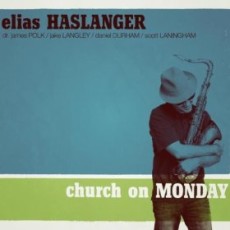
Tenor, alto, and soprano saxophone player Elias Haslanger continues to perform, record and tour around the world with annual invites to play the North Sea and Montreux Jazz Festivals.
Inspire A Young Mind
More Posts: saxophone
Daily Dose Of Jazz…
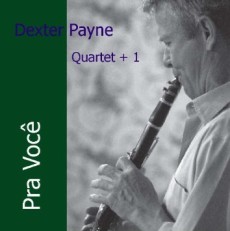
Reedman Dexter Payne was born on July 5, 1951 in Denver, Colorado. The clarinet was his first instrument and went on to master the alto and baritone saxophones adding them to his arsenal. His early influences were Artie Shaw, Buddy DeFranco, Benny Goodman, Stan Getz, Zoot Sims, Gerry Mulligan,Benny Carter, Johnny Hodges and Lester Young.
A very lyrical and melodic player, Dexter plays swing, bop, cool jazz, and Brazilian jazz as well as other forms of music including Latin. In 2000 he played with Brazilian musician Thiago de Mello, recorded the album Inspiration in 2003, with Brazilian guitarist Antonio Mello,
He followed with his sophomore release in 2005 release Another Feeling with producer Arnaldo De Souteiro on his Jazz Station label. He recorded again in 3006 and 2007 which de Mello produced and released Our Time to Remember. Clarinetist and saxophonist Dexter Payne continues to perform, record and tour.
Put A Dose In Your Pocket