

Daily Dose Of Jazz…
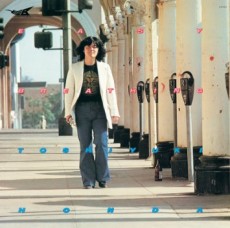
Toshiyuki Honda was born on April 9, 1957 in Tokyo, Japan. A professional saxophonist while still a university student, he released his debut album in 1978 as a leader titled “Burnin’ Wave”.
Honda is one of Japan’s best-known saxophonists and has since recorded with a host of world-celebrated musicians including Chick Corea, Freddie Hubbard, and Christopher Cross among others. He is widely known for his composing and arranging, having scored for television dramas, commercials, movies, and classical music genres.
He has received the Japan Academy’s highest honors for his work on the soundtrack for the movie, Marusa no onna. Toshiyuki’s “Concerto du vent”, a work commissioned by classical saxophonist Nobuya Sugawa, was recorded with the BBC Philharmonic Orchestra. The album was subsequently released on Chandos, a label for classical masterpieces.
Honda has released numerous original albums and soundtracks. One of his latest releases is with the Hyper Chamber Music Unit, “SMILE!” and has composed a work commissioned by Band Restoration 2012. Composer, arranger and producer Toshiyuki Honda continues to perform, record and tour in between utilizing his other talents.

Dose A Day – Blues Away
More Posts: saxophone
Daily Dose Of Jazz…
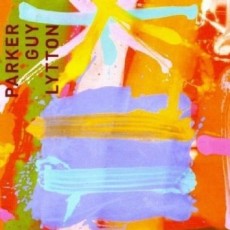
Evan Shaw Parker was born on April 5, 1944 in Bristol, England and his original inspiration was Paul Desmond and the cool jazz saxophone scene with later influences being Warren Marsh and Lee Konitz. Better known for his later work, he rapidly assimilated the American avant-garde of John Coltrane, Pharoah Sander, Albert Ayler and others and forged his own, instantly identifiable style.
Parker’s music of the 1960s and 1970s involves fluttering, swirling lines that have shape rather than tangible melodic content. He began develop methods of rapidly layering harmonics, false notes, circular breathing and rapid tonguing which initially were so intense that he would find blood dripping onto the floor from the saxophone. He also became a member of the important big band, The Brotherhood of Breath.
Evan became interested in electronics and his collaboration electronically processed his playing in real time, creating a musical feedback loop or constantly shifting soundscape. He has recorded a large number of albums both solo or as a group leader, and has recorded or performed with such musicians as Peter Brotzmann, Derek Bailey, Anthony Braxton, Cecil Taylor, George Lewis, Joe McPhee, Mark Dresser and Dave Holland among numerous others.
Parker is one of the few saxophone players for whom unaccompanied solo performance is a major part of his work. Along with Bailey and drummer Tony Oxley founded the Incus record label in 1970. The label continued under Bailey’s sole control, after a falling-out between the two men in the early 1980s and currently Parker curates the Psi record label. He also performs monthly at London’s Vortex Jazz Club.
Though Parker’s central focus is free improvisation, he has also occasionally appeared in more conventional jazz contexts, such as Charlie Watts Big Band, Kenny Werner’s ensembles, and Gavin Bryars’s After the Requiem. He has also performed in pop and rock settings but remains a pivotal figure in the development of European free jazz and free improvisation and has pioneered or substantially expanded an array of extended techniques on the European free jazz scene.
Put A Dose In Your Pocket
More Posts: saxophone
Daily Dose Of Jazz…
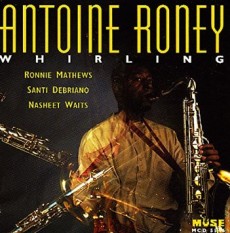
Antoine Roney was born on April 1, 1963 in Philadelphia, Pennsylvania and started out musically learning to play the clarinet but soon turned his attention to the saxophone after his older brother Wallace turned him on to John Coltrane’s Live at Birdland album.
Roney graduated from the Duke Ellington School of the Arts in Washington, DC and then went on to attend college at the Hartt School of Music of the University of Hartford, where he studied with alto saxophonist, Jackie McLean.
Throughout the 80s and 90s Antoine worked as a sideman with McLean, Donald Byrd, Clifford Jordan, Ted Curson, John Patton, Rashied Ali, Arthur Taylor, Jesse Davis, Ravi Coltrane, Michael Carvin, Geri Allen, Chick Corea and Elvin Jones.
Roney released his first album The Traveler” in 1992 followed with his sophomore project “Whirling” in 1996. To date he has released five albums as a leader, and participated in Miles Davis tribute project Bitches Brew Revisited, with drummer Cindy Blackman. The tenor and soprano saxophonist continues to perform and tour extensively with his trio.
Inspire A Young Mind
More Posts: saxophone

Daily Dose Of Jazz…
Michael Leonard Brecker was born on March 29, 1949 in Philadelphia, Pennsylvania and raised in the suburb of Cheltenham Township. Exposed to jazz at an early age by his father, an amateur jazz pianist, he grew up as part of the generation of jazz musicians who saw rock music not as the enemy but as a viable musical option. He began studying clarinet then moved to alto saxophone in school, and eventually settling on the tenor as his instrument of choice.
Graduating high school he entered Indiana University for a year before moving to New York City in 1969. He carved out a niche for himself as a dynamic and exciting jazz soloist and first made his mark at age 21 as a member of the jazz-rock band Dreams that included his older brother, trumpeter Randy Brecker and drummer Billy Cobham. Though the band was short-lived it attracted Miles Davis to attend some of their gigs.
Brecker went on to work with Horace Silver and Billy Cobham before teaming with his brother to form the Brecker Brothers. Following the jazz-rock trends of the time, but with more attention to structured arrangements, a heavier backbeat, and a stronger rock influence, the band stayed together from 1975 to 1982, with consistent success and musicality.
Michael was in great demand as a soloist and sideman from mainstream jazz to mainstream rock and played on over 700 albums with James Taylor, Paul Simon, Steely Dan, Lou Reed, Donald Fagen, Dire Straits, Bruce Springsteen, Frank Zappa, Parliament Funkadelic and Joni Mitchell as well as Frank Sinatra, Herbie hancock, Chick Corea, Chet Baker, George Benson, Quincy Jones, Charles Mingus, Jaco Pastorious, McCoy Tyner and Elvin Jones. And that is the short list.
During the early 1980s, he was a member of NBC’s Saturday Night Live Band, co-led the group Steps Ahead, he recorded a solo album ning him back towards more traditional jazz. As a leader throughout the 1990s and 2000s, Michael won multiple Grammy Awards of which one was for Directions In Music: Live At Massey Hall with Herbie Hancock and Roy Hargrove. He consistently sold out his solo and group tours in major cities worldwide.
While performing at the Mount Fuji Jazz Festival in 2004, Brecker experienced a sharp pain in his back. Shortly thereafter in 2005, he was diagnosed with the blood disorder myelodysplastic syndrome or MDS. Unable to find a matching stem cell donor, and an experimental partial match that proved unsuccessful, he played his final public appearance with Herbie Hancock at Carnegie Hall in 2006.
On January 13, 2007, tenor saxophonist Michael Brecker passed away from complications of leukemia in New York City. He was awarded two posthumous Grammy awards for his involvement on his brother Randy’s 2005 album Some Skunk Funk, his final recording, Pilgrimage that same year, and again posthumously awarded two additional Grammy Awards for this album in the categories of Best Jazz Instrumental Solo and Best Jazz Instrumental Album, bringing his Grammy total to 15. He was awarded an Honorary Doctorate from Berklee College of Music and inducted into the Down Beat Jazz Hall of Fame.
Put A Dose In Your Pocket
More Posts: saxophone
Daily Dose Of Jazz…
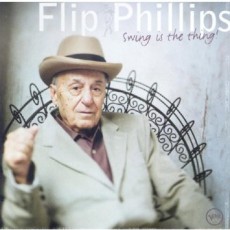
Flip Phillips was born Joseph Edward Filipelli on March 26, 1915 in Brooklyn, New York. In the mid-1940s, he was one of the anchors of the Woody Herman band, and also played with the Woodchoppers, a small spin-off group that Herman led. After this period he went out on his own and joined Jazz at the Philharmonic. His deep, strong and articulate playing with a very full sound contrasted him to his successors such as Stan Getz in the subsequent Herman bands.
Phillips recorded extensively for Clef Records, now Verve, in the 1940s and 1950s, including a 1949 album of small-group tracks under his leadership, with Buddy Morrow, Tommy Turk, Kai Winding, Sonny Criss, Ray Brown and Shelly Manne. He accompanied Billie Holiday on her 1952 Billie Holiday Sings album. He became a frequent player at the Odessa Jazz Party in Odessa, Texas from 1971 to 1991.
Tenor saxophonist and clarinet player Flip Phillips, best known for his work with Jazz At The Philharmonic from 1946 to 1957, passed away in Fort Lauderdale, Florida on August 17, 2001 at the age of 86.
Dose A Day – Blues Away