

Daily Dose Of Jazz…
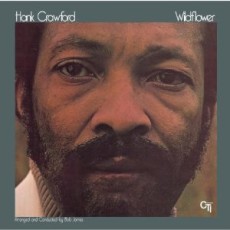
Hank Crawford was born Bennie Ross Crawford, Jr. on December 21, 1934 in Memphis, Tennessee. He began formal piano studies at age nine and was soon playing for his church choir. His father had brought an alto saxophone home from the service and when Crawford entered Manassas High School, he took it up in order to join the band, hanging out with George Coleman, Booker Little, Harold Mabern and Frank Strozier. At eighteen he appeared on an early 1952 Memphis recording for B. B. King playing alongside Ben Branch and Ike Turner.
In 1958 Crawford attended Tennessee State University, majored in music studying theory and composition, played alto and baritone saxophone in the Tennessee State Jazz Collegians and led his own rock ‘n’ roll quartet, “Little Hank and the Rhythm Kings”. It was during this period that he met Ray Charles and got his nickname “Hank” because he looked and sounded like local legendary saxophonist Hank O’Day.
Charles hired Crawford originally as a baritone saxophonist but he switched to alto in ’59 and became musical director until ’63 when he left to form his own septet, having already established himself with several albums on Atlantic Records, recording a dozen albums between 1960 and 1970. He also arranged for Etta James, Lou Rawls and others, although much of his career has been in R&B. However, in the Seventies, Hank had several successes on the jazz and pop charts.
In 1983 a move to Milestone Records gave him the opportunity to become a premier arranger, soloist, and composer, writing for small bands—that include guitarist Melvin Sparks, Dr. John and organist Jimmy McGriff, the later with whom he toured extensively and co-led dates for Milestone’s “Soul Survivor”, Steppin’ Up”, “On The Blue Side” and Road Tested”. The new century found Crawford pursuing a more mainstream jazz sound with the “World of Hank Crawford”, covering Ellington and Tadd Dameron compositions.
Hank Crawford, alto and baritone saxophonist in the hard bop, R&B, jazz-funk and soul jazz genres, credits Charlie Parker, Louis Jordan, Earl Bostic and Johnny Hodges as early influences. His piercing full-bodied signature sanctified church sound, easily recognizable, will live on through his music since his passing on January 29, 2009 at 74.
Daily Dose Of Jazz…
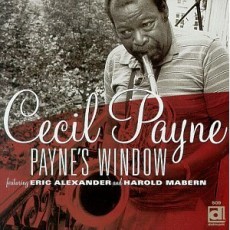
Cecil Payne was born December 14, 1922 in Brooklyn, New York. He received his first saxophone at age 13, asking his father for one after hearing Count Basie’s version of Honeysuckle Rose performed by Lester Young and took lessons from Pete Brown, a local alto sax player.
Payne began his professional recording career with J. J. Johnson on the Savoy label in 1946. During that year he played with Roy Eldridge, through whom he met Dizzy Gillespie. His earlier recordings would largely fall under the “swing” category, until Gillespie hired him, a relationship that lasted until 1949.
By the early 50s, Cecil found himself working with Tadd Dameron, Illinois Jacquet, James Moody, Machito, Woody Herman, Count Basie and freelancing around New York, frequently performing with Randy Weston. Throughout his fifty plus year career baritone saxophonist he recorded as a leader and a sideman for Decca, Savoy, the Charlie Parker label, Muse, Spotlite and Strata East, and regularly for Delmark Records in the nineties, when he was in his seventies, and on into the new millennium.
Cecil Payne, baritone and alto saxophonist and flautist, passed away on November 27, 2007. Although largely unknown to the public he was one of the pioneers in adapting the baritone saxophone to bebop and post-bop.
Daily Dose Of Jazz…
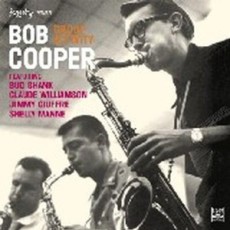
Bob Cooper was born on December 6, 1925 in Pittsburgh, Pennsylvania. He began to study the clarinet in high school and the following year he began working on the tenor saxophone. By 1945 he was joining Stan Kenton’s outfit when he was just 20, and as the new tenor saxophone player played alongside vocalist June Christy on “Tampico” that was to be a Kenton million-selling record. He would marry Christy two years later in Washington, DC.
Coop, as he was affectionately known, stayed with Kenton until he broke up the band in 1951. A naturally swinging jazz musician, Cooper and some other ex- Kenton men were hired to play at the Lighthouse Cafe in Los Angeles by the bassist Howard Rumsey. The Lighthouse became one of the most famous jazz clubs in the world, and the band, Howard Rumsey’s Lighthouse All Stars made history.
With a steady job he could work from home and he expanded his study of the oboe and English horn. While at the Lighthouse he made many momentous recordings, unique amongst them oboe and flute with Bud Shank, and composing a 12-tone octet for woodwind. Bob would go on to lead record sessions as part of a series of long-playing albums under “Kenton Presents” for Capitol Records.
His writing and playing on the album and its successor, “Shifting Winds” in 1955, were seminal in the creation of what was to become known as West Coast jazz. Imaginative writing and a well lubricated polish characterized the session and Cooper’s singing and stomping tenor style on his arrangement of “Strike Up The Band” boosted the record sales considerably.
Cooper would go on to tour Europe, South Africa and Japan with Christy, work as a studio musician in Hollywood, further develop his writing and compose film scores, join Kenton’s huge Neophonic Orchestra and have his composition ‘Solo For Orchestra’ premiered at one of its concerts. Much in demand for his beloved big-band work, he played regularly in other Los Angeles orchestras led by Shorty Rogers, Terry Gibbs, Bill Holman, Bill Berry, Bob Florence and Frankie Capp / Nat Pierce.
Bob Cooper, the West Coast jazz musician known primarily for playing tenor saxophone was also one of the first to play solos on oboe, passed away on August 5, 1993 in Los Angeles, California. Though maturing into one of the finest but least praised tenor saxophonists, he easily ranked with Stan Getz, Zoot Sims and Al Cohn in his talents. His last studio recording, released the year of his death, was on Karrin Allyson’s album Sweet Home Cookin on which he played tenor saxophone.
More Posts: arranger,composer,english horn,oboe,saxophone,vocal

Daily Dose Of Jazz…
Hadley Caliman was born December 1, 1932 in Los Angeles, California. While at Jefferson High School he studied with his fellow classmates trumpeter Art Farmer and saxophonist Dexter Gordon, and was known in the Central Avenue corridor as “Little Dex”. It was here during the 50s and by the 60s where he primarily gigged and the tenor was soon seen playing with Mongo Santamaria, the Gerald Wilson Big Band, Willie Bobo and Don Ellis and was briefly a member of a jazz-rock fusion group led by Ray Draper.
By the Seventies Hadley had moved to San Francisco and was performing and/or recording with Joe Henderson, Nancy Wilson, Carlos Santana, Joe Pass, Hampton Hawes, Bobby Hutcherson, Flora Purim, Elvin Jones, Freddie Hubbard, Jon Hendricks, Earl Andreza, Phoebe Snow and Patrice Rushen among others. He later moved to Seattle, Washington where he had been on the faculty of the Cornish College of the Arts and a featured soloist with the Seattle Repertory Jazz Orchestra.
Though one can hear Coltrane’s influence in his playing, it never overshadowed the earlier West coast bop or the myriad of musical genres he played that created his modern jazz sound. Tenor saxophonist and flautist Hadley Caliman passed away on September 8, 2010 at age 78 in Seattle, Washington where he had been an active player leading both a quartet and quintet.
More Posts: saxophone
Daily Dose Of Jazz…
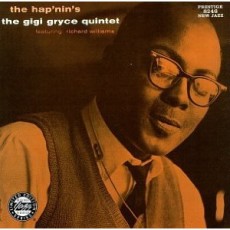
Gigi Gryce was born George General Grice, Jr. on November 28, 1925 in Pensacola, Florida but grew up in Hartford Connecticut. He studied classical composition at the Boston Conservatory, studied with private teachers, then won a Fulbright scholarship and continued his studies in Paris.
His performing career was relatively short in comparison to other musicians of his generation, his work little known, however, several of his compositions have been covered extensively – “Minority,” “Social Call,” and “Nica’s Tempo” are frequently heard in mainstream jazz venues. Gigi’s compositional bent includes harmonic choices similar to those of Benny Golson, Tadd Dameron and Horace Silver in the contemporaneous period. Gryce’s playing, arranging, composing is consonant with the hard bop classic period was generally considered to be 1953-1965.
During the 1950s he achieved some renown for his innovative bebop playing, his primary instrument being the alto saxophone. Among the musicians with whom Gryce performed were Thelonious Monk, Tadd Dameron, Lionel Hampton, D, Howard McGhee, Clifford Brown, Art Farmer, Lee Morgan, Max Roach, Oscar Pettiford, Teddy Charles and Benny Golson. In 1955, Gryce formed the Jazz Lab Quintet, which included trumpeter Donald Byrd.
In the mid-1950s he converted to Islam and adopted the name Basheer Qusim. By the 60s he stopped using the name Gigi Gryce partly due to personal problems that took their toll on his financial and emotional state, withdrawing from performing. During this last period of his life he taught at a series of public schools in Long Island and New York City and the Community Elementary School 53 on 168th Street in the Bronx, the last school renamed the Basheer Qusim School in his honor.
Gigi Gryce, saxophonist, flautist, clarinetist, composer, arranger, educator, and big band leader died of an apparent epileptic seizure on March 14, 1983 in Pensacola, Florida.