

Daily Dose Of Jazz…
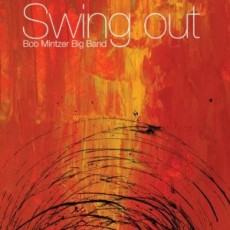
Bob Mintzer was born January 27, 1953 in New Rochelle, New York. After graduating from the Interlochen Arts Academy in 1970, he made his mark as a soloist, mainly on the tenor saxophone and bass clarinet but is also proficient on flute and the EWI (electronic wind instrument).
He is a member of the jazz-rock band the Yellowjackets but among jazz fans is even better known for his inspiring big band work since the early 1980s in the Word of Mouth Big Band and then as the leader of the Bob Mintzer Big Band. Before starting his own big band, Bob was a featured soloist and arranger with the Buddy Rich big band.
In 2008, Bob succeeded pianist Shelly Berg to hold the Bowen H. “Buzz” McCoy and Barbara M. McCoy Endowed Chair in Jazz Studies at the University of Southern California Thornton School of Music.
Mintzer has been nominated for thirteen Grammy Awards both for his solo work and big band recordings an his Homage to Count Basie won him a Grammy for the Best Large Ensemble in 2001. He has performed and/or recorded with a wide variety of artists ranging from Tito Puente, Buddy Rich, Thad Jones/Mel Lewis Big Band, James Taylor, The New York Philharmonic, National Symphony, American Saxophone Quartet, Art Blakey, Donald Fagan, Bobby McFerrin, Nancy Wilson, Kurt Elling, to Jaco Pastorius, Mike Manieri, and Randy Brecker.
Saxophonist, clarinetist, composer, arranger and bandleader Bob Mintzer continues to perform, tour and record as he explores funk and Latin domains with his big band.
Daily Dose Of Jazz…
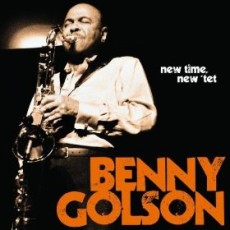
Benny Golson was born January 25, 1929 in Philadelphia, Pennsylvania. While in high school he played with several other promising young musicians, including John Coltrane, Red Garland, Jimmy Heath, Percy Heath, Philly Joe Jones and red Rodney. After matriculating Howard University, Benny joined Bull Moose Jackson’s R&B band where he met and learned about writing from pianist Tadd Dameron.
From 1953 to 1959 Golson played with Dameron’s band and then with the bands of Lionel Hampton, Johnny Hodges, Earl Bostic, Dizzy Gillespie and Art Blakey & The Jazz Messengers. While working with the Lionel Hampton band at the Apollo in 1956, Benny learned that his friend trumpeter Clifford Brown had died in a car accident. In honor, Golson composed “I Remember Clifford”.
From 1959 to 1962 Golson co-led the Jazztet with Art Farmer. Golson then left jazz to concentrate on studio and orchestral work for 12 years and during this period he composed music for such television shows as Ironside, Room 222, M*A*S*H and Mission: Impossible.
By the mid-1970s Golson returned to jazz playing and recording, he re-organized the Jazztet in 1983, was honored as a NEA Jazz Maser in ’95, made a cameo appearance in the Tom Hanks vehicle “The Terminal” that was related to his participation in the classic photo “A Great Day In Harlem”, received the Mellon Living Legend Legacy Award, the Outstanding Lifetime Achievement Award from the University of Pittsburgh International Academy of Jazz, in which he was also inducted into their Hall of Fame.
Since 1996 Howard University created and has awarded the prestigious Benny Golson Jazz Master Award to several distinguished jazz artists. As of 2007, Benny Golson, tenor saxophonist, composer and arranger in the bebop and hard bop genres continues to tour regularly. He is known for his jazz standards “Stablemates”, “Whisper Not”, “Killer Joe”, “Along Came Betty and “Are You Real”, that have been performed and recorded by countless jazz musicians.
More Posts: saxophone
Daily Dose Of Jazz…
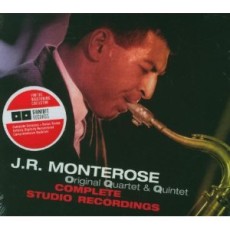
J. R. Monterose was born Frank Anthony Peter Vincent Monterose, Jr. in Detroit Michigan on January 19, 1927. A few months after his birth, the family moved to Utica, New York and this is where he began formal clarinet studies at thirteen. After hearing the Glenn Miller soloist Tex Beneke J.R. taught himself to play tenor saxophone with his early influences Coleman Hawkins and Chu Berry. He also found harmonic inspiration in pianist Bud Powell and learned chord changes from guitarist Sam Mancuso.
Monterose first stepped into the professional arena playing in upstate New York territory dance bands in the late forties. In 1950 he joined the Henry “Hot Lips” Busse touring orchestra, then the Buddy Rich band in ’51 but left for lack of soloing opportunities.
By the mid to late 50s he was in New York City as a featured soloist with Claude Thornhil’s orchestra and with vibraphonist Teddy Charles’ modernist groups, Charles Mingus’s Jazz Workshop and Kenny Dorham’s short-lived Jazz Prophets. He recorded two sessions with Alfred Lion for Blue Note as a leader, “J.R. Monterose” in 1956 and “The Message” in 1959.
Throughout his life he continued to pursue his ever-evolving craft in small time U.S. venues and during extended stays in the late 1960’s through the mid 1970’s in Belgium, The Netherlands and Denmark with occasional low-profile recordings. His preference for small group work in out of the way places would shape much of his subsequent career, contributing to the musical growth upon which he was always so intently focused but ultimately relegating him to an undeserved obscurity.
He steadfastly refused to be pigeonholed in any particular style and was quoted as saying “ I’ve tried all my life to avoid copying. If I can’t be myself, there’s no point in being in jazz”. Tenor saxophonist J.R. Monterose passed away on September 16, 1993.
More Posts: saxophone
Daily Dose Of Jazz…
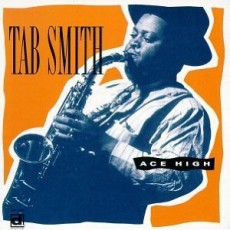
Talmadge (Tab) Smith was born in Kinston, North Carolina on January 11, 1909. He joined his first professional band, the Carolina Stompers, in 1929 and in the 1930s and 1940s he spent several years in the bands of Lucky Millinder and Count Basie as well as spending long periods freelancing both as a player and as an arranger. After WWII he led his own groups, which concentrated on rhythm and blues as jazz turned from swing to bop.
His biggest R & B hit was “Because of You”, recorded for United Records reached #1 on the R & B charts and number 20 on the pop charts, in 1951. His association with United lasted until 1957, put ting out 24 singles and a 10-inch LP for the company sometimes alternating on tenor saxophone.
During the 1950s, Smith was a significant rival to alto saxophone-playing bandleader Earl Bostic, and was also in competition with his own formative influence Johnny Hodges, until Hodges returned to Duke Ellington’s band.
His career never recovered from the closure of United Records. After brief stays at Checker and King Labels, Tab retired from the music business in the early 1960s. He sold real estate, and played piano part-time in a steakhouse.
Alto saxophonist Tab Smith, who concentrated on swing and R&B genres, passed away in St. Louis, Missouri on August 17, 1971.
More Posts: saxophone
Daily Dose Of Jazz…
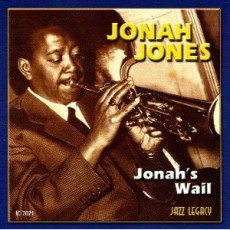
Jonah Jones was born Robert Elliott Jones in Louisville, Kentucky on December 31, 1909. He started playing alto sax at the age of 12 in the Booker T. Washington Community Center band in Louisville before quickly transitioning to trumpet where he excelled immediately. Jones began his career in the 1920s playing on a riverboat named “Island Queen” which plied between Kentucky and Ohio.
By 1928 he joined with Horace Henderson, later worked with Jimmie Lunceford, had an early and successful collaboration with Stuff Smith from 1932-1936, and by the Forties he was working in big bands like Benny Carter’s and Fletcher Henderson. He would spend most of the decade with Cab Calloway’s band that later became a combo.
Starting in the 1950s he had his own quartet and began concentrating on a formula that gained him wider appeal for a decade. The quartet consisted of George “River Rider” Rhodes on piano, John “Broken Down” Browne on bass and “Hard Nuts “Harold Austin on drums. The most mentioned accomplishment of this style is perhaps their version of “On The Street Where You Live”. This effort succeeded and he began to be known to a wider audience. This led to his quartet performing on “An Evening With Fred Astaire” in 1958 and winning a Grammy Award for Best Jazz Performance by a group in 1960.
Jonah went on to become a sensation in France, returned to more “core” jazz work with Earl Hines, played in the pit orchestra for the stage play Porgy and Bess starring Cab Calloway, was inducted into the Big Band and Jazz Hall of Fame in 1999. Trumpeter Jonah Jones passed away on April 29, 2000.