

Daily Dose Of Jazz…
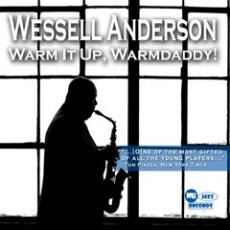
Wessell “Warmdaddy” Anderson was born on November 27, 1966 in Brooklyn, New York and grew up in the tough Bedford-Stuyvesant and Crown Heights neighborhoods. By 14 he was deeply immersed in jazz at the urging of his father, who was a drummer. He played alto saxophone in local clubs from his early teenage years, and studied at the Jazzmobile workshops with Frank Wess, Charles Davis and Frank Foster. He met Branford Marsalis who convinced him to study with clarinetist Alvin Batiste at Southern University in Louisiana.
Anderson began touring with the Wynton Marsalis Septet, collaborating with Marsalis through the middle of the 1990s helping to make some of the most defining music. He continued to sit in the first alto chair with the Lincoln Center Jazz Orchestra. In 1994, he signed and released his debut album, “Warmdaddy In The Garden of Swing” with Atlantic Records followed by his sophomore release “The Ways of Warmdaddy” and then “Live at the Village Vanguard”.
Over the years he develop his sound combining New Orleans jazz with the sweeping blues style of Cannonball Adderley. He has played with contemporaries Eric Reed, Irvin Mayfield, Steve Kirby, Xavier Davis, Jaz Sawyer and Ben Wolfe among others while maintaining an East Lansing, Michigan restaurant called “Gumbo & Jazz”.
More Posts: saxophone
Daily Dose Of Jazz…
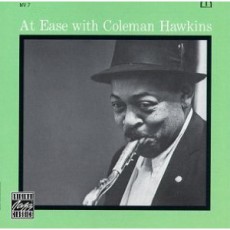
Coleman Randolph Hawkins was born on November 21, 1904 in St. Joseph, Missouri and named after his mother’s maiden name. He started out playing piano and cello prior to playing saxophone at age nine. By the time he turned 14, he was playing around eastern Kansas while attending Topeka High School and simultaneously studying harmony and composition for two years at Washburn College.
In 1921 Hawkins joined Mamie Smith’s Jazz Hounds, toured through 1923 and settled in New York City. Hawkins joined Fletcher Henderson’s Orchestra doubling on clarinet and bass saxophone and becoming a star soloist. He recorded with band mates Louis Armstrong and Henry “Red” Allen, a number of solo recordings with either piano or a pick-up band of Henderson musicians. In late 1934, he played with Jack Hylton’s band in London, toured Europe as a soloist until 1939 and worked with Django Reinhardt and Benny Carter in 1937 Paris.
Returning to the States he worked Kelly’s Stables, recorded two choruses of Body and Soul, his landmark recording of the Swing Era. Recorded as an afterthought at the session, it is notable in that Coleman ignores almost all of the melody, only the first four bars are stated in a recognizable fashion. In its exploration of harmonic structure it is considered by many to be the next evolutionary step in jazz recording from where Louis Armstrong’s “West End Blues” in 1928 left off.
Over the course of his long and prolific career Hawkins had an unsuccessful attempt at a big band, led a combo at Kelly’s Stables, played with Thelonious Monk, Oscar Pettiford, Miles Davis, Oscar Peterson, Herb Ellis, Ray Brown, Ben Webster, Max Roach, Howard McGhee, Sonny Rollins, John Coltrane, Roy Eldridge, J.J. Johnson, Fats Navarro and Duke Ellington among others, recorded a session with Dizzy Gillespie that is considered the first bebop recording and toured with Jazz at the Philharmonic. After 1948 Hawkins divided his time between New York and Europe, making numerous freelance recordings. In the 1960s, he appeared regularly at the Village Vanguard.
Tenor saxophonist Coleman Hawkins directly influenced many future bebop musicians such as Sonny Rollins and John Coltrane. In his later years he stopped recording, began drinking heavily and died of pneumonia on May 19, 1969 in New York.
Daily Dose Of Jazz…
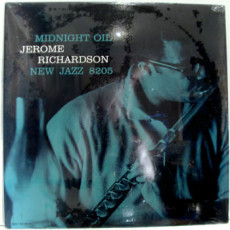
Jerome Richardson was born November 15, 1920 in Oakland, California and started on alto saxophone at the age of eight. In his teens Benny Carter, Johnny Hodges and Willie Smith were his idols. He became a professional musician at the age of fourteen, and had a brief stint with Lionel Hampton, and worked with Bay Area bands until 1941, during which time he also studied music at San Francisco State College. The flute was added to his working compliment in 1940. Both this and his alto sax were used to advantage in a Navy band, under the direction of Marshall Royal, at St. Mary’s Pre-Flight from 1942 to 1945. He joined the Lionel Hampton band again in 1949, with whom he recorded what is widely regarded as the first modern jazz solo played on flute on “Kingfish”, and was also a member of the Earl Hines big band.
Settling in New York in 1954 he began a very active session career, but continued to make his mark in a purely jazz context. He worked with bands led by Lucky Millinder and Cootie Williams, led his own quartet at Minton’s Playhouse in Harlem in 1955 and was part of Oscar Pettiford’s group that summer.
Over the next decade Jerome continued to lead his quartet, work the Roxy pit orchestra, regularly worked with Quincy Jones, toured Europe with Harold Arlen’s blues opera, was a founder member of the Thad Jones-Mel Lewis Orchestra, organizing and performing many Thad Jones tribute concerts. He played with a number of other notable big bands during his long career, including bands led by Jimmy Lunceford, Gerald Wilson, Gil Evans and Charles Mingus.
His standing as a superbly accomplished soloist on a range of reed and wind instruments was complemented by an equally strong reputation as an accompanist of singers, including the likes of Ella Fitzgerald, Frank Sinatra, Sarah Vaughan, Billie Holiday, Peggy Lee, Nancy Wilson, Billy Eckstine, and Lena Horne. Richardson performed with practically every significant post-war jazz artist, including Miles Davis, Dizzy Gillespie, Duke Ellington, Louis Armstrong, John Coltrane, Cannonball Adderley, Lionel Hampton, Herbie Hancock, Milt Jackson, Oliver Nelson, Art Farmer, Clifford Jordan, Slide Hampton, Horace Silver, Gerry Mulligan, Jimmy Smith, Wes Montgomery, Cal Tjader, and Antonio Carlos Jobim, as well as a whole range of blues, soul and pop artists.
Jerome Richardson played tenor, alto, baritone saxophone, clarinet, piccolo, and flute passed away in Englewood, New Jersey on June 23, 2000 recorded sparingly as a leader but was one of the most sought after session musicians for more than half a century was probably the most recorded saxophonist of his generation.
Daily Dose Of Jazz…
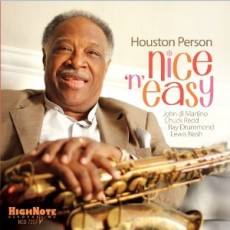
Houston Person, born November 10, 1934, grew up in Florence, South Carolina, first playing the piano before switching to tenor sax. He studied at South Carolina State College, went on to join the Air Force, became a member of a service band stationed in West Germany and played with Don Ellis, Eddie Harris, Cedar Walton and Leo Wright.
After his discharge he continued his studies at Hartt College of Music in Hartford, Connecticut. He first became known for a series of albums for Prestige Records in the 1960s, met Etta Jones while both were with Johnny Hammond’s band and spent many years as her musical partner, recording, performing and touring, and for much of his career this association was what he was best known for. Contrary to popular belief, they were never married.
Houston has performed in the hard bop and swing genres but is best known for his soul-jazz work. He has recorded more than seventy-five albums as a leader for Prestige, Westbound, Mercury, Savoy, and Muse Records. He is currently in residence as a leader and record producer at HighNote and has recorded with Charles Brown, Bill Charlap, Charles Earland, Lena Horne, Etta Jones, Lou Rawls, Horace Silver, Dakota Staton, Billy Butler and Richard “Groove” Holmes among others.
He received the Eubie Blake Jazz Award in 1982 and was inducted into the South Carolina State College Hall of Fame in 1999. He continues to produce, record, perform and tour.

More Posts: saxophone
Daily Dose Of Jazz…
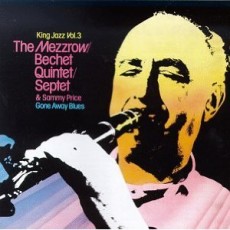
Milton Mesirow, better known as Mezz Mezzrow was born November 9, 1899 in Chicago, Illinois. The clarinetist and saxophonist has never been ranked as one of the best jazz musicians, organizing and taking part in some magnificent recording sessions involving the best black musicians of the 1930s/40s, including Benny Carter, Teddy Wilson, Frankie Newton, Tommy Ladnier and most importantly Sidney Bechet. His 1938 sessions for the French jazz critic Hugues Panassie, which he is well-known for organizing and financing, involved Bechet and Ladnier and helped spark the “New Orleans revival”.
Mezzrow became better known for his drug-dealing of marijuana than his music. His nicknames “Mezz” and “Muggles” that became slang for marijuana were used in song, the former in the Stuff Smith tune “If You’re A Viper” and the later was the title of a 1928 Louis Armstrong recording and for a brief time was his manager.
In the mid-1940s Mezzrow started his own record label, King Jazz Records, featuring himself in groups that usually included Sidney Bechet and, often, trumpeter Oran “Hot Lips” Page. Mezzrow also can be found and heard playing on six recordings by Fats Waller and his appearance at the 1948 Nice Jazz Festival was a surprise hit.
Following that appearance he made his home in Paris, France and organized many bands that included French musicians like Claude Luter, as well as visiting American artists like Peanuts Holland, Jimmy Archey, Kansas Fields, Lionel Hampton and Buck Clayton, with whom in 1953 he made what is probably his best ever recording: a version of the Louis Armstrong classic “West End Blues”.
Mezz Mezzrow, clarinetist, saxophonist, author and colorful character died on August 5, 1972 in Paris, France.