

Daily Dose Of Jazz…
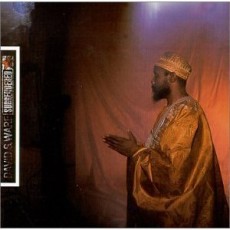
David S. Ware was born on November 7, 1949 in Plainfield, New Jersey and began playing at age ten due to his father’s admiration for the saxophone and his large record collection. While in high school he played in the bands and ventured into New York as a teenager to listen to jazz. He had informal practice sessions with Sonny Rollins as a youth in the ’60s; then as part of the fertile NYC Loft Jazz era of the ’70s.
During this decade, he joined the Cecil Taylor Unit and Andrew Cyrille’s Maono. He also worked together with drummers Beaver Harris and Milford Graves. In the early ’80s he toured Europe with both Andrew Cyrille and his own trio. In mid-decade, Ware purposefully engaged himself in a period of extensive woodshedding – in order to further develop both his personal sound and his visionary group concept.
The ’90s saw the full-on actualization of this group, and the recognition of David S. Ware as a true saxophone colossus. A series of groundbreaking albums by the David S. Ware Quartet were released on the Silkheart, DIW, Homestead, AUM Fidelity, and Columbia Jazz labels. Perhaps the most highly acclaimed group of the last decade, David’s efforts were rewarded by being one of the very few jazz musicians whose work was appreciated by an audience outside the narrow confines of the jazz world. In an unprecedented coup, the ‘Cryptology’ album garnered the lead review slot in Rolling Stone Magazine.
Over the course of his career, tenor saxophonist David Ware has recorded for Columbia, Black Saint, DIW, Silkheart, Homestead, AUM Fidelity and Thirsty Ear record labels. He has performed with a host of musicians and was responsible for bringing the young pianist Matthew Shipp to the attention of the jazz environment. David S. Ware, who has played the most prestigious clubs and festivals around the globe passed away on October 18, 2012 ar age 62 in New Brunswick, New Jersey.
More Posts: bandleader,composer,saxophone
Daily Dose Of Jazz…
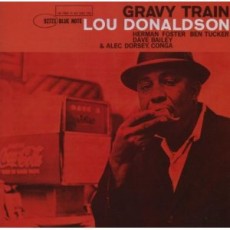
Lou Donaldson was born November 1, 1926 in Baden, North Carolina, the second of four children in a musical family, his mother being a concert pianist and the music director at Baden High School. His mother started him out on the clarinet and once mastering the instrument and his pursuit of a music career was ignited.
At age 15, Lou matriculated to North Carolina A & T College, received a Bachelor’s of Science degree, joined the marching band playing clarinet. Drafted into the US Navy in 1945, he played in the Great Lakes Navy Band playing both clarinet and alto saxophone for dances. Hearing Charlie Parker play, he decided that this was the style of playing he would make his own, having previously playing like Johnny Hodges, Tab Smith or Pete Brown.
Upon return from the military he went back North Carolina A& T College, he played in the Billy Tolles dance band and with the Sabby Lewis Band during the summer months in Boston. Sitting in one night with Illinois Jacquet and hearing him play drummer Poppa Joe Jones told Lou to come to New York. Lou went to work at Minton’s Playhouse, was approached by Alfred Lyons of Blue Note Records and recorded with the Milt Jackson Quartet.
Success came and more records as a leader came with Horace Silver, Clifford Brown, Grant Green, John Patton, Blue Mitchell, Donald Byrd, Horace Parlan, Tommy Turrentine, Al Harewood, George Tucker, Jameel Nasser and Curtis Fuller playing as sidemen. Donaldson went on to have a prolific career playing bebop, hard bop jazz blues and soul jazz, helping fellow musicians get work and get paid, bringing Gene Harris and the 3 Sounds from Washington DC to New York to record with him on the famous album called LD Plus 3.
Awarded an honorary doctorate from North Carolina A&T University and n inducted into the International Jazz Hall of Fame along with countless of honors and awards for his outstanding contributions to jazz, alto saxophonist Lou Donaldson continues to express himself as a composer and bandleader.
More Posts: saxophone
Daily Dose Of Jazz…
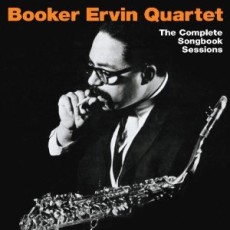
Booker Telleferro Ervin II was born October 31, 1930 in Denison, Texas but didn’t take up the saxophone until he was an adult. After teaching himself tenor saxophone while in the USAF, he moved to the Boston area and studied at Berklee College of Music. His tenor playing was characterized by a strong, tough sound, blues/gospel phrasing and perhaps inspired by growing up in the south. Some thought Coltrane influenced him but it is also thought that they developed their styles independently, and beyond some sheets of sound similarities, they were distinctively different.
Moving to New York, Ervin joined Horace Parlan’s quartet, with whom he recorded “Up & Down” and “Happy Frame of Mind” on Blue Note. He went on to work with Charles Mingus from 1956 to 1963, appearing on “Goodbye Pork Pie Hat” on the album “Mingus Ah Um” and “Wednesday Night Prayer Meeting” on the Blues and Roots session in 1959, as well as the Mingus Mingus Mingus Mingus Mingus recording.
During the Sixties Ervin also led his own quartet, recording for Prestige with ex-Mingus associate pianist Jaki Byard along with bassist Richard Davis and Alan Dawson on drums. Ervin later recorded again on Blue Note and played with pianist Randy Weston.
Tenor saxophonist Booker Ervin had 18 albums as a leader and two dozen as a sideman with Teddy Charles, Andrew Hill, Mal Waldron and others, died of kidney disease in New York City on July 31, 1970 at the age of 39.
More Posts: saxophone
Daily Dose Of Jazz…
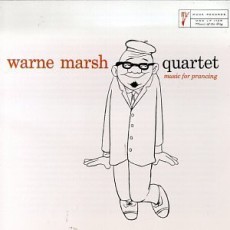
Warne Marion Marsh was born October 26, 1927 in Los Angeles, California into an affluent family, his father was a cinematographer, mother a violinist and his aunt May Marsh an actress.
Tutored by Lennie Tristano and, along with Lee Konitz became one of the pre-eminent saxophonists of the Tristano-inspired “Cool School”. Of all of Tristano’s students, Marsh came closest to typifying Tristano’s ideals of improvised lines, in some respects, even transcending the master himself. He often recorded in the company of other Cool School musicians, and remained one of the most faithful to the Tristano philosophy of improvisation. His distinctively pure tone without the inflections popular among many other tenor saxophonists at that time such as honks, growls, etc. set him apart from other Lester Young and Ben Webster-influenced saxophonists.
Warne’s rhythmically subtle lines are immediately recognizable and have been called by Anthony Braxton as “the greatest vertical improviser.” In the 1970s he gained renewed exposure as a member of Supersax, a large ensemble that played orchestral arrangements of Charlie Parker solos. Marsh also recorded one of his most celebrated albums, “All Music”, with the Supersax rhythm section during this period.
Marsh died onstage at the Los Angeles club Donte’s on December 18, 1987, in the middle of playing the tune “Out of Nowhere”. Though he remains something of a cult figure among jazz fans and musicians, his influence has grown since his death. Younger players such as Mark Turner have borrowed from his music as a way of counterbalancing the pervasive influence of John Coltrane.
More Posts: saxophone
Daily Dose Of Jazz…
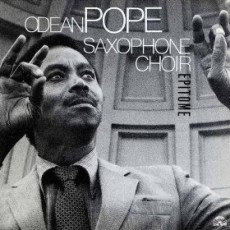
Odean Pope was born October 24, 1938 in Ninety Six, South Carolina to musical parents but was reared in Philadelphia, Pennsylvania when the family moved when he was ten. His lifelong study of music began at the Graniff School of Music and the Benjamin Franklin High School music program.
Pope grew up in a rich musical environment with other Philadelphia jazz luminaries as John Coltrane, Lee Morgan, Kenny Barron, Jimmy and Percy Heath, Clifford Brown, Philly Joe Jones, Dizzy Gillespie and Benny Golson to name a few. Early in his career, the young tenor saxophonist, while at Philadelphia’s Uptown Theater, played behind a number of noted rhythm and blues artists including James brown, Marvin Gaye and Stevie Wonder, however, it was Coltrane who chose him as his replacement in Jimmy Smith’s group when he left to join Miles Davis in New York.
He went on to play briefly with Jimmy McGriff in the 1960s and late in the decade began working with Max Roach and touring Europe. Odean was a member of Philadelphia group Catalyst in the early and mid-1970s, and in 1977 assembled the “Saxophone Choir” consisting of nine saxophones and a rhythm section. He became a regular member of Roach’s quartet in 1979 and has recorded extensively with him, in addition to numerous releases as a leader.
His never-ending quest to study his craft led him to study orchestration, modern harmony, African rhythms, be-bop art forms and arrangement with Kenny Clarke at the Paris Conservatory. He would go on to study with Ray Bryant, Jimmie Merritt, and Hasaan Ibn Ali and with Max Roach for some twenty-two years. Pope is known for saying, “Studying with Max was like going to the highest institution in the world.”
Odean perfected the techniques of circular breathing and multiphonics, both allowing him to stretch his solo improvisations from dazzling elevations to the throbbing, husky sounds for which he is so well known, to all kinds of delicacy in getting from one to the other.
Pope has won “Best Tenor Saxophone Player” at the North Sea Jazz Festival, received numerous citations from the City of Philadelphia, and has received awards from the Pew Fellowship, the Rockefeller Foundation and the Chamber music America. He started the jazz studies program at the Settlement Music School and he continues to give master classes in the Philadelphia School District as well as nationally and internationally.
More Posts: saxophone