

Daily Dose Of Jazz…
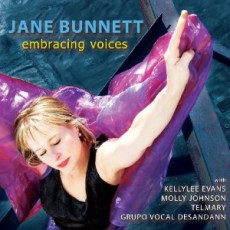
Jane Bunnett was born on October 22, 1956 in Toronto and began her musical educational as a classical pianist then switched to woodwinds at the Royal Conservatory. Inspired by Charles Mingus and Rahsaan Roland Kirk in 1979 San Francisco, she was studying jazz at York University. This led her to study with Barry Harris, James Newton, Frank Wess and James Moody and ultimately Steve Lacy in Paris in 1991.
Her debut recording “In Dew Time” featured an ambitious mix of Canadian and American players – pianist Don Pullen, tenor Dewey Redman and Vincent Chancy on French horn. This led to touring Canada and Australia and recording of her sophomore project a year later followed by two more by 1994.
Jane has become one of the foremost jazz musicians in Canada, and has gained recognition around the world for her improvising talents, technical proficiency, and writing and band leading abilities. She has received accolades and won awards from the Village Voice, SOCA, Downbeat Magazine, the National Jazz Awards of Canada, the Smithsonian Institute and the Jazz Journalist Association, her work has been nominated for several Grammy awards and received Canada’s highest award, the Order of Canada.
With sixteen albums under her belt, the saxophonist and outspoken humanitarian, Jane Bunnett continues to perform at jazz clubs, festivals, and concert halls and for broadcast throughout Canada, the United States, Europe, and Cuba, with her groups, and as a featured solo artist.
More Posts: saxophone

Daily Dose Of Jazz…
Don Byas was born Carlos Wesley Byas October 21, 1912 in Muskogee, Oklahoma into a musical family, his mother a pianist and father playing clarinet. He started training in classical music, first on the violin, then clarinet and finally the alto saxophone, which he played until the end of the 1920s. He started playing in local orchestras at the age of 17, with the likes of Bennie Moten, Terrence Holder and Walter Page’s Blue Devils.
In 1931 while at Langston College in Oklahoma he founded and led his own college band, “Don Carlos and His Collegiate Ramblers”. Switching to the tenor saxophone when he moved to West Coast, through the Thirties he played with various Los Angeles bands such as Bert Johnson’s Sharps and Flats, Lionel Hampton, Eddie Barefield, Buck Clayton, Lorenzo Flennoy and Charlie Echols bands.
By 1937 Byas moved to New York working with Eddie Mallory and his wife Ethel Waters, went on to work with Don Redman, recorded his first solo in 1939, played with the bands of lucky Millinder, Andy Kirk, Edgar Hayes and his childhood idol Benny Carter. He played and recorded with Billie Holiday, Pete Johnson, Hot Lips Page, Big Joe Turner, Charlie Christian, Thelonious Monk and Kenny Clarke in after hour sessions.
However Byas’ big break came in early 1941 when Count Basie selected him to fill the seat vacated by Lester Young. Through the forties he played the best New York nightspots, had some success with a few hits, collaborated with Dizzy Gillespie, Charlie Parker, George Wallington, Oscar Pettiford and Max Roach. Despite his bebop associations, Byas always remained deeply rooted in the sounds of swing. He started out by emulating Coleman Hawkins, but always cited Art Tatum as his greater influence: “I haven’t got any style, I just blow like Art”.
In 1946 Byas went to Europe and forgot to return to America. A bon vivant in the true sense he was seen on the Riviera, St. Tropez often sporting mask and flippers, sport fishing, shooting pool or dishing up Louisiana style menus for his female admirers all while recording and playing regularly throughout Europe.
Settling in Amsterdam he continued to tour and play with the likes of Art Blakey, Kenny Clarke, Bud Powell, Jazz At The Philharmonic and Ben Webster to name a few. He returned once to the U.S. to appear at the Newport Jazz Festival. Tenor saxophonist Don Byas died on August 24, 1972 from lung cancer in Amsterdam, Netherlands at the age 59.
More Posts: saxophone
Daily Dose Of Jazz…
Eddie Daniels was born on October 19, 1941 in New York City and grew up in the Brighton Beach neighborhood of Brooklyn. He became interested in jazz as a teenager when impressed by listening to the recordings of the musicians accompanying singers, such as Frank Sinatra. Eddie’s first instrument was the alto saxophone, started on clarinet at 13 and later received his Masters in Clarinet from Julliard. By 15 he would add the Newport Jazz Festival Youth Competition to what would become a long list of credits. By the time he entered college, he was playing alto, clarinet and adding tenor saxophone to his arsenal.
Daniels has led a variety of bands from small combos to orchestras and has toured worldwide, recorded and appeared on television. Since the 1980s he has focused mainly on the clarinet and in 1989 he won one of many Grammy awards for playing on the Roger Kellaway arrangement of “Memos From Paradise”.
Over the course of his career he has captured Down Beat Magazine’s International Critics New Star on Clarinet Award, played and recorded with the Thad Jones/Mel Lewis Orchestra at the Village Vanguard, George Benson, Joe Farrell, Johnny Hammond, Richard Davis, Yusef Lateef, Airto Moreira and Don Patterson Gordon Goodwin’s Big Phat Band. Clarinetist Eddie Daniels, who also plays saxophone, flute and piccolo, performs commissioned classical compositions, has revolutionized the blend of classical and jazz and continues to tour and record.
Daily Dose Of Jazz…
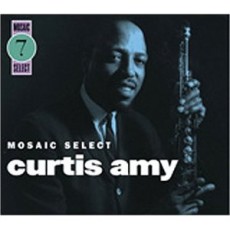
Curtis Amy was born on October 11, 1929 in Houston, Texas and learned how to play clarinet before joining the Army. During his time in service he picked up the tenor saxophone and after his discharge he enrolled and graduated from Kentucky State College.
Working as an educator in Tennessee while playing in mid-western jazz clubs for a time and in the mid-1950s, Amy relocated to Los Angeles and signed with Pacific Jazz Records. By the mid-60s he spent three years as musical director for Ray Charles’ orchestra, together with his wife and singer Merry Clayton, and Steve Huffsteter.
Curtis lead his own bands and recording albums under his own name, Amy also did session work and played the solos on several recordings, including The Doors song “Touch Me”, Carole King’s “Tapestry”, and Lou Rawls’ first albums, “Black and Blue and Tobacco Road”; with Dexter Gordon in the Onzy Matthews’ big band as well as working with Marvin Gaye, Tammy Terrell and Smoky Robinson.
Soul jazz and hard bop tenor saxophonist Curtis Amy, a part of the West coast jazz scene who explored other musical mediums, passed away on June 5, 2002.
More Posts: saxophone
Daily Dose Of Jazz…
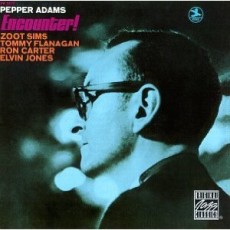
Park “Pepper” Adams III was born on October 8, 1930 in Highland Park, Michigan. His family moved to Rochester, New York when he was young and it was here that he began his musical endeavors. At 16 he moved back to Detroit and met several musicians who would later be important to his career, including trumpeter Donald Byrd. Adams became interested in Wardell Gray’s approach to the saxophone and later named Gray and Harry Carney as his influences.
After his Army band stint and a brief tour in Korea, Pepper moved to New York and recorded the “Dakar” album with Coltrane, with Lee Morgan on “The Cooker”, and briefly worked with Benny Goodman ‘s band in 1958. During this time, Adams also began working with Charles Mingus, performing on one of Mingus’s finest albums from this period, “Blues & Roots” and sporadically recording with Mingus until his death in 1979.
Adams would become a significant member of the Thad Jones/Mel Lewis Big Band from 1965 to 1978, and continued to record Jones’s compositions on many of his own albums. Adams also co-led a quintet with Donald Byrd that produced the live date, “10 to 4 at the 5 Spot” featuring Elvin Jones.
Pepper Adams, the baritone saxophonist nicknamed “The Knife” for his hearty tone, driving rhythmic sense, and big and intense sound that fit well in the up-tempo of hard bop, is considered, along with Gerry Mulligan, as setting the foundation for contemporary playing on the baritone. He died of lung cancer in Brooklyn, New York on September 10, 1986.
More Posts: saxophone