

Daily Dose Of Jazz…
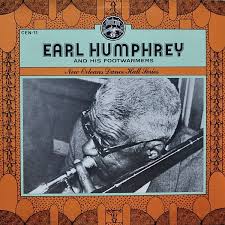
Earl Humphrey was born on September 9, 1902 in New Orleans, Louisiana into a musical family. His father a prominent local clarinetist and music teacher, his older brother Willie was also a clarinetist and his younger brother Percy played the trumpet.
Earl learned to play trombone from his grandfather, joined a traveling circus with his father in 1919 and traveled widely in the 1920s. In 1927 he recorded with Louis Dumaine and played through the 1930s until he decided to retire from music, settling in Virginia in the 1940s.
Returning to New Orleans in 1963, he was urged to resume his musical career. He joined his brother Percy’s band and played on a few albums, including Jazz City Studio. He recorded his first sessions as bandleader in 1966 titled Igor’s Imperial Orchestra and his sophomore project Earl Humphrey & His Footwarmers the following year on the Center label. Trombonist Earl Humphrey passed away on June 26, 1971 in his home in New Orleans at the age of 68.

Inspire A Young Mind
More Posts: trombone
Daily Dose Of Jazz…
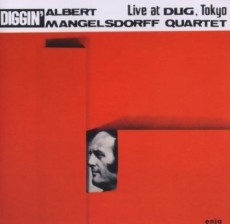
Albert Mangelsdorff was born on September 5, 1928 in Frankfurt, Germany. He was given violin lessons as a child and was self-taught on guitar in addition to knowing trombone. His brother, alto saxophonist Emil introduced him to jazz during the Nazi period at a time when it was forbidden in Germany. After the war he worked as a guitarist and took up trombone in 1948.
In the 1950s Mangelsdorff played with the bands of Joe Klimm, Hans Koller that featured Attila Zoler, Jutta Hipp and the Frankfurt All Stars. Together with Joki Freund he led a hard bop quintet that was the nucleus of the Jazz Ensemble of Hessian Broadcasting, of which he was the musical director. In 1958 he represented Germany in the International Youth Band appearing at the Newport Jazz Festival.
By 1961 Albert was recording with the European All Stars, formed a quintet with the saxophonists Heinz Sauer, Günter Kronberg, bassist Gunter Lenz and drummer Ralf Hubner, which became one of the most celebrated European bands of the 1960s. He has recorded John Lewis, toured Asia on behalf of the Goethe-Institut, recorded a quintet album of Eastern themes titled Now Jazz Ramwong, toured the USA and South America with the quintet and after a period of European free jazz Kronberg left and the quartet remained together.
During the early seventies the quartet was revived, Mangelsdorff explored the new idiom with Global Unity Orchestra and other groups such as the trio of Peter Brotzmann. It was at this juncture that he discovered multiphonics, long solistic playing and experimental sounds. As the decade ensued he made his debut solo recording and played trombone collaborating with Elvin Jones, Jaco Pastorious, Alphone Mouzon, John Surnam, Barre Phillips, Stu Martin and others.
Over the course of his career he co-founded the United Jazz and Rock Ensemble, a thirty-year association, taught jazz improvisation at Dr. Hoch’s Konservatorium, performed with Reto Weber Percussion Ensemble, Chico Freeman, and with Jean-Francois Jenny Clark founded the German-French Jazz Ensemble. He toured and recorded with pianist Eric Watson, bassist John Lindberg and drummer Ed Thigpen during the 90s and with a second quartet of Swiss musicians and Dutch cellist Ernst Reijseger.
In 1995 he replaced George Gruntz as musical director for the JazzFest Berlin, had a prize named after him by the Union of German Jazz Musicians, and on July 25, 2005 in Frankfurt, one of the most accredited and innovative trombonists of modern jazz passed away. Albert Mangelsdorff, who became famous for his distinctive technique of playing multiphonics was 86 years old.
Put A Dose In Your Pocket
More Posts: trombone

Daily Dose Of Jazz…
Thurman Green was born on August 12, 1940 in Texas where he learned to play the trombone. He spent time playing in Los Angeles, California with swinging big bands including the Clayton-Hamilton Jazz Orchestra and was an occasional member of the Horace Tapscott Quintet, unfortunately one of the groups no one bothered to record. He was open-eared enough to play quite credibly in free settings now and then.
In 1962, Green and baritone saxophonist Hamiet Bluiett were jamming buddies at the Navy School of Music in Washington D.C. but they soon went their separate ways hoping to team up again some day. He wpould perform and record with Willie Bobo, Donald Byrd, Ella Fitzgerald, Bobby Hutcherson and Jean-Luc Ponty.
Some thirty-two years later, in 1994, Bluiett who had been recording for the Mapleshade label was able to give his old friend his first opportunity to lead his own record date, Dance of the Night Creatures. It is a shame that it took over four years for the music to finally come out because on June 19, 1997, bebop trombonist Thurman Green suddenly died at age 57.
Inspire A Young Mind
More Posts: trombone

Daily Dose Of jazz…
Urban Clifford “Urbie” Green was born August 8, 1926 in Mobile, Alabama and was taught the piano as a child by his mother, jazz and popular tunes from the beginning. He picked up the trombone when he was about 12 and although he listened to such trombone greats as Tommy Dorsey, J.C. Higginbotham, Jack Jenney, Jack Teagarden and Trummy Young, he was more influenced by the styles of Dizzy Gillespie, Charles Parker and Lester Young. Vocalists Perry Como and Louis Armstrong also influenced his style.
After his father died when he was 15, Green went straight into professional music, first joining the Tommy Reynolds Band and then stints with Bob Strong, Jan Savitt and Frankie Carle. While at Auburn High School he played with The Auburn Knights Orchestra, a college big band. In 1947, he joined Gene Krupa’s outfit and quickly moved up to Woody Herman’s 3rd Thundering Herd Big Band in 1950 to play with his brother, Jack.
By 1953 Urbie was in New York City quickly establishing himself as the premier trombonist in the booming recording industry and in 1954 he was voted the “New Star” trombonist in the International Critics Poll from Down Beat magazine. He was voted “Most Valuable Player” several times by the National Academy of Recording Arts and Sciences. He recorded with virtually all of the major jazz musicians of the 1950s and 1960s and led his own groups while also joining tours as a featured performer.
He collaborated with innovative producer Enoch Light for the Command and Project 3 labels, producing The Persuasive Trombone of Urbie Green and 21 Trombones, and was sideman and soloist on the album ‘s Continental by Ray Conniff in 1961. In the Seventies he began making innovations with his instrument designing a signature mouthpiece for Jet Tone and collaborated with Martin Brass on practical improvements to trombone design.
He would go on to record with Enoch Light and the Light Brigade, Dick Hyman, Maynard Ferguson and Doc Severinsen before moving over to CTI where he played more of his music and less solos with his band. He would record with Blue Mitchell, Herbie Mann, Manny Albam,, Steve Allen, Ray Bryant, Count Basie, Paul Desmond, Gil Evans, Art Farmer, Aretha Franklin, Dizzy Gillespie, Johnny Griffin, Billie Holiday, Coleman Hawkins, Milt Jackson, Bobby Hutcherson, Wes Montgomery, Mark Murphy and the list goes on and on.
By the 1980s and beyond Urbie’s recording career began a slowing down with only two live, straight jazz works; Just Friends, and Sea Jam Blues. In 1995 he was elected into the Alabama Jazz Hall of Fame and he still plays live at the Delaware Water Gap Celebration of the Arts Festival every September, just miles down the road from his home.
Put A Dose In Your Pocket
More Posts: trombone
Daily Dose Of Jazz…
Carl Charles Fontana was born on July 18, 1928 in Monroe, Louisiana and learned jazz from his father Collie, a saxophonist and violinist. He first performed with his father’s band while in high school and would go on to attend the University of Louisiana Monroe for two years prior to transferring to Louisiana State University and getting a degree in Music Education.
Fontana got his first professional break on the jazz scene in 1951 when he was hired to stand in for Urbie Green in the Woody Herman band. Impressing the bandleader with his improvisational skills he kept him on as a permanent member of the band even after Green returned..
Three years later he left Herman and joined Lionel Hampton’s big band. In early 1955 he played briefly with Hal McIntyre before joining Stan Kenton’s big band later in the year. He recorded three albums with Kenton and also worked with fellow trombonist Kai Winding during this period. Being an inventive yet fluid player made it easy for him to record and tour, but Carl was also a master of the “Doodle Tonguing” technique, that allowed him to smoothly execute runs of notes at speeds many had not previously considered possible to achieve on a slide trombone.
By 1958, Fontana was living in Las Vegas, Nevada and would tour only on rare occasions. He primarily performed with house orchestras in Las Vegas during the 1960s, particularly Paul Anka’s band with Rosolino, and in the bands backing Sammy Davis Jr., Tony Bennett, Wayne Newton and the Benny Goodman Orchestra. This continued into the Seventies in addition to recording with Louie Bellson, Bill Watrous, and Supersax as well as co-leading a date with Jack Hanna, titled The Hanna-Fontana Band: Live at Concord.
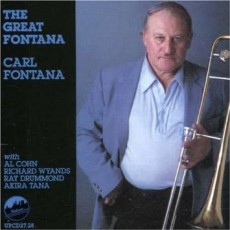
The 1980s saw him appearing regularly on National Public Radio’s Monday Night Jazz program. And although he recorded on more than 70 albums over his long career, his first true record as a headliner did not appear until 1985 when Uptown Jazz released The Great Fontana. He continued performing and recording sporadically throughout the 1990s.
Trombonist Carl Fontana, who never earned great fame but was on every great trombonist’s list of greats, passed away in Las Vegas, Nevada aged 75 after suffering from Alzheimer’s disease on October 9, 2003.
Jazz Is Global – Share
More Posts: trombone