

Daily Dose OF Jazz…
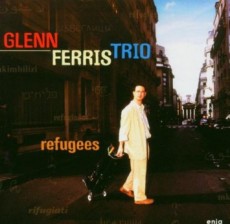
Glenn Ferris was born on June 27, 1950 in Los Angeles, California. He studied classical music from 1958 to 1967, but from 1964 onward he also studied jazz with Don Ellis. He went on to perform with a variety of musicians in varied genres before moving to France in 1980.
In France, trombonist Glenn Ferris worked with Tony Scott, Brotherhood of Breath, Henri Texier and others. As an educator he currently teaches at the Conservatoire de Paris and leads a trio and a quintet.

Give A Gift Of Jazz – Share
More Posts: trombone
Daily Dose Of Jazz…
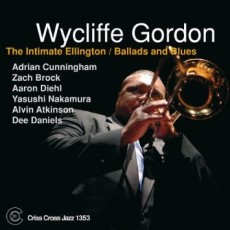
Wycliffe Gordon was born May 29, 1967 in Waynesboro, Georgia and was heavily influenced musically by the church music his organist father played at several churches in Burke County as well as being a classical pianist and teacher.
It wasn’t until 1980 that Gordon became particularly inspired in jazz at age thirteen, listening to jazz recordings inherited from his great aunt. The collection included a five-LP jazz anthology produced by Sony-Columbia and was drawn in particular to Louis Armstrong and the Hot Fives and Hot Sevens.
Wycliffe attended, at that age, Sego High School in Augusta, Georgia and played in the band under direction from Don Milford. He graduated from Butler High in 1985, performed in New York City as part of the McDonald High School All-American Band, went on to study music at Florida A&M where he played in the marching band.
His early works as a professional were with Wynton Marsalis but in recent years he expanded beyond swing and experimented with new instruments, notably the indigenous Australian wind instrument, didgeridoo. In 1995, Gordon arranged and orchestrated the third version of the theme song for NPR’s All Things Considered, the widely recognized melody composed in 1971 by Donald Joseph Voegeli.
In 2006 he founded Blues Back Records, his was an independent jazz label and released his Rhythm On My Mind album, a collaboration with bassist Jay Leonhart. His desire for full artistic control was the impetus for creating Blues Back. Blues Back had produced other artists in Wycliffe’s universe who met Gordon’s criteria for originality, however, since 2011 has been inactive.
Jazz trombonist, arranger, composer, bandleader and music educator at the collegiate-conservatory level, Wycliffe Gordon also plays didgeridoo, trumpet, tuba, piano, and sings. To date he has a catalogue of 19 albums as a leader and another eight as a sideman performing with John Allred, Marcus Roberts, Randy Sandke, Maurice Hines, Ron Westray, and Chip White. He continues to perform, tour, record and educate.
Take A Dose On The Road
;

Daily Dose Of Jazz…
Rob McConnell was born Robert Murray Gordon McConnell on February 14, 1935 in London, Ontario, Canada. He took up the valve trombone in high school and began his performing career in the early 1950s, performing and studying with Don Thompson, Bobby Gimby, Maynard Ferguson and music theory with Gordon Delamont. In 1968 he formed The Boss Brass, a big band that became his primary performing and recording unit through the Seventies and Eighties.
In 1988, McConnell took a teaching position at the Dick Grove School of Music in California, but gave up his position and returned to Canada a year later. In 1997, he was inducted into the Canadian Music Hall of Fame and in 1998 was made an Officer of the Order of Canada.
Rob remained active throughout the 2000s, touring internationally as both a performer and educator. The Rob McConnell Tentet, a scaled-down version of the Boss Brass featuring many Boss Brass alumni, has been quite successful; it has recorded three major albums, The Rob McConnell Tentet, Thank You, Ted and Music of the Twenties.
Rob McConnell & The Boss Brass became one of Canada’s most popular jazz ensembles, performing live and recording for Concord Jazz label and a variety of others. The valve trombonist, composer, arranger, bandleader, educator and recording artist died on May 1, 2010 in Toronto, Ontario, aged 75, from cancer. He left a catalogue of 33 albums recording with Maynard Ferguson and Mel Torme among others.
Put A Dose In Your Pocket
More Posts: trombone
Daily Dose Of Jazz…
Steve Wiest was born John Stephen Wiest on January 26, 1957 in Cleveland, Ohio. Taking up the trombone in his youth he attended Blair High School and played in the band. He went on to matriculate through University of Southern Mississippi and then through University of North Texas.
From 1981 to 1985, Steve was a featured trombonist and arranger with the Maynard Ferguson Band, he has been a professor for twenty-six of the thirty-four years that he has been a professional trombonist, composer, and arranger. From 2006 to 2014, he was Associate Professor of Music in Jazz Studies at the University of North Texas College of Music and during that time he was also the director of the One O’Clock Lab Band.
A three-time Grammy nominee individually, for composing and collaboratively for ensemble, Steve Wiest has in excess of two dozen albums to his name and 58 arrangements and compositions to his credit, which include 10 original compositions from his current project, The Dover Stone: Concerto for Folded Space.
His resume of performances or recordings reads like a who’s who list with Weather Report, Sarah ‘Vaughan, Bill Cosby, Buddy Rich, Freddie Hubbard, McCoy tner, Al Foster, Eddie Gomez, Slide Hampton, Dizzy Gillespie, Chick Corea and the Gil Evans Orchestra on it, just to name a few.
Trombonist and educator Steve Wiest is currently in his first year as Associate Professor of Jazz Studies and Commercial Music at the University of Denver Lamont School of Music, and is the Coordinator of the 21st Century Music Initiative at the school. He continues to perform, compose and arrange jazz and big band.
Give A Gift Of Jazz – Share
More Posts: trombone
Daily Dose Of Jazz…
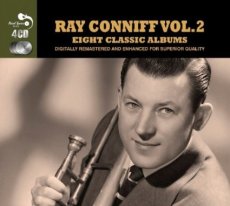
Joseph Raymond Conniff was born on November 6, 1916 in Attleboro, Massachusetts, learned to play trombone from his father and learned music arranging from a course book.
Post World War II he joined the Artie Shaw big band writing many of his arrangements. Hired by Mitch Miller, head of A&R at Columbia Records, Ray became the house arranger. During this period he worked with Rosemary Clooney, Johnny Mathis, Frankie Laine, Marty Robbins and Johnny Ray among others. In 1955 Ray wrote a top 10 arrangement for Don Cherry’s “Band of Gold” that sold more than a million copies.
From 1957 to 1969 Conniff arranged and recorded as a leader and sideman for Columbia and their subsidiary label Epic, became a bandleader and had 28 albums in the American Top 40, created the Ray Conniff Singers, toured Europe, was the first American popular artist to record in Russia and stepping out of his element he produced a couple of light jazz albums sans vocals.
Conniff’s most famous album was his 1966 release of “Somewhere My Love” written to the tune Lara’s Theme from the 1965 film Dr. Zhivago. It featured the 12 female and 13 male Ray Conniff Singers. The album went platinum, hit the top of the American and European charts and grabbed a Grammy Award.
The next three decades were equally lucrative for Ray recording mainly out of Los Angeles and finding fame touring Latin and South America. He recorded an average of two instrumental and one vocal album a year and sold over 70 million albums worldwide. He continued to record and perform until his death on October 12, 2002 in Escondido, California.
Jazz Is Global – Share
More Posts: trombone