

Daily Dose Of Jazz…
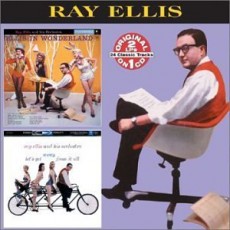
Ray Ellis, born July 28, 1923 in Philadelphia, Pennsylvania became a well-known record producer, arranger and conductor. In the 1950s and 60s he produced easy-listening sessions for RCA Victor, MGM an Columbia, recorded such well known works as a leader “Let’s Get Away From It All” and “Ellis In Wonderland”.
Ray arranged such works as “A Certain Smile” for Johnny Mathis, “Broken Hearted Melody” for Sarah Vaughan and “Standing On The Corner” for the Four Lads, but his best known jazz orchestration is Billie Holiday’s “Lady In Satin”. He would collaborate with Lena Horne, Emmy Lou Harris, Barbra Streisand, Harold Land, The Drifters, Connie Francis and others
Ellis’ work encompassed all areas of music, from records to film, commercials, and television. His television theme music credits include NBC News At Sunrise with Connie Chung, The Today Show and the original Spider-Man cartoon series.
From 1968 to 1982 Ellis along with Norman Prescott composed and arranged nearly all of the background music for cartoon studio Filmation, composed and conducted the music for Fantastic Voyage, The Hardy Boys, Flash Gordon, The Archie Show and Sabrina The Teenage Witch. He was responsible for such game show themes such as Sale of the Century, Scrabble and Scattergories among others.
Ray Ellis’ prolific career ended with his death from complications from melanoma on October 27, 2008 in Encino, California.
More Posts: arranger,conductor,record producer

Daily Dose Of Jazz…
Lalo Schifrin was born Boris Claudio Schifrin in Buenos Aires, Argentina on June 21, 1932. At the age of six he began a six-year course of study on piano with Enrique Barenboim and at 16 studied piano with Andreas Karalis and harmony with Argentine composer Juan Carlos Paz. By twenty he was attending the Paris Conservatoire during the day and playing at night in jazz clubs.
1955 saw Lalo playing with Astor Piazzolla and on stage at the International Jazz Festival in Paris. Back in Argentina he formed a jazz orchestra, met Dizzy in ’58 and wrote Gillespiana for his big band. He would go on to work with Xavier Cugat, move to New York, take the piano chair in Dizzy’s quintet and wrote a second extended composition titled, The New Continent.
The Sixties had MGM signing Schifrin to his first movie score, he moved to Hollywood, changed The Man from U.N.C.L.E. to a jazz melody and won an Emmy for the theme. He would go on to score television and movies like Mission Impossible, Mannix, Cool Hand Luke, Dirty Harry, The Exorcist, Bullitt and even ABC’s Eyewitness News.
Over the course of his career Lalo Schifrin has recorded over 50 albums and soundtracks, 90 television and film scores as a leader, composer and conductor; and has worked with Cannonball Adderley, Eddie Harris, Count Basie, Luiz Bonfa, Candido Camera, Louis Bellson, Al Hirt, Jimmy Smith, Sarah Vaughan, Cal Tjader, Paul Horn and many others.
In 1997, the composer founded Aleph Records; played an orchestra conductor in Red Dragon, has had his music sampled by hip-hop artists, has been nominated twenty-one times and won four Grammy Awards, one Cable Ace Award, received six Oscar nominations and has a star on the Hollywood Walk Of Fame.
Pianist, composer, arranger and conductor Lalo Schifrin continued to compose, conduct and perform until his death from complications of pneumonia at a hospital in Los Angeles, California at the age of 93 on June 26, 2025.
Daily Dose Of Jazz…
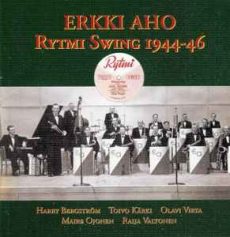
Erkki Vilhelm Aho was born December 10, 1918 in Helsinki, Finland. He led the Rytmi orchestra which was formed in 1938. In the orchestra, Olavi Virta and Raija Valtonen acted as soloists, the pianist was Toivo Kärki and another famous member was Pauli Granfelt.
Aho’s orchestra was one of the top Finnish orchestras. During the Continuation War, his orchestra consisted of 14 men before it was taken over in 1945 by drummer Osmo “Ossi” Aalto. In the spring of 1944, the orchestra recorded American evergreens arranged by Kärjen Syväri.
Trombonist, trumpeter and conductor Erkki Aho died on August 19, 2002.

More Posts: bandleader,conductor,history,instrumental,jazz,music,trombone,trumpet

Daily Dose Of Jazz…
Isabel Hernandez-Cata was born on December 9 and raised in the Washington, D.C. metropolitan area. She completed undergraduate studies in music at University of Rochester, a Masters degree in Music Education from Boston University and Jazz Studies – Vocal Performance from the University of North Texas.
She founded the Isabel Hernandez-Cata quintet featuring a fluid lineup with guitarist Greg Loman. They met while working at a community theatre. They have performed with numerous DC jazz musicians Ricky Loza, Eric Byrd, Alison Miller, and Marcus Johnson.
A classical contralto, Isabel has sung in choirs, among them the National Philharmonic Chorale and Singers. Her diverse musical interests always return her to a love of the jazz art form to perform standards and jazz treatments of tunes from other modern music genres.
As an educator she teaches vocal music and piano in Montgomery County Public Schools. She has also served as vocal director, pit conductor keyboardist, and choreographer for dozens of school and community musical productions. She has been a choral director, combo leader, and teacher of Piano & AP Music Theory in Maryland Public Schools since 2001.
Hernandez-Cata composes, arranges, and performs as a jazz vocalist and bandleader. Her choirs have performed for US Presidents fifty times and she has had backing vocal stints for Al Green and Lionel Richie.
Vocalist Isabel Hernandez-Cata continues to perform, compose, conduct and educate.
More Posts: bandleader,composer,conductor,educator,history,instrumental,jazz,music,vocal
Daily Dose Of Jazz…
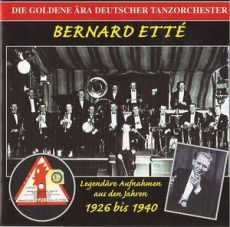
Bernard Etté was born on September 13, 1898 in Kassel, Germany. The son of a hairdresser, he studied music formally at the Louis Spohr Conservatory in Kassel. He initially worked with Carl Robrecht as an instrumentalist, playing piano and banjo in addition to violin.
In the early 1920s he assembled his own ensemble, and took up a residency in Berlin, Germany and performed on radio. The group also recorded in the 1920s, often with traveling American musicians. During the 1930s, as the Nazi party rose to power, Etté shifted away from jazz to light music, and led a large orchestra during World War II.
He played for wounded soldiers on behalf of the Nationalsozialistische Volkswohlfahrt in 1940 and for prison overseers at Auschwitz in 1944. After the war, he moved to the United States but was unsuccessful in adapting to new stylistic trends when he attempted a new career.
Returning to Germany, he led bands for luxury retreats in the East Frisian Islands and schlager and operetta backing bands in central Germany. By the end of the 1950s he quit actively playing music, and lived out his last years in an old folk’s home.
Bernard Etté, jazz and light music violinist and conductor died on September 26, 1973 in Mühldorf, Bavaria, Germany.
More Posts: bandleader,conductor,history,instrumental,jazz,music,violin