

Daily Dose Of Jazz…
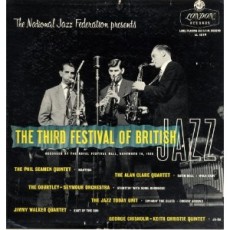
Keith Ronald Christie was born January 6, 1931 in Blackpool, England and began playing trombone at 14 while attending the Guildhall School of Music and Drama. He formed a band with his brother Ian in the late 1940s, and soon after the pair joined the band of Humphrey Lyttleton, recording copiously.
Keith served in the military early in the 1950s, reconvening to lead an ensemble with his brother in 1951 that lasted until 1953. He went on to work with other jazz musicians like John Dankworth, Cleo Laine, George Chisholm, Vic Ash and others in the mid 50s. He worked with Ted Heath as well as Allan Ganley in the Jazzmakers from the late 50s to early 60s, with brief stints in other bands through the end of the decade.
During this period he joined Benny Goodman on a European tour, also playing with Tubby Hayes, Paul Gonsalves, Kenny Wheeler, Ronnie Ross, and Bobby Lamb among others. In the mid-1970s Keith Christie suffered and recovered from a fall but his continuing battles with alcoholism eventually resulted in the trombonist’s early death on December 16, 1980 in London, England.
More Posts: bandleader,trombone
Daily Dose Of Jazz…
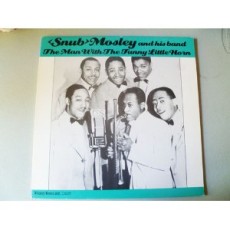
Snub Mosley was born Lawrence Leo Mosley on December 29, 1905 in Little Rock, Arkansas. Playing trombone in high school after graduation he joined Alphonse Trent’s territory band from 1926 to 1933. Following this he played with the Jeter-Pillars Orchestra in 1934, Claude Hopkins from 1934-35, was band mates with Fats Waller and Louis Armstrong with the Luis Russell Orchestra 1936-37. In addition, he led his own groups before settling in New York City.
Though Mosley spent most of his career on trombone, he also invented an instrument called the slide saxophone, which had both the slide portion of a trombone and a saxophone mouthpiece. The instrument is prominently featured in his 1940 recording The Man With The Funny Little Horn. From 1940 to 1978 he recorded for Decca, Sonora, Penguin, Columbia and Pizza record labels.
Trombonist Snub Mosley passed away quietly on July 21, 1981 at his home at 555 Edgecombe Avenue in Harlem, New York City.
More Posts: slide saxophone,trombone
Daily Dose Of Jazz…
Curtis DuBois Fuller was born in Detroit, Michigan on December 15, 1934 to Jamaican parents who died when he was very young and raised in an orphanage. He took up the trombone while in Detroit and became friends with schoolmates Paul Chambers and Donald Byrd and also knew Tommy Flanagan, Thad Jones and Milt Jackson.
After two years of army service ending in 1955, where he played in a band with Chambers and the Adderley brothers, Fuller joined the quintet of another Detroit musician, Yusef Lateef. By 1957 the quintet moved to New York and Curtis recorded his first sessions as a leader for Prestige Records.
Alfred Lion of Blue Note Records heard him playing with Miles Davis in the late Fifties and featured him as a sideman on record dates led by Sonny Clark and John Coltrane. His work on Trane’s “Blue Train” album is probably his best-known recorded performance. This was followed with four Fuller led dates for Blue Note.
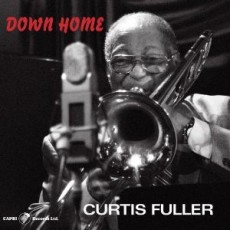
Over his career Curtis has worked with Slide Hampton, Bud Powell, Jimmy Smith, Wayne Shorter, Abbey Lincoln, Lee Morgan, Hank Mobley, Blue Mitchell and Joe Henderson, and that’s the very short list. He performed with Dizzy Gillespie’s band, toured with Count Basie, was the sixth Jazz Messenger with Art Blakey in 1961, was the first trombonist to hold membership in the Art Farmer-Benny Golson Jazztet, and has recorded for Savoy, Epic, Impulse, Status, Challenge, Timeless and Capri among others and his latest album, “Down Home” on Capri.
In addition to continuing to perform and record, he was a faculty member of the New York State Summer School of the Arts – School of Jazz Studies. Trombonist Curtis Fuller passed away on May 8, 2021.

More Posts: trombone
Daily Dose Of Jazz…
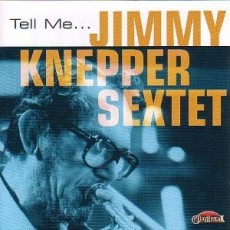
James M. Knepper was born November 22, 1927 in Los Angeles, California. He began playing trombone at nine, started playing professionally at 15 and worked with the big bands Freddie Slack, Roy Porter, Charlie Spivak, Charlie Barnet, Woody Herman and Claude Thornhill during the late forties and early ‘50s.
A good friend and arranging/transcribing partner of bassist and composer Charles Mingus, Knepper was twice on the receiving end of Mingus’ legendary temper. The first incident was being a punch in the mouth while onstage at a memorial concert in Philadelphia, the second punch landed in Mingus’ apartment broke one of his teeth ruining his embouchure and resulting in the permanent loss of the top octave of his range on the trombone, thus ending their working relationship.
Throughout his career Jimmy worked with Lee Konitz, Stan Kenton, Herbie Mann, Gil Evans, Benny Goodman, Thad Jones/Mel Lewis Orchestra, toured Africa and the Soviet Union, and cut sessions as a leader several albums on Debut, Bethlehem, Blackhawk, Steeplechase and Criss Cross labels among others.
Knepper’s nimble technique enabled him to articulate the trombone more in the manner of a saxophone coupled with the slurs and tonal variations of his predecessors. His improvisation was filled with subtle surprises and his reputation has remained strong in the jazz world over the years. After a long battle with Parkinson’s disease, Jimmy Knepper passed away on June 14, 2003.
More Posts: trombone
Daily Dose Of Jazz…
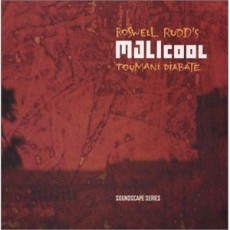
Roswell Rudd, born Roswell Hopkins Rudd, Jr. on November 17, 1935, grew up in Sharon, Connecticut. Graduating from Yale University where he had played and recorded two albums of boisterous trad-jazz with Eli’s Chosen Six, a Dixieland band of Yale students that Rudd joined in the mid-’50s. But his landmark collaborations with Cecil Taylor, Archie Shepp, John Tchicai and Steve Lacy grew out of the lessons learned while playing rags and stomps in college.
In the 1960s, Rudd participated in key free jazz recordings with his ultra avant-garde New York Art Quartet, the soundtrack of the 1964 film New York Eye and Ear Control, Michael Mantler & Carla Bley’s 1968 Jazz Composer’s Orchestra-Communications with Cecil Taylor; and has collaborations with Don Cherry, Pharoah Sanders, Larry Coryell and Gato Barbieri. A major factor in his career has been his lifelong friendships with saxophonists Archie Shepp and Steve Lacy, recording and performing the music of Thelonious Monk numerous times with the later.
Roswell is skilled in a variety of jazz genres but is best known for his avant-garde contributions. Rudd has taught ethnomusicology at Bard College and the University of Maine. Over a period of three decades he has assisted with world music song style – Cantometrics and Global Jukebox projects. He has collaborated and recorded with Malian, Mongolian and with Hispanic New Yorkers.
The Grammy Award-nominated jazz trombonist and composer Roswell Rudd conducts master classes and workshops around the world and since 1962 Rudd has worked extensively with saxophonist Archie Shepp.

Inspire A Young Mind