

Daily Dose Of Jazz…
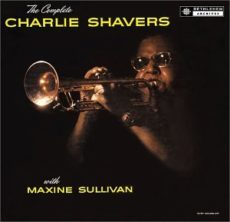
Charles James Shavers was born on August 3, 1920 in New York City and took up piano and banjo before switching to trumpet. In the mid-Thirties he performed with Tiny Bradshaw and Lucky Millinder. In 1935 he joined the trumpet section with Dizzy Gillespie and Carl “Bama” Warwick in Frankie Fairfax’s Campus Club Orchestra.
1936 saw him as a member of John Kirby’s Sextet as trumpet soloist and arranger. Only 16 at the time he gave his birth date as 1917 to avoid child labor laws, Charlie’s arrangements and solos helped make the band one of the most commercially successful and imitated of its day. In 1937, he performed with Midge Williams and her Jazz Jesters. By 1944 he began playing sessions in Raymond Scott’s CBS staff orchestra.
Leaving John Kirby’s band In 1945 he joined Tommy Dorsey’s Orchestra, with whom he toured and recorded, off and on, until Dorsey’s passing in 1956. In 1949, he sang and played the hit The Hucklebuck with Dorsey. He was a member of Dorsey’s Orchestra on numerous Stage Show telecasts for CBS, including early Elvis Presley appearances. During this time he continued to play at CBS while also appearing with the Metronome All-Stars and making a number of recordings as trumpet soloist with Billie Holiday.
From 1953 to 1954 he worked with Benny Goodman and toured Europe with Norman Granz’s popular Jazz at the Philharmonic series, where he was a crowd favorite. He formed his own band with Terry Gibbs and Louie Bellson.
Swing era trumpeter Charlie Shavers passed away from throat cancer in New York City on July 8, 1971 at the age of 50. While on his deathbed his close friend Louis Armstrong passed away, and his last request was that his trumpet mouthpiece be buried with Armstrong.

More Posts: bandleader,composer,history,instrumental,jazz,music,trumpet
Daily Dose Of Jazz…
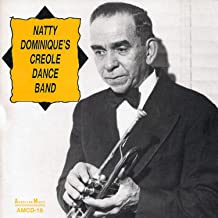
Anatie “Natty” Dominique was born on August 2, 1896 in New Orleans, Louisiana of Afro-Italian descent. Claiming to be a direct descendant of Dominique You, the half-brother of the pirate Jean Lafitte, he studied with Manuel Perez.
Moving to Chicago, Illinois in 1913, over the course of more than three decades there, Dominique played with a number of New Orleans jazzmen, including Louis Armstrong, Jimmie Noone, and especially Johnny Dodds, who employed him from 1928 until his death in 1940.
Shortly afterward, Natty was forced to retire due to a heart condition, keeping him out of the music business for almost a decade. Returning to part-time work with a small combo in the 1950s, he played up till his death.
Trumpeter Natty Dominique, who recorded for American Music Records, Challenge Records, and Black Swan Records, passed away on August 30, 1982 in Chicago.
More Posts: bandleader,history,instrumental,jazz,music,trumpet
Three Wishes
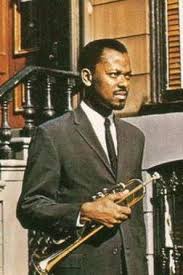
Richard Williams was queried by Nica of his three wishes and his answers were this:
-
-
“More gigs.”
-
“More understanding from the public. I don’t want anything else right now. ”
-
*Excerpt from Three Wishes: An Intimate Look at Jazz Greats ~ Compiled and Photographed by Pannonica de Koenigswarter
More Posts: baroness,history,instrumental,jazz,music,pannonica,three,trumpet,wishes
Requisites
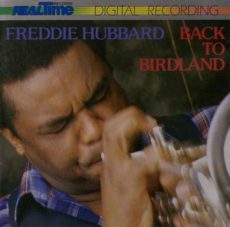
Trumpet and flugelhorn jazzman Freddie Hubbard steps into the spotlight with his first Hard-Bop album since his 1970 CTI Records debut, Red Clay. Back To Birdland (M & K Realtime Records RT-305) has Hubbard leading a sextet featuring Ashley Alexander (tracks: A1, A2, B1 to B3) on double trombone; Richie Cole (tracks: A1 to A3, B1), Med Flory (track: B3) on alto sax; George Cables on piano; Andy Simpkins on bass and John Dentz on drums. Before this release, Freddie recorded a series of LP’s for CTI and Columbia exploring the styles of Jazz-Funk, Jazz Fusion, Smooth Jazz, and Soul-Jazz.
My copy used in this report is the original 1981 US Digital Stereo Audiophile release. Shaw ‘Nuff by Dizzy Gillespie and Charlie Parker begins the album with the front-line blowing fire on the melody. Freddie starts wailing on a hard-driving, opening chorus, then Richie energizes the second solo with the high-voltage current. Ashley brings a swift, brassy attitude to the next reading, then George’s fingers fly with quicksilver speed and John fills the closer with radiant intensity.
Star Eyes by Gene de Paul and Don Raye debuted in the 1943 musical-comedy, I Dood It! The song became a jazz standard after Charlie Parker recorded it for Mercury Records in 1951. The ensemble states the first chorus, then Hubbard takes over on flugelhorn for the next verse. He begins the first solo, conveying a light mood that’s joyously happy and relaxed. Cole takes over in low gear, then builds steadily into a very satisfying groove. Cables puts a vibrant personality into the third statement and Vinnegar wraps up things with a succinct solo. Lover Man is a revered standard from 1941 by Jimmy Davis, Roger Ramirez, and Jimmy Sherman that was written for Billie Holiday. Richie Cole gets the spotlight here and crafts an indelible portrait on the melody and opening statement capturing the beauty of the lyrics perfectly. Freddie has a stylish flugelhorn performance that’s nicely detailed and beautifully paced; he’s also featured on the main theme and ending.
For B.P., a Hubbard creation is one of the most interesting tunes on the album featuring interchanges of cross-rhythms within different time signatures. This song is a tribute to Bebop pianist, Bud Powell and was introduced on the 1968 LP, High Blues Pressure. The leader takes charge of the introduction and vigorous theme, then Cables initiates the first of two thrilling solos. Hubbard follows with a sizzling performance that makes stunning use of the rhythm section’s sterling support. Cables then prepares a tasty musical brew with a spicy flavor on the finale ahead of a mesmerizing climax.
Stella By Starlight by Victor Young and Ned Washington offers Ashley Alexander the spotlight in a quartet setting. This romantic ballad was the main title song during the opening credits and throughout the 1944 film, The Uninvited. Ashley introduces the song slowly but picks up the pace to a sprightly tempo for the melody and first reading. George gives a zesty performance next, then Leroy closes with a velvety smooth finale.
Hubbard’s uptempo Byrdlike was originally recorded on the 1962 release, Ready For Freddie. Everyone gets solo space except Vinnegar and Med Flory takes over on alto, soloing twice. This speedster gets underway with a collective melody by the ensemble. Cables takes the reins first, delivering an adrenaline rush of great speed. Hubbard raises the temperature on the second solo to a ferocious velocity. Flory fuels the first of two readings with exhilarating vitality, then Alexander tells his story with swift acceleration. The altoist returns on the second reading blazing and Dentz makes a clever comment on the closing solo with an entertaining kick at the end.
Back To Birdland is a sonic tour de force with a superb soundstage. Scott Simon and Ken Kreisel are the men behind the dials; the label took the utmost care in preparing their records for the jazz lover, utilizing the very purest vinyl available and imported pressings made in West Germany. If you’re a Freddie Hubbard fan and are seeking an album recalling the Hard-Bop spirit of Goin’ Up, Open Sesame, and Ready For Freddie from his Blue Note years, I highly recommend Back To Birdland! It’s an excellent album from a first-rate sextet that would make a great addition to any jazz library!
~ Goin’ Up (Blue Note BLP 4056/BST 84056); High Blues Pressure (Atlantic SC 1501); Open Sesame (Blue Note BLP 4040/BST 84040); Ready For Freddie (Blue Note BLP 4045/BST 84045); Red Clay (CTI Records CTI 6001); Star Eyes (Mercury Records 11087) ~ Source: Discogs.com ~ Shaw ‘Nuff, Stella By Starlight – Source: JazzStandards.com ~ Star Eyes – Source: Wikipedia.org ~ For B.P. – Source: Album Liner Notes by Dr. Herb Wong © 2020 by Edward Thomas Carter

More Posts: choice,classic,collectible,collector,history,instrumental,jazz,music,trumpet
Daily Dose Of Jazz…
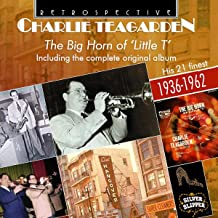
Charlie Teagarden was born July 19, 1913 in Vernon, Texas, the younger brother of Jack Teagarden. Nicknamed Little T, he worked locally in Oklahoma before he and Jack joined Ben Pollack’s Orchestra in 1929. Pollack’s recordings were Teagarden’s first before he worked with Red Nichols in 1931 and Roger Wolfe Kahn in 1932 before doing a seven-year run in the Paul Whiteman Orchestra from 1933 to 1940. In 1936 he, Jack, and Frankie Trumbauer played together in the ensemble The Three T’s.
Teagarden played in his brother’s big band in 1940 but soon branched off to lead his own ensembles. He played with Jimmy Dorsey in 1948-50 and Bob Crosby from 1954–58, as well as working with Pete Fountain in the 1960s. He worked steadily in Las Vegas, Nevada after 1959.
His only release as a leader was issued in 1962 on Coral Records. At the 1963 Monterey Jazz Festival, he performed with Jack, sister Norma, and mother Helen. Teagarden went into semi-retirement in the 1970s.
Trumpeter Charlie Teagarden, also known as Smokey Joe and who was among the hundreds of artists whose material was reportedly destroyed in the 2008 Universal fire according to The New Times Magazine, passed away on December 10, 1984 in Las Vegas.

More Posts: bandleader,history,instrumental,jazz,music,trumpet