

Daily Dose Of Jazz…
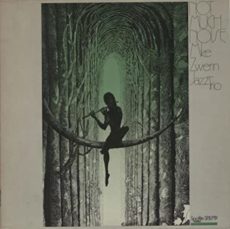
Mike Zwerin was born in New York City on May 18, 1930, where he studied at the High School of Music and Art. He began leading bands in his teens, employing several up-and-coming musicians. He went on to attend the Univerity of Miami and after graduation, he went into his father’s business, the Capitol Steel Corporation.
At the age of 18, while on his summer holidays from the University of Miami, he was spotted by Miles Davis at Minton’s in Harlem, while sitting in with Art Blakey. He was immediately drafted into the rehearsal band for what would become immortalized as Birth of the Cool, while the regular trombonist Kai Winding was indisposed. Also present were Gerry Mulligan, Max Roach, and Lee Konitz. His contribution, in particular, his solo on the track Move, can be heard on The Complete Birth of the Cool. A few muddy recordings exist of radio broadcasts by the band during Zwerin’s time in it, which gave him a lifelong reputation as a jazz musician lucky enough to have been at the cutting edge of a new movement.
Abandoning his musical life for much of the 1950s and after a spell in France, he returned to New York in 1958 and played the trombone in several big bands. Among his other recordings are Getting Xperimental over U, and Mack the Knife, an album of Kurt Weill songs that he produced and arranged himself. He also appears on Archie Shepp’s 1968 album The Magic of Ju-Ju.
Before moving permanently to Europe in 1969, he was a jazz critic for the Village Voice and focusing on journalism, writing for Down Beat, Rolling Stone, and Penthouse before joining the Herald Tribune. Zwerin’s move to London, England in 1969 and then to Paris, France in 1972, would be his home for the rest of his life. Nevertheless, he kept his hand in as a trombonist throughout the 1980s, working with his fellow expatriate Hal Singer and with the guitarist Christian Escoudé. In 1988 he toured with the Charles Mingus Big Band, having played briefly with the Swiss bandleader George Gruntz and played with the French fusion band Telephone.
Zwerin’s lasting claim to fame, however, is, perhaps, not his trombone playing but his book La Tristesse de Saint Louis: Swing Under the Nazis (1985). He spent two years researching it, traveling across France, Austria, Poland and Germany to interview survivors and unearthing the story of how jazz was banned by the Nazis as degenerate music, and yet somehow survived as what Zwerin called a metaphor for freedom.
Cool and progressive jazz trombonist and bass trumpeter Mike Zwerin passed away on April 2, 2010 after a long illness in Paris at the age of 79.

More Posts: bandleader,critic,history,instrumental,jazz,music,trombone,trumpet

Daily Dose Of Jazz…
Lee Katzman was born on May 17, 1928 in Chicago, Illinois and was raised in Indianapolis, Indiana. His early career saw him playing primarily in big band settings. After arriving in New York in the late ‘40s, he played in the big bands of Gene Krupa, Claude Thornhill, Sam Donahue, Buddy Rich, Jimmy Dorsey, and Benny Goodman.
Relocating to California in 1956, he got an invitation from Stan Kenton to join the band as a jazz soloist, both on recordings and on worldwide tours. The late 1950s and 1960s saw him working with Pepper Adams, Les Brown, June Christy, Bob Dorough, Walter Norris, Med Flory, Bill Holman, Teddy Edwards, Mel Lewis, Shelly Manne, Les McCann, Anita O’Day, Jimmy Rowles, and Sonny Stitt.
Known for his clear tone and fearless, acrobatic solos, Lee was often a featured soloist in Bill Holman’s Great Big Band and Terry Gibbs Dream Band, as well as both the NBC and CBS orchestras. He later became a member of Herb Albert’s Baja Marimba Band.
He recorded two sessions as a leader, Beautiful with Teddy Edwards on tenor saxophone, Jack Wilson on piano, bassist Leroy Vinnegar, and Nick Martinis on drums. His second was Lee Katzman Meets Supersax with Med Flory~alto saxophone, Jay Migliore~tenor saxophone, Ray Reed~tenor saxophone, Jack Nimitz~baritone saxophone, Jimmy Rowles~piano, Bob Magnusson~bass, and Donald Bailey~drums.
When he relocated to New York in 1980, he played informal gigs around town with John Bunch and reconnected with Bob Dorough and Walter Norris. He retired with his wife, Judy, to Taos, New Mexico in 2011 and trumpeter Lee Katzman passed away in Taos on August 1, 2013 at age 85.
More Posts: bandleader,history,instrumental,jazz,music,trumpet

Daily Dose Of Jazz…
Oscar Valdambrini was born on May 11, 1924 in Turin, Italy and his professional career didn’t begin until the late 1940s when he played with Rex Stewart. Soon afterward he co-led a small ensemble with Gianni Basso and his association with Basso would continue through the early 1960s.
He also arranged and played as a sideman for Armando Trovajoli toward the end of the Fifties. During the 1960s he played with Gil Cuppini, Duke Ellington, and Giorgio Gaslini, and by the early Seventies, he was working with Maynard Ferguson.
Joining forces once again with Basso the two performed together from 1972 to 1974. He went on to also play with Franco Ambrosetti, Conte Candoli, Dusko Goykovich, Freddie Hubbard, Mel Lewis, Frank Rosolino, Ernie Wilkins, and Kai Winding in the 1970s.
Growing increasingly sick from the middle of the 1980s, trumpeter and flugelhornist Oscar Valdambrini, had a central role in the emergence of a modern jazz movement in Italy, receded from active performance and passed away on December 26, 1996 in Rome, Italy.
More Posts: arranger,bandleader,flugelhorn,history,instrumental,jazz,music,trumpet
Daily Dose Of Jazz…
Richard Gene Williams was born in Galveston, Texas on May 4, 1931 and played tenor saxophone early in his life before picking up the trumpet as a teenager. While playing in local Texas bands, he attended Wiley College, majoring in music.
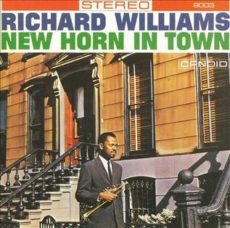
After serving in the Air Force from 1952–56, Williams toured Europe with Lionel Hampton. He returned to America and received a master’s degree at the Manhattan School of Music. In 1959, he played with Charles Mingus at the Newport Jazz Festival and recorded with MIngus that same year. The following year he recorded his only session as a leader, New Horn in Town on the Candid Records label featuring Reggie Workman, Leo Wright, Richard Wyands, and Bobby Thomas.
During the 1960s Richard was a sideman on numerous releases for Blue Note, Impulse!, New Jazz, Riverside, and Atlantic working with Oliver Nelson, Grant Green, Booker Ervin, Sam Jones, Rahsaan Roland Kirk, Les McCann, Lou Donaldson, Yusef Lateef, Gigi Gryce, Carmen McRae, Randy Weston, Charles Tolliver, Mose Allison, Eddie “Lockjaw” Davis, and Duke Jordan, among numerous others.
He also played with the big bands of Duke Ellington, Gil Evans, Thad Jones and Mel Lewis, Sam Rivers, and Clark Terry. Finding work on Broadway in pit orchestra productions of The Me Nobody Knows and The Wiz, and appeared on the original Broadway cast recordings of both musicals. Williams led his own bands in New York jazz clubs and in addition to jazz trumpet, he performed with classical orchestras, playing piccolo trumpet and flugelhorn. Trumpeter Richard Williams passed away on November 4, 1985 from kidney cancer in his Jamaica, New York home, at the age of 54.
More Posts: bandleader,history,instrumental,jazz,music,trumpet
Daily Dose Of Jazz…
Sam Noto was born on April 17, 1930 in Buffalo, New York, where he learned to play the trumpet. While still in his early twenties he was invited to join Stan Kenton’s band as the lead trumpeter, playing with him full-time until 1958. He returned to the Kenton band in 1960 after a year-long stint touring Europe with Louie Bellson and Pearl Bailey in 1959.
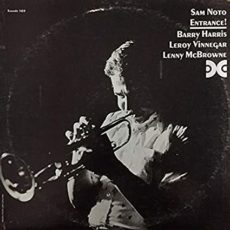
Between 1964 and 1967 for two separate periods, Sam was also a member of the Count Basie Orchestra. He worked primarily in Las Vegas, Nevada after 1969. It was while living and working in Vegas, he became acquainted with trumpeter Red Rodney who was influential in Noto’s prolific recording career with Xanadu.
Relocating to Toronto in 1975 he quickly became a first-call studio player and member of Rob McConnell’s “The Boss Brass” for a number of years in the ‘80s. Noto established his own successful groups including the Sam Noto Quintet, performing frequently throughout Toronto in the ‘90s and early 2000s.
He recorded six albums as a leader and another eighteen as a sideman working with Count Basie, Stan Kenton, Rob McConnell, Frank Rosolino, Red Rodney, Don Menza, Buddy Rich, Joe Romano, Charlie Parker, Mel Lewis, Dizzy Gillespie, Louie Bellson, and Kenny Drew. He has had recording associations with Xanadu, Muse, Capitol, Sea Breeze, Dot, Coliseum, Reprise, Supermono, and Unisson record labels.
Now residing in Fort Erie, Ontario, trumpeter and bop soloist Sam Noto continues to play in and around the Toronto area, as well as closer to home in Buffalo, New York jazz clubs.

More Posts: bandleader,history,instrumental,jazz,music,trumpet