

Daily Dose Of Jazz…
Ike Morgan, born Isaiah Morgan, came into the world on April 7, 1897 in Bertrandville, Louisiana into a musical family. He played in Plaquemines Parish in the early 1910s and then moved to New Orleans.
He led his brothers Al, Sam and Andrew in the Young Morgan Band beginning in 1922, which was later led by Sam and this ensemble recorded for Columbia Records. After Sam suffered a stroke in 1932, Ike resumed the leadership of the group, but it disassembled in 1933.
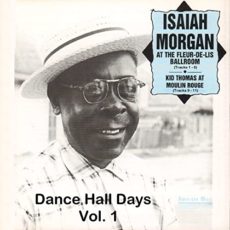
In the Thirties and Forties, Morgan was a bandleader in the Biloxi, Mississippi area, and played with Andrew there as well. Isaiah recorded in 1955 on an album called Dance Hall Days, Vol. 1, his group at this time featured Freddie Land on piano.
Retiring from music the following year, trumpeter Ike Morgan passed away on May 11, 1966 in New Orleans, Louisiana.

More Posts: bandleader,history,instrumental,jazz,trumpet
Daily Dose Of Jazz…
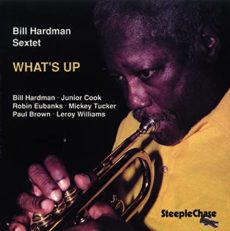
Bill Hardman was born William Franklin Hardman, Jr. on April 6, 1933 in Cleveland, Ohio. Growing up he worked with local players like Bobby Few and Bob Cunningham and while in high school he appeared with Tadd Dameron. After graduating he joined Tiny Bradshaw’s band.
Hardman’s first recording was with Jackie McLean in 1956, later playing with Charles Mingus, Art Blakey and the Jazz Messengers, Horace Silver, and Lou Donaldson. He led a group with Junior Cook and recorded as a leader: Saying Something on the Savoy label. The album received critical acclaim in jazz circles but was little notoriety with the general public. He had three periods in as many decades with Art Blakey’s Jazz Messengers, though his misfortune was not to be with the Messengers at the time of their popular Blue Note recordings. Blakey occasionally featured him playing several extended choruses unaccompanied.
Though he was a crackling hard bop player with blazing technique, crisp articulations, and a no-frills sound, he never received commercial success like his colleagues Donald Byrd, Freddie Hubbard, and Lee Morgan.
Bill later incorporated into his sound the fuller, more extroverted romantic passion of a Clifford Brown – a direction he would take increasingly throughout the late-1960s and 1970s. As a leader, he recorded six albums, as a sideman he recorded more than three dozen with Dave Bailey, Walter Bishop Jr., Charles Earland, Curtis Fuller, Benny Golson, Eddie Jefferson, Ronnie Mathews, Jimmy McGriff, Hank Mobley, Houston Person, Mickey Tucker, Steve Turre, Mal Waldron, and Reuben Wilson.
Hard bop trumpeter and flugelhornist Bill Hardman passed away on December 5, 1990 in Paris, France.
More Posts: bandleader,flugelhorn,history,instrumental,jazz,music,trumpet
Requisites
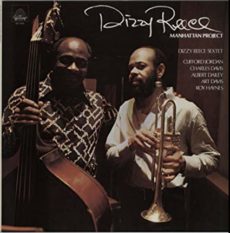
Manhattan Project is an album by Jamaican-born jazz trumpeter Dizzy Reece featuring performances recorded at Blue Rock Studio, N.Y.C. on January 17, 1978 and released on the Bee Hive label.
Track List | 47:16 All compositions by Dizzy Reece except as indicated- Con Man – 8:55
- Manhattan Walk – 7:59
- Yule On The Hudson – 9:05
- Woody ‘n’ You (Dizzy Gillespie) – 13:20
- One For Trane (Mickey Bass) – 7:57
- Dizzy Reece – trumpet
- Clifford Jordan – tenor saxophone
- Charles Davis – tenor saxophone
- Albert Dailey – piano
- Art Davis – bass
- Roy Haynes – drums
Manhattan Project ~ Dizzy Reece Sextet | By Eddie Carter
Submitted for your consideration now is an album by trumpet player Dizzy Reece. Manhattan Project (Bee Hive Records BH 7001) is the only album he recorded for the Evanston, Illinois label. Reece was born in Kingston Jamaica and attended the Alpha Boys School where he began playing the baritone sax before switching to the trumpet at the age of fourteen. It’s also during this time where he got his nickname Dizzy, which has nothing to do with Dizzy Gillespie. He became a professional musician by the age of sixteen and has played with some of the greatest jazz musicians in the United States, England, and France. On this date, he performs with an outstanding quintet; Charles Davis, and Clifford Jordan on tenor sax; Albert Dailey on piano; Art Davis on bass and Roy Haynes on drums. My copy used in this report is the 1978 Stereo album, the only release on LP.
Con Man, the first of three tunes from Reece’s pen starts Side One with a brief trio introduction that segues into the ensemble’s speedy theme. Dizzy begins a lengthy performance that swings with limitless energy convincingly. Clifford and Charles take the reins next for two incendiary solos of intense heat. Albert maintains the high-voltage current on the next reading with his fingers providing plenty of electricity. Roy adds a brisk footnote that glows brightly preceding the sextet’s lively closing chorus. Dizzy’s Manhattan Walk takes the sextet on an adventurous evening stroll through the city with the group speaking in unison on the modal melody led by the front line. Reece goes first, haunting the streets like a restless spirit but with a hypnotic emotion that’s irresistibly seductive. Jordan gets the next turn, revealing his abundant lyricism and Dailey follows exhibiting formidable creativity preceding the ensemble continuing their walk down the street into the fadeout. The first side closes with the third Reece tune; Yule on The Hudson flies from the opening notes of the trio’s introduction with an astounding workout by Roy into the ensemble’s high-powered theme treatment. Dizzy takes his trumpet for a thrilling ride on the first solo; Clifford illuminates the next interpretation with some splendid work. Charles takes over for a spirited presentation possessing equal amounts of speed and energy. Albert continues with an incisively, infectious exploration that takes hold of you and doesn’t let go. The front line reconvenes for an exciting conversation among themselves, then Roy joins them to wrap up the solos with a few final remarks of musical bliss before the climax.
The ageless jazz standard, Woody ‘n’ You by Dizzy Gillespie opens Side Two making a grand out-of-harmony ensemble entrance with Dizzy in front segueing into the familiar rapid melody pace. Reece takes off first with a supercharged solo establishing he’s in complete control of his instrument. Clifford offers an exceptional display of his mastery on the tenor sax with a radiant reading. Charles gives a breathtaking performance next that travels to stratospheric heights. Albert gives a brilliant solo that’s extremely clever and inspired by Art’s bouncy bass and Roy’s impeccable timekeeping. Dizzy launches his second reading like a rocket with an invigorating presentation, then shares the spotlight with Roy for a few red-hot exchanges into the out-of-step climax. One For Trane by bassist Mickey Bass is a blues dedicated to John Coltrane and the sextet turns the heat up on the uptempo theme collectively. Albert solos first, dispensing passionate fury that sinks its teeth into the opening statement with fiery intensity and joyous spontaneity. Dizzy steps into the spotlight next with an exhilarating account illustrating his flawless technique and stylistic versatility. Charles charges into the third solo with cheerful optimism, then Clifford wails his behind off on the next scintillating performance. Albert has the final word on a vigorously energetic presentation culminating with the ensemble’s stunning finish.
Manhattan Project was produced by Jim Neumann, a noted jazz record producer, and the founder of Bee Hive Records, and Fred Norsworthy whose excellent work as an engineer and producer can also be found on jazz recordings for Black Lion Records, Interplay Records, Jazzbank, Muse Records, PJL, Storyville and Trip Jazz. The album was pressed at Wakefield Manufacturing in Phoenix, Arizona. The lacquer was cut by Mastering engineer Brian Gardner who worked at Trident Studio in London, before working at Allen Zentz Mastering and Bernie Grundman Mastering in Hollywood, California. He currently owns Brian Gardner Mastering and the listener can tell a lot of care went into making the best sounding record at the time. Recording Note: To achieve a tight, cohesive sound, Dizzy removed some of the sound baffles in the studio. This creates a close blending of instruments not unlike some of the ’50s. The album has a superb soundstage throughout the treble, midrange and bass spectrum and delivers a crystal-clear sound of the instruments.
Dizzy Reece, now eighty-eight years young is still active as a musician and writer and has recorded albums for Blue Note, and other labels including Futura, Interplay Records, Jasmine, Jazz Vision, and New Jazz. On this album, the leader and his colleagues serve up a Hard-Bop feast with lots of energy that’s put together very well and shows these guys have a perfect balance of technique, intellect, and emotion. If you’re a fan of jazz trumpet, I invite you to audition Manhattan Project for a spot in your library. It’s a compelling album that’s sure to satisfy almost any jazz appetite by the other trumpeter named Dizzy whose recognition as a bandleader, composer, and gifted musician is long overdue.
Recording Note – Source: Album liner notes by Brian Davis Woody ‘n’ You – Source: JazzStandards.com, Wikipedia.org

More Posts: choice,classic,collectible,collector,history,instrumental,jazz,music,trumpet

Daily Dose Of Jazz…
David Burns was born on March 24, 1924 in Perth Amboy, New Jersey and began playing trumpet when he was nine years old. As a teenager, he heard bebop performances at Minton’s Playhouse, among others Dizzy Gillespie. His first ensemble was in Al Cooper’s Savoy Sultans, with whom he played from 1941 to 1943, prior to joining the Army Air Force. There he led a band from 1943 to 1945 that included James Moody as a sideman.
He joined Gillespie’s band in 1946 and appeared with Gillespie in Jivin’ in Bebop in 1947. After leaving Gillespie’s band in 1949, he worked with Duke Ellington from 1950 to 1952 and then with James Moody until 1957.
The late 1950s saw Dave playing shows in New York City and in the Sixties recorded for Vanguard Records. He worked with Billy Mitchell, Al Grey, Willie Bobo, Art Taylor, Dexter Gordon, Johnny Griffin, Leo Parker, and Milt Jackson. From the 1970s through the end of his career he increased his work as an educator. Trumpeter, flugelhornist, arranger, composer, and teacher Dave Burns passed away on April 5, 2009 in Freeport, New York.

More Posts: arranger,composer,educator,flugelhorn,history,instrumental,jazz,music,trumpet
Daily Dose Of Jazz…
Patrick John Halcox, born March 18, 1930 in Chelsea, London, was originally offered a band spot earlier but elected to continue his studies as a research chemist. Ken Colyer was invited to fill the vacancy in 1953, which became known as the Ken Colyer Jazz Band, playing in a New Orleans style with Chris Barber, Lonnie Donegan and Monty Sunshine.
The band effectively parted company with Colyer in 1954 after a dispute about its musical direction. Halcox took Colyer’s place, in what then become Barber’s group and as the original six-piece band eventually grew to eleven members, he remained present. Although primarily the trumpet player, he had a fine singing voice and led the band’s various renditions of Ice Cream, one of their most popular standards. He also played piano on the Lonnie Donegan recording of Digging My Potatoes.
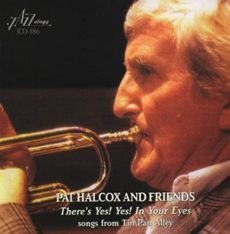
The Pat Halcox Allstars did make a recording of their own during a Chris Barber Band summer break, now re-released as a Lake Records CD. Trumpeter and vocalist Pat Halcox announced his retirement from the Chris Barber Band at the age of 78, effective in 2008 and passed away on February 4, 2013 at the age of 82.
More Posts: bandleader,hiwstory,instrumental,jazz,music,trumpet,vocal