

Daily Dose Of Jazz…
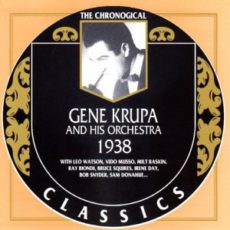
Ray Biondi was born Remo Biondi on July 5, 1905 in Cicero, Illinois. As a child he started with violin and his early training was classical under the supervision of several teachers from the American Conservatory of Chicago. Mandolin followed at age 12 and it became his gateway into the world of string bands, and added guitar and then trumpet into his musical arsenal.
In 1926 he began playing professionally with the Blanche Jaros Orchestra, based out of Cicero, and the next year he started an eight-year period of heavy freelancing in Chicago, enjoying new contacts such as trumpeter Wingy Manone, reedman Bud Freeman, and Earl Burtnett put Biondi in his lineup as a violin and trumpet double. This band took him on a series of tours Kansas City, Cincinnati and New York. this led to a gig with clarinetist and saxophonist Joe Marsala and playing guitar whenever Eddie Condon double booked himself.
In 1938, Gene Krupa hired Ray solely as a guitarist except on an orchestra project where he double as a violinist. A year later he left the band and formed a series of small groups as a leader and one band had a long residency at Chicago’s 606 Club. He then opened a short-lived club himself, and Krupa took him back on the road in the early ’50s. He then began to get session guitar and mandolin work in some genres outside of straight jazz. With Pat Boone and the Crew Cuts as doo wop became a new musical style.
By 1961, he had begun a serious shift to teaching all of his instruments except the trumpet, but continued gigging with groups both large and small, including the orchestra of Dick Schory in the former case and stride pianist Art Hodes in the latter. Violinist Ray Biondi passed away on January 28, 1981 in Chicago, Illinois.
Sponsored By


#preserving genius
Daily Dose Of Jazz…
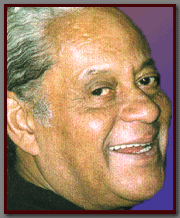
John Parker was born on June 24, 1928 in Queens, New York and began playing jazz trumpet at the age of 16 while attending Flushing High School. Encouraged by the bassist George Duvivier in the late Forties, he began playing in the jazz clubs on Manhattan’s W. 52nd Street where Dixieland, swing and bebop combos held court. It was on 52nd St. that drummer Zooty Singleton nicknamed him Tasty because of his tasty solos.
During the early 1950s, John, who was no relation to the Charlie Parker, began traveling with the Rhythm & Blues band of Roosevelt Sykes. He also played with trumpeter and composer Sy Oliver and vocalist Etta Jones. He also stepped in for trumpeter Cat Anderson in the Duke Ellington band. He would go on to play with Sonny Rollins and Thelonious Monk.
The 1970s saw Parker playing with pianist Brooks Kerr and drummer Sonny Greer in Manhattan venues including the Algonquin Hotel. Over the last 20 years, when Parker was living at Westbeth Artists Community with his wife, the late writer Leslie Gourse, he became a regular at Arthur’s Tavern and played New York City clubs in Little Italy and Chelsea.
Trumpeter John “Tasty” Parker, who never recorded as a leader and had been suffering from emphysema, passed away on Tuesday, March 21, 2006 in his Manhattan apartment at the age of 78.
Sponsored By

#preserving genius
More Posts: trumpet
Daily Dose Of Jazz…
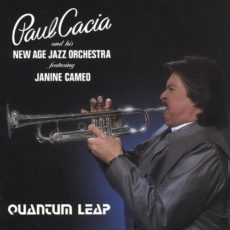
Paul Cacia was born on June 20, 1956 and at age 10 he took up playing the trumpet. A protege of the master Claude Gordon and private pupil of Cat Anderson, he was also mentored by Stan Kenton, Louie Bellson, and Don Ellis.
His professional career began as the lead trumpet for the Al Hirt Big Band in New Orleans, Louisiana and The Ray Anthony Orchestra. His first recording session was a duet with Stevie Wonder, leading to over a decade as a top call studio musician in Los Angeles, California. As a soloist and bandleader, his career began before sixty thousand people as the opening act for the rock group Chicago. Paul has also shared billing with Tito Puente and Pia Zadora.
Hard bop trumpeter, big band leader and producer Paul Cacia recorded for the Alexander Street, Outstanding and Happy Hour labels. He has produced The Mormon Tabernacle Symphony & Chorus, the Los Angeles Raiders Big Band and has been the personal manager to Peggy Lee. For over fifty years he has been known as one of the world’s greatest high note trumpet showmen until his retirement in 2016.

#preserving genius
More Posts: trumpet
Daily Dose Of Jazz…
Melvin Moore was born on June 15, 1923 in Chicago, Illinois. In 1944 the trumpeter began his career playing with Lucky Millinder, then joined Duke Ellington’s Orchestra from 1948 to 1950. This he followed with performance in rhythm and blues bands. By 1951 he was recording with Dizzy Gillespie and singing on such titles as The Champ and Swing Low, Sweet Cadillac.
At the end of 1951 he was recording some vocal titles for King Records with Terry Gibbs, Billy Taylor, Mundell Lowe and Charles Mingus. In 1957 he was a member of Don Redman’s orchestra, the following year he recorded with John Pisano and with Billy Bean. Between 1964 and 1966 he worked with Gerald Wilson and he also accompanied Johnny Hartman. During the Sixties he performed on separate dates at the Monterey Jazz Festival with Mingus, Thelonious Monk and Dizzy Gillespie.
By 1967 he was playing in B.B. Kings band followed by the Seventies bands of Esther Phillips, T – Bone Walker, Don Sugarcane Harris, Johnny Otis, Jerry Garcia and Shuggie Otis and in the early 1980s with Ted Hawkins. Moore is not to be confused with the singer born in 1917, who sang with Jimmie Lunceford and Ernie Fields .
Trumpeter, violinist and singer of swing and bebop Mel Moore passed away on February 26, 1989 in New York City.
Sponsored By

#preserving genius
Daily Dose Of Jazz…
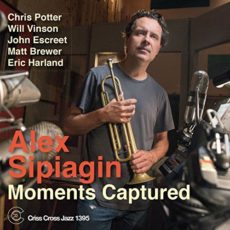
Alex “Sasha” Sipiagin was born June 11, 1967 in Yaroslavl, Russia and began learning to play the trumpet at the age of twelve. He studied at the Moscow Music Institute and the Gnessin Conservatory in Moscow where he received his Baccalaureate. In 1990 he competed in the International Louis Armstrong Competition sponsored by the Thelonious Monk Institute in Washington, D.C. winning top honors. Moving from Russia to the United States in 1991 and began his career shortly thereafter.
His first gigs were with the Gil Evans Band and George Gruntz Concert Jazz Band and soon became a favored player for various bands including the Gil Goldstein’s Zebra Coast Orchestra, drummer Bob Moses’ band Mozamba, the Mingus Big Band, Mingus Dynasty, the Mingus Orchestra, the Dave Holland Big Band, Sextet and Octet groups.
He has recorded and performed with Michael Brecker, Mulgrew Miller, Eric Clapton, Dr.John, Aaron Neville, Elvis Costello, Michael Franks, Dave Sanborn, Deborah Cox, legendary producer Phil Ramone and Gonzalo Rubalcaba, among others. Alex has recorded fifteen albums as a leader, for the most part on the Criss Cross Jazz label.
He is a founding member of the collective Opus 5, along with Seamus Blake, David Kikoski, Boris Kozlov and Donald Edwards. Trumpeter and flugelhornist Alex Sipiagin, who teaches at the Groningen Prince Claus Conservatory, Academy of Music, Basel, Switzerland as well steady professorship at NYU and continues to compose, perform and record.
Sponsored By

www.whatissuitetabu.com
#preserving genius
More Posts: flugelhorn,trumpet