

Daily Dose Of Jazz…
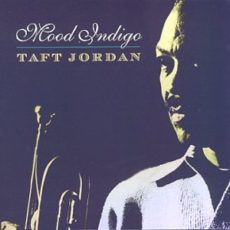
Taft Jordan was born on February 15, 1915 in Florence, South Carolina and as a trumpeter was heavily influenced by Louis Armstrong. Early in his career he played with the Washboard Rhythm Kings before joining Chick Webb’s orchestra from 1933 to 1942. He remained with Webb after Ella Fitzgerald became its frontwoman, trading duties with Bobby Stark as the orchestra’s main trumpet soloist.
From 1943 to 1947 Taft played with Duke Ellington, then with Lucille Dixon at the Savannah Club in New York City from 1949 to 1953. After this stint he played less often, though he toured with Benny Goodman in 1958, played on the Miles Davis album Sketches of Spain, and worked with the New York Jazz Repertory Company.
In 1935 Jordan recorded four tunes, Night Wind, If the Moon Turns Green, Devil in the Moon, and Louisiana Fairy Tale as a leader, with Ward Silloway on trombone, Johnny Mince on clarinet, tenor saxophonist Elmer Williams, pianist Teddy Wilson, guitarist Bobby Johnson, John Kirby on string bass and drummer Eddie Dougherty. He would go on to lead his own band in 1960 and ‘61, recording LPs for Mercury, Aamco Records, and Moodsville labels, as well as with Ruth Brown on Atlantic Records and Dizzy Gillespie on the Norgran label.
Trumpeter Taft Jordan passed away on December 1, 1981 in New Orleans, Louisiana.
Sponsored By


#preserving genius
More Posts: trumpet
Daily Dose Of Jazz…
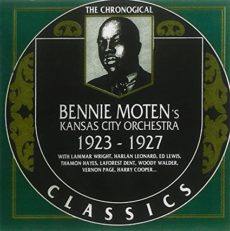
Ed Lewis was born on January 22, 1909 in Eagle City, Oklahoma. His early career saw him in Kansas City, Missouri playing with Jerry Westbrook as a baritone saxophonist, but in 1925 he switched to trumpet He played with Paul Banks and Laura Rucker before joining the Bennie Moten Orchestra, where he was the primary trumpet soloist from 1926-1932 until Hot Lips Page joined the outfit.
In the 1932 he worked with Thamon Hayes for two years followed by a three year stint with Harlan Leonard, the in 1937 played for a short time with Jay McShann. That same year Ed joined the Count Basie Orchestra, remaining until 1948 and though he recorded frequently with the orchestra, he almost never soloed.
In the 1950s Lewis led his own band in New York City for strictly local gigs, and worked for a period as a taxicab driver. He returned to play with The Countsmen in Europe in 1984, shortly before his death.
Harry “Sweets” Edison considered Lewis and Snooky Young the two greatest first trumpet players he ever played with. Trumpeter Ed Lewis, who never led his own recording session, passed away on September 18, 1985.

Give The Gift Of Knowledge
#preserving genius
More Posts: trumpet
Daily Dose Of Jazz…
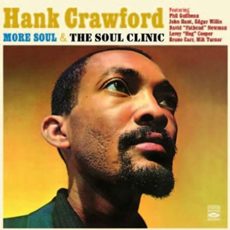
Phillip Guilbeau was born on January 16, 1926 in Lafayette, Louisiana. Like many of his fellow musicians he took up the trumpet and during World War II served in the Navy, Honorably discharged in 1945 he moved to Detroit, Michigan and successfully became a session player. Throughout his career he recorded on hundreds of albums including sessions with Count Basie, Big Joe Turner, David “Fathead” Newman, Otis Redding, Frank Sinatra, Quincy Jones, soloist on Hank Crawford’s recording of What A Difference A Day Makes from his Soul Clinic album and with Ray Charles, he was the soloist on the landmark 1961 album Genius + Soul = Jazz.
By the Seventies Phil moved to Washington, DC and recognizing the evolution of the music, moved into the new sound called funk. He became the trumpeter and manager of the group The Young Senators, the top-rated R&B group in the area after the release of their hit, that Guilbeau penned, The Jungle. With the success of this single they were asked to tour as the backing group of Eddie Kendricks, and recorded his seminal album My People… Hold On with them. The album included what is widely considered the first ever Disco song, Girl You Need A Change Of Mind.
As a manager, Gilbeau would go on to discover another group called Black Heat, get them to Atlantic Records and record three albums before they disbanded. After a lifetime career of playing jazz, funk and rhythm & blues music that spanned five decades, trumpeter and composer Phil Guilbeau passed away on September 5, 2005 in Florida.
Sponsored By

Voices From The Community
#preserving genius
More Posts: trumpet
Daily Dose Of Jazz…
Calvin Massey was born on January 11, 1928 in Philadelphia, Pennsylvania and studied trumpet under Freddie Webster. Following his education on the trumpet he and played in the big bands of Jay McShann, Jimmy Heath, and Billie Holiday.
In the late 1950s he led an ensemble with Jimmy Garrison, McCoy Tyner, and Tootie Heath, while John Coltrane and Donald Byrd occasionally played with them. Towards the end of the decade he gradually receded from active performance and concentrated on composition. Some of Cal’s compositions that were recorded are Bakai by Coltrane, Assunta, Father and Son by Freddie Hubbard, Message from Trane by Jackie McLean, These Are Soulful Days by Lee Morgan, Fiesta by Philly Joe Jones and Cry of My People by Archie Shepp. Horace Tapscott and McCoy Tyner also recorded his work.
He played and toured with Shepp from 1969 until 1972. An outspoken activist, Massey’s political standpoint was radical and his work was strongly connected with the Civil Rights Movement of the 1960s and ’70s. The Black Panthers were an inspiration for The Black Liberation Movement Suite which he created with Romulus Franceschini. The Suite was performed three times at Black Panther benefit concerts. Massey’s ideology resulted in him getting blacklisted or whitelisted according to Fred Ho from major recording companies and only one album was recorded under his name.
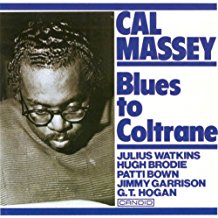
He also performed in The Romas Orchestra with Romulus Franceschini, and had The Music of Cal Massey: A Tribute, recorded by Fred Ho, Quincy Saul and the Green Monster Band. Cal’s only album recorded as a leader two days after his birthday in 1961, Blues to Coltrane, on Candid label, was not released until fifteen years later in 1987. He composed all the songs and the personnel with him on this session were Julius Watkins on French horn, pianist Patti Brown, bassist Jimmy Garrison, Hugh Brodie on tenor saxophone, and G. T. Hogan on drums.
Trumpeter and composer Cal Massey passed away from a heart attack at the age of 43 in New York City, New York on October 25, 1972.
Sponsored By

#preserving genius
More Posts: trumpet
Daily Dose Of Jazz…
Wendell Philips Culley was born on January 8, 1906 in Worcester, Massachusetts. He performed locally in Boston, then moved to New York City in 1931 and found early work playing with Horace Henderson and Cab Calloway.
He then spent eleven years in the employ of Noble Sissle, recording with him extensively. Following this he played with Lionel Hampton from 1944 to 1949, and then briefly worked again with Sissle.
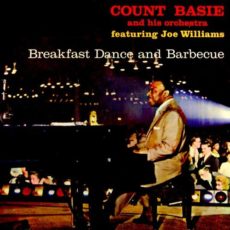
In 1951 he joined the Count Basie Orchestra and until 1959 he recorded twenty albums with the man and toured the world. After his tenure with Basie, he retired from music and pursued a career in insurance. Trumpeter Wendell Culley, who never led a session of his own, passed away on May 8, 1983 in Los Angeles, California. He was seventy-seven years old.
Give The Gift Of Knowledge
#preserving genius
More Posts: trumpet