

Daily Dose Of Jazz…
Dick Pearce was born April 19, 1951 in Forest Gate, London, England. Dick began playing cornet at the age of 12 in the Boys’ Brigade and joined Ewell village’s local brass band a year later. At 15 he became interested in jazz and attended a Sunday morning rehearsal band run by the dance bandleader Ken Macintosh. Soon after, he joined Bill Ashton’s National Youth Jazz Orchestra where he met many like-minded young musicians.
At 17 he spent three and a half extremely disillusioned years in the army (The Household Cavalry) supposedly as a bandsman. He’d played Haydn’s Trumpet Concerto for his audition and expected to receive musical tuition after signing on the dotted line, but for most of his service he found himself sitting on a horse playing bugle calls. Discharged from the army in April 1972, he began playing with some of the ‘freer’ bands of that time – led by Graham Collier, Dudu Pukwana, Pat Evans and Keith Tippet.
In the mid to late 70s he was drawn towards the harmonically structured improvisation of post-Bebop playing with jazz groups led by the likes of Don Rendell, Michael Garrick and Mike Westbrook, while also playing with his own generation of young jazz musicians.
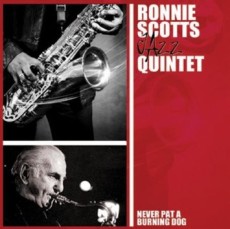
In 1980 Dick joined The Ronnie Scott Quintet, with whom he travelled all over the world for the following 14 years. The band included pianist John Critchinson, double bassist Ron Mathewson, drummer Martin Drew and Ronnie Scott on tenor sax. In 1990 the quintet became a sextet with the addition of Mornington Lockett on tenor sax.
In more recent years trumpeter Dick Pearce has been playing with Alan Barnes, Don Weller’s Tribute to Cannonball Adderley Band. The Don Weller Big Band. The Tim Richards Great Spirit, the John Williams New Perspectives. Stan and Clarke Tracey’s Ellingtonia, Pete Downes Trio with Dick Pearce and John Critchinson’s tribute to Ronnie Scott band.

Give The Gift Of Knowledge

More Posts: trumpet
Daily Dose Of Jazz…
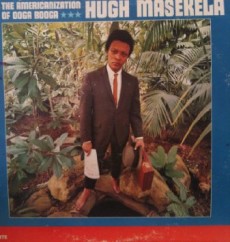
Hugh Ramopolo Masekela was born on April 4, 1939 in Kwa-Guqa Township of Witbank, South Africa. He began singing and playing piano as a child. At the age of 14, after seeing Kirk Douglas in the film Young Man With A Horn he took up playing the trumpet. He was given his first trumpet was given to him by anti-apartheid Archbishop Trevor Huddleston at St. Peter’s Secondary School.
Quickly mastering the instrument under the tutelage of Uncle Sauda of Johannesburg’s Native Municipal Brass Band, Masekela along with some of his schoolmates formed the Huddleston Jazz Band, South Africa’s first youth orchestra. By 1956, after leading other ensembles, he joined Alfred Hebrert’s African Jazz Revue.
In 1958 he wound up in the orchestra of South Africa’s first musical blockbuster King Kong, followed by touring the country for a sold-out year with Miriam Makeba and the Manhattan Brothers’ Nathan Mdledle in the lead. By the end of 1959 Hugh along with Dollar Brand, Kippie Moeketsi, Makhaya Ntshoko and Johnny Gertze formed the Jazz Epistles. They became the first African jazz group to record an album and perform to record-breaking audiences in Johannesburg and Cape Town.
Following the 1960 Sharpeville Massacre of 69 peacefully protesting Africans he left the country with the help of Huddleston, Yehudi Menuhin and John Dankworth for London’s Guildhall School of Music. Befriended by Harry Belafonte on a visit to the U.S. he gained admission to Manhattan School of Music studying classical trumpet.
By the late Sixties he had hits with Up, Up & Away and Grazing In The Grass, appeared at the Monterey Pop Festival, and was featured in the film Monterey Pop. In 1974, Masekela and friend Stewart Levine organized the Zaire 74 music festival around the Rumble In The Jungle boxing match.
He has played primarily in jazz ensembles, with guest appearances on recordings by The Byrds and Paul Simon. Since 1954 Hugh’s music protested about apartheid, slavery, government and the hardships individuals were living but also vividly portrayed the struggles and sorrows, as well as the joys and passions of his country. In 1987, he had a hit single with Bring Him Back Home, which became an anthem for the movement to free Nelson Mandela.
Trumpeter Hugh Masekela also plays the flugelhorn, cornet, and trombone and is a composer and singer. He has some four dozen albums to date in his catalogue, has won two Grammy Awards with seven nominations, received two honorary doctorates, and serves as a director on the board of The Lunchbox Fund, a non-profit organization that provides a daily meal to students of township schools in Soweto. He continues to perform, record and tour.
Take A Dose On The Road
More Posts: cornet,flugelhorn,trombone,trumpet
Daily Dose Of Jazz..
Marty Marsala was born on April 2, 1909 in Chicago, Illinois. He began his professional career playing drums for bands led by Joe Bananas and Red Feilen in Chicago. During the 1920s he switched to the trumpet and following years as a freelance musician in Chicago, he soon joined his brother Joe’s band in New York playing trumpet from 1936 to 1941. In 1937 and 1938 he also worked with Bob Howard and Tempo King.
After working with the Will Hudson Orchestra, Marty then led a local band for a while before joining Chico Marx’s band from 1942 to 1943. The band was technically led by Ben Pollack but performed under Marx’s name.
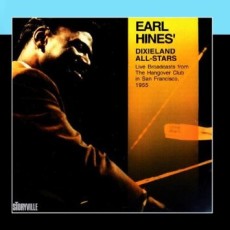
Marsala served briefly in the Army from 1944 to the end of World War II. After his discharge he toured between San Francisco and Chicago playing Dixieland with his brother again as well as Miff Mole, Tony Parenti and Sidney Bechet. He became especially popular in California during these years. In 1955 he moved permanently to San Francisco and began leading his own groups and recording with Kid Ory and Earl Hines.
By the 1960s his health had deteriorated and he retired from performing in 1965, never recording under his own name. Swing trumpeter Marty Marsala, best known for his two decades working with is brother from 1926-46, passed away on April 27, 1975.
Put A Dose In Your Pocket
More Posts: trumpet
Daily Dose Of Jazz…
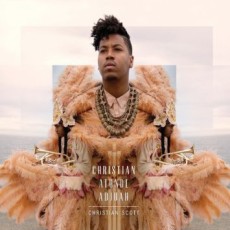
Christian Scott, also known as Christian Scott aTunde Adjuah was born March 31, 1983 in New Orleans, Louisiana. A twin to brother Kiel, at the age of 13 he was given the chance to play with his uncle, jazz alto saxophonist Donald Harrison. A year later he was accepted into the New Orleans Center of Creative Arts where he studied jazz under the guidance of program directors, Clyde Kerr, Jr. and Kent Jordan.
After graduating NOCCA, Christian received a scholarship to Berklee College of Music in Boston, Massachusetts, graduating in 2004. While matriculating his last year he was member of the Berklee Monterey Quartet and recorded as part of the Art:21 student cooperative quintet. He studied under the direction of Charlie Lewis, Dave Santoro, and Gary Burton. He majored in professional music with a concentration in film scoring.
Scott has worked across musical genres with Stefon Harris, David Sanchez, Donald Harrison, Karin Williams, Nnenna Freelon, Grace Kelly, Erin Boheme, X Clan, Prince, Mike Clark, David Benoit, Global Noize, Ledisi, Marcus Miller and Esperanza Spaulding, to name a few.
His debut album Rewind That on the Concord Record label garnered him a Grammy nomination and received the Edison Award in 2010 and 2012. Since 2002, he has released eight studio albums, and two live recordings. Trumpeter, composer and producer Christian Scott continues performing with his eight-piece ensemble his legacy in jazz.
Uplift Someone’s World
More Posts: trumpet
Daily Dose Of Jazz…
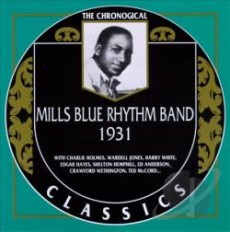
Shelton “Scad” Hemphill was born on March 16, 1906 in Birmingham, Alabama. While still in his teens when he played trumpet in the Fred Longshaw band that accompanied Bessie Smith on recordings in 1924–25. In 1924, at age 18, he enrolled at Wilberforce University in Ohio and was a member of Horace Henderson’s student band alongside the likes of Ted and Castor McCord.
Moving to New York late in the 1920s, he played with Benny Carter and Chick Webb before joining the Mills Blue Rhythm Band. He played with this group from 1931 to 1937, and then joined Louis Armstrong from 1937 to 1944. He followed with a five-year stint with Duke Ellington until 1949.
By the 1950s, he played occasionally in New York City but left music due to mounting health problems later in the decade.
Trumpeter Shelton Hemphill passed away in New York City on January 6, 1960 just two months and ten days before his 54th birthday. His demise was noted in the syndicated column of veteran music critic Ralph J. Gleason.
Put A Dose In Your Pocket
More Posts: trumpet