

Daily Dose OF Jazz…
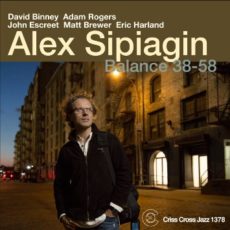
Alex “Sasha” Sipiagin was born June 11, 1967 in Yaroslavl, Russia. He began studying the trumpet at age 12, studying at the Moscow Music Institute and the Gnessin Conservatory in Moscow where he received his Baccalaureate. By 1990, he was a participant in the International Louis Armstrong Competition sponsored by the Thelonious Monk Institute in Washington D.C. where he won top honors.
Soon after Alex relocated to the jazz mecca of the world, New York City and soon became a favored player for various bands including the Gil Evans Orchestra, Gil Goldstein’s Zebra Coast Orchestra, the George Gruntz Concert Jazz Band, drummer Bob Moses’ band Mozamba, Mingus Big Band as well as the Mingus Dynasty and Mingus Orchestra, and the Dave Holland Big Band, Sextet and Octet groups.
In 2003 he recorded with Michael Brecker’s Quindectet touring also with the Michael Brecker Sextet. Sipiagin has also worked with Barbara Dennerlein, Eric Clapton, Dr. John, James Moody, Conrad Herwig, Aaron Neville, Elvis Costello, Michael Franks, Dave Sanborn, Deborah Cox, legendary producer Phil Ramone, Gonzalo Rubalcaba and many others.
Many of the recordings he has been a sideman have been nominated for or won a Grammy, as a soloist, Alex has recorded eleven recordings out to his credit, another four with Opus 5, and more than twenty-nine albums as a sideman. He has toured extensively throughout Europe, U.S., Japan and Russia with his own group.
As an educator he teaches at the Groningen Prince Claus Conservatory, Academy of Music, Basel, Switzerland as well holding a professorship at New York University.

Take A Dose On The Road

More Posts: flugelhorn,trumpet
Daily Dose Of Jazz…
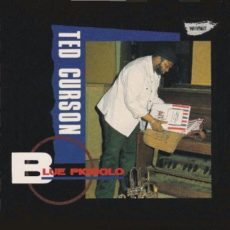
Theodore Curson was born on June 3, 1935 in Philadelphia, Pennsylvania. He became interested in playing trumpet after watching a newspaper salesman play a silver trumpet, however, his father preferred he become an alto saxophonist like Louis Jordan. By the time he turned 10 years old he received his first trumpet.
Curson attended Granoff School of Music in Philadelphia and at the suggestion of Miles Davis, moved to New York City in 1956. He performed and recorded with Cecil Taylor in the late 1950s and early 1960s and his 1964 Eric Dolphy tribute composition Tears for Dolphy has been used in numerous films.
Ted is a familiar face in Finland performing annually at the Port Jazz Festival each year since its inception in 1966. In 2007 he played the Finland’s Independence Day Ball at the invitation of President Tarja Halonen.
Trumpeter Ted Curson recorded some twenty albums as a leader for Old Town, Prestige, Fontana, Atlantic, Freedom, EMI Columbia Interplay and Inner City record labels among many others. He has been a sideman on fifteen other albums with Andrew Hill, Nick Brignola, Charles Mingus, The NY Contemporary Five, Sal Nistico, Archie Shepp, Pepper Adams and a host of others until his death on November 4, 2012 in Montclair, New Jersey.
Inspire A Young Mind
More Posts: trumpet
Daily Dose Of Jazz…
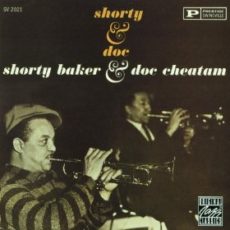
Shorty Baker was born Harold Baker on May 26, 1914 in St. Louis, Missouri and began playing drums, but switched to trumpet during his teens.
He started his career on riverboats with Fate Marable, then with Erskine Tate before playing with Don Redman in the mid-1930s. He went on to work with Teddy Wilson and Andy Kirk before joining Duke Ellington. Shorty married Kirk’s pianist Mary Lou Williams and though the two separated shortly thereafter, they never officially divorced.
Baker worked on and off in Duke Ellington’s Orchestra from 1942 to 1962 alongside Ray Nance, Clark Terry, Taft Jordan, Willie Cook and Cat Anderson among others. He also worked with Billy Strayhorn and Johnny Hodges’ group in the early Fifties during the period when Hodges was not a member of Ellington’s orchestra. During the latter years of his career he worked with Bud Freeman and Doc Cheatham.
Trumpeter Shorty Baker passed away on November 8, 1966 in New York City.
Sponsored By

www.whatissuitetabu.com
More Posts: trumpet
Daily Dose Of Jazz…
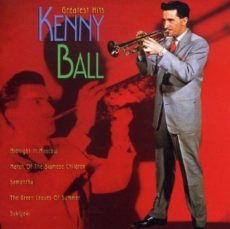
Kenny Ball was born Kenneth Daniel Ball on May 22, 1930 in Ilford, Essex, England. At the age of 14 he left school to work as a clerk in an advertising agency, but also started taking trumpet lessons. He began his career as a semi-professional sideman in bands in addition to being a salesman and continued working at the ad agency.
Turning professional in 1953 Kenny played the trumpet in bands led by Sid Phillips, Eric Delaney, Charlie Galbraith and Terry Lightfoot before forming his own trad jazz band, Kenny Ball and his Jazzmen in 1958. His Dixieland band was at the forefront of the early 1960s UK jazz revival.
Ball’s 1961 recording of Cole Porter’s Samantha became a hit and they reached No. 2 by the end of the year on the UK Singles Chart. The following year they hit the Hot 100 with Midnight In Moscow, selling over a million copies, earning them a gold record. Further hits followed such as March of the Siamese Children from the King and I, however crossing to the U.S. though making the cover of New Musical Express along with Cliff Richards, Brenda Lee, Joe Brown, Craig Douglas and Frank Ifield, they remained a one-hit wonder.
By 1963 Ball became the first British jazzman to become an honorary citizen of New Orleans and appeared in the film Live It Up!, featuring Gene Vincent. In 1968 the band appeared with Louis Armstrong during his last European tour and later appeared on BBC Television’s review of the 1960s music scene Pop Go the Sixties. His continued success was aided by guest appearances on every edition of the first six series of the BBC’s Morecambe and Wise Show and performed at the wedding of Prince Charles and Lady Diana.
Kenny enjoyed one of the longest unbroken spells of success for trad bands and over the course of his career he charted fourteen Top 50 it singles, reached Number 1 collaborating with Acker Bilk and Chris Barber on a joint album, The Best of Ball, Barber and Bilk. In 2001 he recorded on the album British Jazz Legends Together that also featured Bilk, Don Lusher, John Chilton & The Feetwarmers, John Dankworth, Humphrey Littleton and George Melly.
Trumpeter Kenny Ball continued to tour until shortly before his death, performing his last concert with Bilk and Barber at Manchester’s Bridgewater Hall on February 21st, two weeks before he passed away on March 7, 2013 at age 82 in Basildon Hospital in Essex, where he was being treated for pneumonia.
Put A Dose In Your Pocket
More Posts: trumpet
Daily Dose Of Jazz…
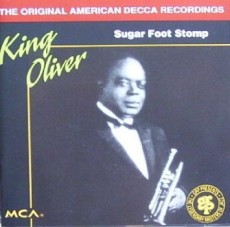
King Oliver was born Joseph Nathan Oliver on May 11, 1885 in Aben, Louisiana. He was also known as Joe Oliver and moved to New Orleans in his youth. He first studied the trombone and then changed to cornet. From 1908 to 1917 he played cornet in New Orleans brass and dance bands, and also in the city’s red-light district known as Storyville.
Oliver co-led a band with trombonist Kid Ory that was considered to be New Orleans’ hottest and best in the late 1910s. He gained great popularity in New Orleans across economic and racial lines, and was in demand for music jobs from rough working-class black dance halls to white society debutante parties.
With the closing of Storyville, Joe packed up his wife and child and moved to Chicago, Illinois in 1918. There he found work with clarinetist Lawrence Duhé, bassist Bill Johnson, trombonist Roy Palmer and drummer Paul Barbarin, eventually becoming the leader. By 1922 he was billing himself as King Oliver and his Creole Jazz Band at the Royal Gardens cabaret. His band included Louis Armstrong, Baby Dodds, Johnny Dodds, Lil Hardin, Honoré Dutrey and William Manuel Johnson. The following year they recorded for Gennett, Okeh, Paramount and Columbia record labels, bringing Dixieland to the attention of a much wider audience.
The mid-Twenties saw King enlarging his band to nine musicians, began performing more written arrangements with jazz solos, disbanding to do more freelance work in New York, Over the course of his career Oliver pioneered the use of mutes, including the rubber plumber’s plunger, derby hat, bottles and cups but his favorite mute was a small metal mute made by the C.G. Conn Instrument Company. He performed mostly on cornet, but like many cornet players he switched to trumpet in the late 1920s.
Oliver was also a talented composer, and wrote many tunes that are still regularly played, including Dippermouth Blues, Sweet Like This, Canal Street Blues, and Doctor Jazz. His recording Wa Wa Wa with the Dixie Syncopators can be credited with giving the name wah-wah to such techniques.
As an educator he influenced young New Orleans and Chicago players like Tommy Ladnier, Paul Mares, Muggsy Spanier, Johnny Wiggs Frank Guarente, Louis Panico and Louis Armstrong. The latter he taught, gave him his job in Kid Ory’s band and then summoned him to Chicago to play in his band.
As a businessman his acumen was often less than his musical ability losing jobs at the Savoy Ballroom and the Cotton Club by holding out for moe money than they were willing to pay. Ellington took the Cotton Club job and catapulted to fame
Oliver’s managers stole money from him and then the Great Depression hit losing his life savings to a failed Chicago bank, and bookings became lean.Oliver also had health problems, suffering from the gum disease pyorrhea, caused by his love of sugar sandwiches. He began employing younger musicians to play solos like up-and-coming trumpeter Henry “Red” Allen. Coupled with health problems suffering from periodontitis and his diminished capacity to play left him no choice but to stop playing by 1937.
Cornetist and bandleader King Oliver died in poverty of arteriosclerosis in a Savannah rooming house on April 10, 1938 at age 52, too broke to afford treatment. His sister spent her rent money to have his body brought to New York, where he was buried at Woodlawn Cemetery in the Bronx. In attendance were his friends Louis Armstrong, Clarence Williams, Coleman Hawkins, Lionel Hampton, W.C. Handy, Milt Jackson, and Max Roach. In 2007 he was inducted as a charter member of the Gennett Records Walk of Fame in Richmond, Indiana.
Jazz Is Global – Share