

Daily Dose OF Jazz…
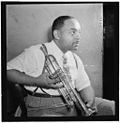
Ward Pinkett was born on April 29, 1906, the son of an amateur cornet player. He started playing the trumpet when he was ten years old. He played in the school band at Hampton Institute and later attended the New Haven Conservatory of Music.
After working with the White Brothers Orchestra in Washington, D. C. he moved to New York City and played for brief periods with the bands of Charlie Johnson, Willie Gant, Billy Fowler, Henri Saparo, Joe Steele and Charlie Skeete.
During his stint with Jelly Roll Morton in 1928–30, he participated in seven of Morton’s recording sessions and his solos on “Strokin’ Away” and “Low Gravy” that are considered by music historians to be the best of his career. He also worked with Chick Webb, Bingie Madison, Rex Stewart and Teddy Hill but was never able to achieve fame.
By 1935 he teamed with Albert Nicholas and Bernard Addison at Adrian Rollini’s Tap Room and also had a short stint with Louis Metcalf’s Big Band. He recorded with King Oliver, Bubber Miley, Clarence Williams, the Little Ramblers and James P. Johnson.
Ward Pinkett died of alcoholism-aggravated pneumonia on March 15, 1937 just six weeks short of his thirty-first birthday.

Take A Dose On The Road
Take A Dose On The Road
More Posts: bandleader,trumpet

Daily Dose Of Jazz…
Milton “Shorty” Rogers was born Milton Rajonsky on April 14, 1924 in Great Barrington, Massachusetts. He worked first as a professional trumpeter with Will Bradley and Red Norvo. For two years beginning in 1947 he worked extensively with Woody Herman and then from 1950 to1951 he played with Stan Kenton.
Rogers appeared on Shelly Manne’s 1954 album “The Three and the Two” along with Jimmy Guiffre, later recording with Guiffre showing his experimental side, resulting in an early form of avant-garde jazz. Settling in Los Angeles in the early fifties, by 1953 he was recording as a leader with RCA through 1962 that incorporated avant-garde, cool jazz and the “hot” style of Count Basie, who was a great inspiration for him.
Shorty’s composer credits include Mr. Magoo cartoon “Hotsy Footsy” and the Looney Tune “Three Little Bops”, scored the Brando film “The Wild One” and the Sinatra vehicle “The Man With The Golden Arm”. Becoming better known for his skills as a composer and arranger than as a trumpeter in the early ‘60s he stopped performing on trumpet, left the jazz scene and concentrated on writing for television and film for many years.
In 1982, he returned to the trumpet and jazz and by the 1990s formed a Lighthouse All Stars group with Bud Shank, Bill Perkins and Bob Cooper. Trumpeter, composer and arranger Shorty Rogers, a figurehead in the West Coast era of “cool jazz” passed away on November 7, 1994.
Dose A Day-Blues Away
More Posts: trumpet
Daily Dose Of Jazz…
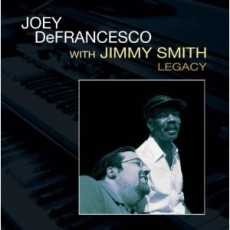
Joey DeFrancesco was born in Springfield, Pennsylvania on April 10, 1971 into a family of musicians – a multi-instrumentalist grandfather and Hammond B3 player father. Joey DeFrancesco started playing the piano at the age of four, switching to the B3 shortly after. By age six, he was sitting in on his father’s gigs; by ten playing out on his own and sitting in with organ legends like Jack McDuff and Richard “Groove” Holmes. He went to high school with bassist Christian McBride, where the two were often scolded for altering their big band charts.
At seventeen years old Miles Davis asked Joey to join his band, touring Europe and recording Amandla with Davis. He became well known in the 1990s, however, through his work with John McLaughlin’s trio Free Spirits. He has also played with jazz guitarists Pat Martino, Paul Bollenback, Jimmy Bruno, Dave Stryker, Danny Gatton as well as trumpet player Big Jim Henry and many others.
DeFrancesco’s career as a leader began with his first recordings on Columbia, and later with Muse, Big Mo, and HighNote. He listened to and learned from Jimmy Smith, ultimately paying homage with his 1999 release “The Champ”. In 2000 he recorded the album “Incredible!” with Jimmy and finished “Legacy” shortly before Smith’s passing in 2005. He has also paid tribute to Don Patterson with “Tribute to Don Patterson: The Philadelphia Connection” released in 2004.
Jazz organist, trumpeter and vocalist Joey DeFrancesco, who has been selected by the Down Beat Critics and Readers Poll as the top jazz organist every year since 2003 and who consistently played an average of 200 nights a year on the road with various musicians, transitioned on August 25, 2022 at the age of 51.
Put A Dose In Your Pocket
More Posts: hammond organ,keyboard,saxophone,trumpet,vocal
Daily Dose Of Jazz…
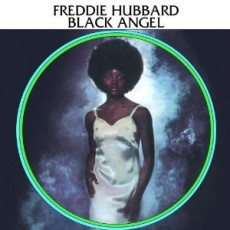
Frederick Dewayne Hubbard was born on April 7, 1938 in Indianapolis, Indiana and started playing the mellophone and trumpet in his school band at Arsenal Technical High School. Upon the recommendation of one-time Stan Kenton sideman, trumpeter Lee Katzman, he began studies at the Arthur Jordan Conservatory of music. During his teens he played with Wes and Monk Montgomery, bassist Larry Ridley and James Spaulding.
1958 saw a 20-year old Hubbard in New York working with the likes of Philly Joe Jones, Sonny Rollins, Slide Hampton, Eric Dolphy, J. J. Johnson and Quincy Jones. Three years later in ’61 he recorded his debut as a leader, Open Sesame with Tina Brooks, McCoy Tyner, Sam Jones and Clifford Jarvis. That same year he replaced Lee Morgan in Art Blakey’s Jazz Messengers and for the next five years played and recorded on a succession of albums. Leaving Blakey in 1966 he formed the first of several small groups with among others Kenny Baron and Louis Hayes.
Throughout his hard bop and post bop career he recorded profusely for Blue Note, Atlantic, CTI, Columbia and a host of subsidiaries and smaller labels playing with the likes of Ornette Coleman, John Coltrane, Wayne Shorter, Eric Dolphy, Don Cherry, Herbie Hancock, Oliver Nelson, Stanley Turrentine, George Benson, Richard Wyands, Eric Gale, Ron Carter, Jack DeJonette, Dexter Gordon, Curtis Fuller and the list goes on.
Freddie Hubbard, NEA Jazz Master, had an unmistakable and influential tone that greatly contributed to new perspectives for modern jazz and bebop. He passed away from a heart attack on December 29, 2008.
More Posts: cornet,flugelhorn,french horn,mellophone,trumpet
Daily Dose Of Jazz…
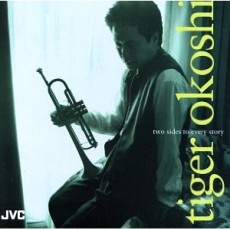
Toru “Tiger” Okoshi was born in Ashiya, Japan on March 21, 1950. An autodidact on trumpet, he studied at Kwansei Gakuin University prior to moving to the United States in 1972. He then matriculated through the Berklee School of Music.
Okoshi first gained attention with his collaboration in the Seventies with Gary Burton, then played with the Mike Gibbs Orchestra at Carnegie Hall in 1974. Following this came a tour with Buddy Rich and in the early 90s he played in George Russell’s Living Time Orchestra and recorded with Rakalam Bob Moses.
Tiger has recorded regularly as a leader and sideman with Jay Anderson, Peter Erskine, Bela Fleck, Gil Goldstein, Mike Stern, Jack DeJohnette, Kenny Barron, Mino Cinelu and Bernard Purdie among others. He is currently a professor at Berklee.
More Posts: trumpet