

Daily Dose Of Jazz…
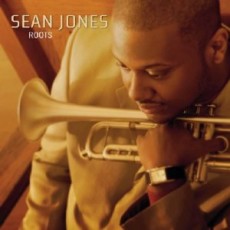
Sean Jones was born on May 29, 1978 in Warren, Ohio. Among his first musical experiences were the gospel music he heard in church where he sang and performed with the Saint James’ Church of God in Christ choir. As a beginning musician, Jones started on the drums and switched to trumpet in the fifth grade after his grandmother told him about his grandfather playing that instrument during World War II. He developed an interest in jazz around the same time, after receiving two albums by Miles Davis from his band instructor, namely Kind of Blue and Tutu.
By the time he entered high school Sean had decided to pursue a career as a professional musician, and studied classical trumpet as well as jazz. In 2000, Jones obtained an undergraduate degree in classical trumpet performance from Youngstown State University and later a master’s degree from Rutgers University.
As a session musician he has performed with several notable ensembles and musicians, including Tia Fuller, Gerald Wilson, Joe Lovano, Tom Harrell, Jon Faddis, Jimmy Heath and Frank Foster. He has had a six-month stint with the Lincoln Center Jazz Orchestra, after which Marsalis offered him a position with the ensemble as lead trumpeter, became a music professor at Duquesne University.
Sean is featured on Nancy Wilson’s Grammy winning “Turned To Blue”, has released five albums for Mack Avenue Records as a bandleader, has played the Monterey, Detroit International and Montreal International Jazz Festivals and currently holds the position of Interim Artistic Director for the Cleveland Jazz Orchestra and held a position as Associate Professor of Jazz Trumpet at Oberlin Conservatory for the 2012-13 academic year. He continues to perform, record, teach and tour.

Take A Dose On The Road
More Posts: trumpet
Daily Dose Of Jazz…
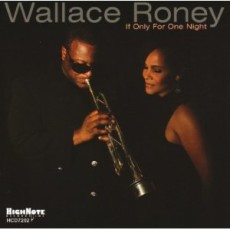
Wallace Roney was born May 25, 1960 in Philadelphia, Pennsylvania and at the age of 4 it was discovered he had perfect pitch. He began his musical and trumpet studies at the Settlement School of Music, then from the age of 7 studied with Sigmund Herring of the Philadelphia Orchestra and under the watchful eye of Eugene Ormandy was regularly presented at the Settlement recitals with the Philadelphia Brass Ensemble.
Having already made his recording debut at 14 by the time he entered the Duke Ellington School of the Arts in Washington, D.C., Wallace made his mark in D.C. as a gifted local performer by his graduation. He studied with Langston Fitzgerald of the Baltimore Symphony, attended Howard University and Berklee College of Music, took lessons from Clark Terry and Dizzy Gillespie.
Wallace studied with Miles Davis from 1985 until his death in ’91 and credits Miles as having helped to challenge and shape his creative approach to life as well as being his music instructor, mentor and friend and holds the distinction of being the only trumpet player Davis ever personally mentored.
With all of his skills and early accomplishments, Roney early career was bleak, bordering on homelessness, until he got a call to tour with drummers Tony Williams and Art Blakey. This shot in the arm culminated in him becoming one of the most in-demand trumpeters on record, movie and commercial recording sessions. In 1979 and again in 1980, Wallace Roney won the Down Beat Award for Best Young Jazz Musician of the Year. In 1989, and again in 1990, Wallace won Down Beat Magazine’s Critic’s Poll for Best Trumpeter to Watch.
He has played with Herbie Hancock, Ron Carter, Wayne Shorter, Elvin Jones, Jay McShann, Walter Davis Jr., Sonny Rollins and Curtis Fuller to name the short list and has recorded on over 250 sessions by the time he turned 40. The hard bop and post bop trumpeter Wallace Roney continued to perform, record and tour until he passed away at age 59 from complications arising from COVID~19 on March 31, 2020 in Paterson, New Jersey.
Give A Gift Of Jazz – Share
More Posts: trumpet
Daily Dose Of Jazz…
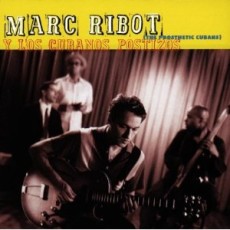
Marc Ribot was born on May 21, 1954 in Newark, New Jersey and worked extensively as a session musician. His early sessions with Tom Waits helped define Waits new musical direction in 1985.
His own work has touched on many styles, including n wave, free jazz and Cuban music. Ribot’s first two albums featured The Rootless Cosmopolitans, followed by an album of works by Frantz Casseus and Arsenio Rodriguez. Further releases found him working in a variety of band and solo contexts including two albums with his self-described “dance band”, Marc Ribot y Los Cubanos Postizos.
His relatively limited technical facility is due to learning to play right-handed despite being left-handed. He currently performs and records with his group Marc Ribot’s Ceramic Dog. Marc’s studio work involves several tracks accompanying the legendary pianist McCoy Tyner’s “Guitars” project. He has performed and recorded with Jack McDuff, John Scofield, Wilson Pickett, Cibo Matto, Bela Fleck, Derek Trucks, Madeline Peyroux, Medeski Martin & Wood, Elton John and many others.
He has toured Europe with his band Sun Ship, had a biographical documentary film called the The Lost String and has also judged the 8th Annual Independent Music Awards to support indie careers in music. He has twenty-one albums as a leader, a filmography that includes five and a biographical documentary about him titled The Lost String. Guitarist Marc Ribot also plays banjo, trumpet, cornet and sings and continues to perform, record and tour.
Dose A Day-Blues Away
Daily Dose Of Jazz…
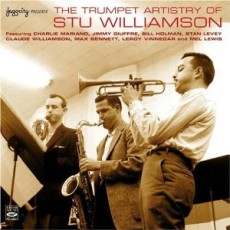
Stu Williamson was born on May 14, 1933 in Brattleboro, Vermont and is the younger brother of jazz pianist Claude Williamson. The trumpeter relocated to Los Angeles in 1949 and became a regular on the West Coast scene. He played with Woody Herman, Mel Lewis-Pepper Adams Quintet, Elmo Hope, Lennie Niehaus, Billy May and Charlie Barnet the first half of the Fifties.
Williamson played a significant role in Stan Kenton’s Orchestra, Howard Rumsey’s Lighthouse Café All-Stars and Terry Gibbs’s Dream Band. Between 1954 and 1958 Williamson played intermittently with Shelly Manne and was a ubiquitous session player up until 1968.
Although he had a beautiful, rich, round tone and his ability to create melodic solos full of invention, power and clarity gave him the opportunity to front small groups and big bands. Disappearing from the jazz scene after battling drug addiction for much of his life, including for years after he left the music. Trumpeter Stu Williamson passed away on October 1, 1991 in Studio City, California.
Dose A Day-Blues Away
More Posts: trumpet
Daily Dose Of Jazz…
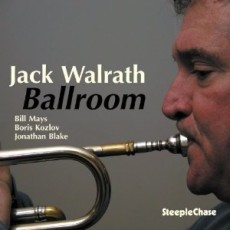
Jack Walrath was born on May 5, 1946 in Stuart, Florida and began playing the trumpet at the age of nine while living in Edgar, Montana. He graduated from Joliet High School in 1964 and attended the Berklee College of Music. Pursuing a composition diploma program instead of a full degree program, he concentrated specifically upon music classes. During his Berklee years he backed a number of R&B singers in the Boston and Cambridge areas, gigged with his fellow students and worked in the band Change with bassist Gary Peacock.
In 1969 Jack relocated to the West Coast, found work in the Los Angeles jazz scene, became a member of the band Revival, joined the West Coast Motown Orchestra, toured with Ray Charles and by the next year was back in New York City working with mainstream and Latin jazz bands. By 1974 he met and joined Charles Mingus’ quintet that broke new ground in free jazz and non-chordal improvisation. He continues the legacy working with Mingus Dynasty and the Charles Mingus Big Band.
Walrath has been a sideman for such luminaries as Miles Davis, Quincy Jones, Larry Willis, Bobby Watson, Hal Galper, Sam Rivers, Mike Longo, Elvis Costello, Richie Cole and others. He has worked with the WDR Big Band, the Jazz Tribe and the Charlie Persip Superband. He has led ensembles under the names of The Jack Walrath Group, Wholly Trinity, Hard Corps, The Masters of Suspense, and The Jack Walrath Quintet.
Post-bop jazz trumpeter Jack Walrath has amassed a catalogue of twenty-six albums as a leader and 28 as a sideman; has been nominated for a Grammy, received composition grants from the National Endowment for the Arts, has been commissioned to compose for symphony to solo piano and continues to conduct seminars, master classes, music camps and clinics around the world. He has also written an instruction book, 20 Melodic Jazz Studies for Trumpet, and is currently working on an autobiography, CD and record guide.
More Posts: trumpet