

Daily Dose Of Jazz…
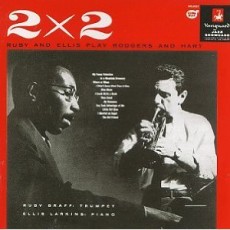
Reuben “Ruby” Braff was born on March 16, 1927 in Boston, Massachusetts He began playing in local clubs in the 1940s and in 1949, and he was hired to play with the Edmond Hall Orchestra at Boston’s Savoy Cafe. Ruby teamed up with Pee Wee Russell when the clarinet was making a comeback and they recorded several sessions for Savoy Records.
Relocating to New York in 1953 Braff easily fit into a variety of Dixieland and mainstream settings becoming in demand for band dates and recordings. He recorded as both leader and sideman working with such names as Vic Dickinson, Buck Clayton, Urbie Green, Ellis Larkins and Benny Goodman.
In the Sixties he was a member of George Wein’s Newport All-Stars but for a number of years work was hard to come by for the Dixieland player until the 70s when he formed a quartet in 1973. Following this he freelanced in different small combos and duets ultimately recording with Scott Hamilton’s quintet and sparring with guitarist Howard Alden.
Ruby Braff, cornetist and trumpeter who played in the genres of Dixieland, mainstream jazz and swing passed away on February 10, 2003 in Chatham, Massachusetts.
Daily Dose Of Jazz…
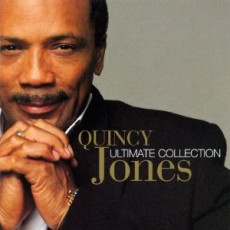
Quincy Delight Jones, Jr. was born on March 14, 1933 in Chicago, Illinois. When he was ten, his family moved to Bremerton, Washington, a suburb of Seattle. He first fell in love with music when he was in elementary school, and tried nearly all the instruments in his school band before settling on the trumpet. While barely in his teens attending Garfield High, Quincy befriended then-local singer-pianist Ray Charles and the two youths formed a combo, eventually landing small club and wedding gigs.
At 18, the young trumpeter won a scholarship to Berklee College of Music in Boston, Massachusetts but dropped out abruptly when he received an offer to go on the road with bandleader Lionel Hampton. The stint with Hampton led to work as a freelance arranger and settling in New York, throughout the 1950s he wrote charts for Tommy Dorsey, Gene Krupa, Sarah Vaughan, Count Basie, Duke Ellington, Dinah Washington, Cannonball Adderley and Ray Charles.
In 1964 Quincy won his first Grammy for Best Instrumental Arrangement of “I Can’t Stop Loving You”, in 1968 he won his second Grammy for Best Instrumental Performance with “Walking In Space” and that same year along with his songwriting partner Bob Russell became the first African Americans to be nominated for an Academy Award for Best Original Song for “The Eyes Of Love” and he became the first African American to be nominated twice within the same year when for Best Original Score for the 1967 film In Cold Blood.
His firsts would continue in 1971 when named musical director/conductor of the Academy Awards ceremony, being first to win the Academy’s Jean Hersholt Humanitarian Award, and He is tied at 7 with sound designer Willie D. Burton as the most Oscar-nominated African American.
His musical achievements are too numerous to list as they span the gambit from film scores such as The Pawnbroker, In The Heat of the Night, The Italian Job, MacKenna’s Gold, The Getaway and The Color Purple to his jazz works “Body Heat” and “Big Band Bossa Nova” from which Soul Bossa Nova was used in the Austin Powers movies to his crowning glories with Miles Davis last release “Live at the Monteux Jazz Festival”, his work with Michael Jackson’s “Thriller” and the charity song “We Are The World”. He continues to produce, conduct, arrange and compose.
More Posts: drums,french horn,piano,synthesizer,trumpet,vocal
Daily Dose Of Jazz…
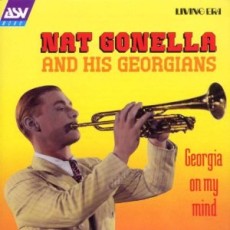
Nathaniel Charles Gonella was born March 7, 1908 in East London, England and took up cornet as a child while at St. Mary’s Guardian School, an institution for underprivileged children. His first professional job interrupted his stint as a furrier’s apprentice when he joined Archie Pitt’s Busby Boy’s Band in 1924. He remained with the band until 1928, and it was during this period that he became acquainted with the early recordings of Louis Armstrong and the New Orleans jazz style.
Nat played and recorded with many prominent jazz musicians, including Billy Cotton, Archie Alexander, Digby Fairweather, Lew Stone, Bob Bryden and Roy Fox. His distinctive vocal style was reminiscent of his idol, Louis Armstrong, though his voice was often eclipsed by his achievements as a bandleader and trumpeter.
Gonella’s standing grew even more quickly after the formation of his own band, “The Georgians”, in 1935, taking the name from his highly popular recording of “Georgia On My Mind” in 1932. He later formed a big band and quickly became a headliner on the variety circuit.
Nat flirted briefly with bebop but returned to the variety stage until a revival of tradition jazz came in the late Fifties. His performing and recording success lasted until the advent of The Beatles in the Sixties, however he toured the northern club circuit and over the next thirty years he continued to sing occasionally with various bands until his death in Gosport on August 6, 1998 at age 90.
More Posts: bandleader,mellophone,trumpet,vocal
Daily Dose Of Jazz…
Johnny Dunn was born on February 19, 1897 in Memphis, Tennessee and learned to play trumpet as a youth. He attended Fisk University in Nashville and had a solo act in Memphis before he was discovered by W.C. Handy and traveling to New York with him in 1917. After a three-year association featured playing cornet, Johnny joined Mamie Smith’s Jazz Hounds, recording with her band before leaving a year later to lead his Original Jazz Hounds.
During the 1920s he ventured to Europe with the Will Vodery band, recorded with Noble Sissle in France, played and recorded with Willie “The Lion’ Smith and memorable sessions with Jelly Roll Morton in New York, had a hit song “Sergeant Dunn’s Bugle Call Blues”.
By the 30s Dunn was working steadily in Europe and often residing there for periods of time in the Netherlands. He was among the best of the musicians playing in the immediate pre-jazz years and he influenced many of his contemporaries. Overshadowed though he was by the arrival of Louis Armstrong, Dunn was still an able and gifted player, showing subtle power and using complex patterns that never descended into mere showmanship.
His stylistic roots became outmoded during the 30s but his decision to remain in Europe and his early death on August 20, 1937, in Paris, meant that his reputation never suffered and is recognized as having been a highly accomplished trumpeter.
More Posts: trumpet
Daily Dose Of Jazz…
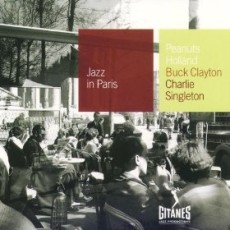
Herbert Lee “Peanuts” Holland was born on February 9, 1910 in Norfolk, Virginia. Holland learned to play trumpet at the Jenkins Orphanage. A veteran of the Alphonse Trent territory band with whom he recorded and played with from 1928 to 1933, he also played with Al Sears, the Jeters-Pillars Orchestra, Willie Bryant Jimmie Lunceford and Lil Armstrong’s band.
In 1938 Peanuts led his own very successful band prior to moving to New York City the following year. There he joined the big bands of Coleman Hawkins and Fletcher Henderson. Through the first half of the Forties he was part of Charlie Barnet’s band and in 1946 with Don Redman toured Europe.
Holland elected to stay in Europe living in Paris and Stockholm and performing with his own small combo. He amassed a catalog of 46 recordings for European labels between 1946 and 1960 regularly working with such jazz names as Mezz Mezzrow, Don Byas, Billy Taylor and Claude Bolling.
Jazz trumpeter Peanuts Holland best known for his contributions to swing jazz, passed away on February 7, 1979 in Stockholm, Sweden, just two days shy of his 69th birthday.