

Daily Dose Of Jazz…
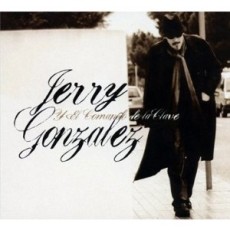
Jerry Gonzalez was born in the Bronx, New York City on June 5, 1949. Of Latin heritage, he grew up with jazz and Afro-Cuban music that left a deep impact on his musical appreciation. Listening to his father’s jazz collection he was influenced by Miles Davis, Dizzy Gillespie and Louis Armstrong along with gleaning inspiration from Tito Puente, Eddie Palmieri and Mongo Santamaria.
Studying music in junior high school, Gonzalez took up the trumpet and later the congas, continuing he formal training at New York College of Music and New York University. He began his professional career in 1963 playing with Lewellyn Mathews in New York State World’s Fair. In 1970 playing with Dizzy Gillespie, under whose tutelage he fused African based rhythms onto jazz elements seamlessly without detracting from either.
After playing with Manny Oquendo and Eddie Palmieri, Jerry created the Fort Apache Band with Andy Gonzalez (his brother), Larry Willis and Steve Berrios. A later reconfiguration and naming, Jerry Gonzalez & the Fort Apache Band became much more successful performing at European jazz festivals and subsequent recordings. Three albums later, “Rumba Para Monk” released in 1989, topped a readers’ poll in Down Beat magazine and was named the “Jazz Album Of The Year” in France by the Academie du Jazz. In 1998 they won both the industry and journalist polls in the New York Jazz Awards Latin Jazz category.
Gonzalez has played and/or collaborated with Tito Puente, McCoy Tyner, Jaco Pastorious, Chet Baker, Woody Shaw, Tony Williams, Larry Young, Freddie Hubbard, Chico O’Farill, Papo Vasquez, Ray Barretto, The Beach Boys, Chico Freeman and Paquito D’Rivera among others but his most noteworthy contribution is to Afro-Cuban jazz and a resurgence in Latin jazz in the 80s and 90s. With seventeen albums as a leader under his belt and a host of recording sessions as a sideman, since 2000, trumpeter Jerry Gonzalez has lived and played in and around jazz clubs in Madrid.
Daily Dose Of Jazz…
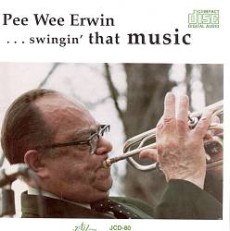
Pee Wee Erwin was born on May 30, 1913 in Falls City, Nebraska. Erwin started on trumpet at age four. He played in several territory bands before joining the groups of Joe Haymes from 1931-1933 and Isham Jones from 1933 to 1934.
By 1934 Pee Wee moved to New York City where he became a prolific studio musician, performing on radio and in recording sessions. He played with Benny Goodman in 1934-35, then with Ray Noble in 1935. The next year he joined Goodman again, taking Bunny Berigan’s empty chair. In 1937 he again followed Berigan, this time in Tommy’s Dorsey’s orchestra, where he remained until 1939.
Erwin led his own big band in 1941-42 and 1946. In the 1950s he played Dixieland in New Orleans, and in the 1960s formed his own trumpet school with Chris Griffin; among its graduates was Warren Vache. Erwin played up until the year of his death, recording as a leader for United Artists in the 1950s and issuing six albums in 1980 and ’81, the last two years of his life.
Trumpeter Pee Wee Erwin passed away on June 20, 1981 in Teaneck, New Jersey.
More Posts: trumpet
Daily Dose Of Jazz…
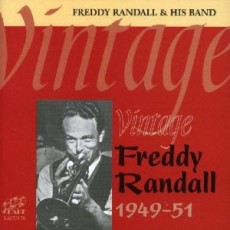
Freddy Randall was born Frederick James Randall on May 6, 1921 in Clapton, East London, England. Becoming interested in music in school the self-taught musician took up the trumpet at 16, never learned to read music but still achieved a high degree of technical proficiency with a flair and exuberance which marked him out. He began playing in local bands including Albert Bale’s Darktown Strutters and Will De Barr’s Band.
Randall’s heroes were the so-called Dixieland players out of Chicago like Wild Bill Davison and Muggsy Spanier and his own playing reflected their influence as he led the St. Louis Four in 1939. After military service he played Freddy Mirfield and John Dankworth before leading his own Dixieland groups in the late forties that featured many well-known English trad jazz stars of the era.
By 1958 Freddy left music due to lung problems, not resurfacing until ’63 playing with Dave Shepherd and recording for Black Lion Records. Over the course of his career Randall played with visiting American jazz musicians Sidney Bechet, Bud Freeman, Wild Bill Davison, Pee Wee Russell, Bill Coleman and Teddy Wilson.
Freddy Randall, trumpeter and bandleader, died on May 18, 1999 in Teignmouth, Devon at age 78.

More Posts: trumpet
Daily Dose Of Jazz…
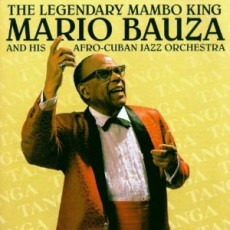
Mario Bauzá was born on April 28, 1911 in Havana, Cuba and was classically trained. By age nine he was playing clarinet in the Havana Philharmonic Orchestra and would stay there for the next three years. In 1925 he ventured to New York to record with Maestro Antonio Maria Romeu’s band “Charanga Francesca”. He was fourteen. Five years later he returned to New York and reputedly learned to play trumpet in two weeks to become a part of the Don Azpiazu Orchestra.
Bauzá became lead trumpeter and musical director for Chick Webb’s Orchestra by 1933, and it was during his time with Webb that Bauzá both met fellow trumpeter Dizzy Gillespie and discovered and brought into the band singer Ella Fitzgerald. 1938 saw Bauzá joining Cab Calloway’s band, later convincing Calloway to hire Dizzy as well, with whom Bauzá would continue to collaborate even several years after he left Calloway’s band in 1940. The fusion of Bauzá’s Cuban musical heritage and Gillespie’s advancements in bebop eventually culminated in the development of cubop, one of the first forms of what is commonly referred to as Latin jazz.
Bauzá became musical director of Machito and his Afro-Cubans in 1941, a band led by his brother-in-law, Frank Grillo, also known as Machito, and in 1942 he brought a young timbales player named Tito Puente into the fold. For the next 30 years Bauzá remained director of the band up until 1976 where he began working sparingly leading his own Afro-Cuban orchestra through the eighties and into the early 90s, where his last band made a guest appearance on The Cosby Show.
Mario Bauzá, who died in New York City on July 11, 1993, was one of the first musicians to introduce Latin music to the United States by bringing Cuban musical styles into the New York jazz scene. He was one of the most influential figures in the development of Afro-Cuban music, and his innovative work and musical contributions have many jazz historians to call him the “Founding Father of Latin Jazz”.
More Posts: bandleader,clarinet,trumpet
Daily Dose Of Jazz…
Benny Harris was born on April 23, 1919 in New York City. His first major gig as a trumpeter was in 1939 with Tiny Bradshaw. He would go on to play with Earl Hines in 1941 and 1943, and worked New York’s 52nd Street bebop circuit in the 1940s.
Harris collaborated with Benny Carter, John Kirby, Coleman Hawkins, Don Byas and Thelonious Monk. He was with Boyd Raeburn from 1944-45 and Clyde Hart in 1944; he and Byas worked together again in 1945. He played less in the late 1940s, though he appeared with Dizzy Gillespie in 1949 and Charlie Parker in 1952. After this Harris quit music entirely.
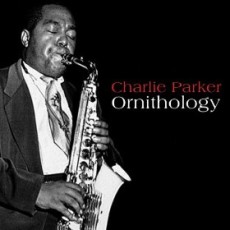
Never a well-known soloist, Benny is better known for such compositions as “Crazeology” and “Ornithology”, the latter being a signature Charlie Parker tune; “Reets and I”, a Bud Powell favorite; and “Wahoo”, a tune associated with Duke Pearson.
Benny Harris, bebop trumpeter and composer died on May 11, 1975 in San Francisco, California.

More Posts: trumpet