

Daily Dose Of Jazz…
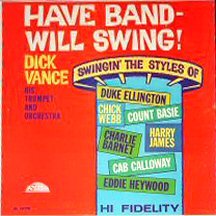
Dick Vance was born on November 28, 1915 in Mayfield, Kentucky, and raised in Cleveland, Ohio. He learned violin before concentrating on trumpet and by 1932 was playing with J. Frank Terry before joining Lil Armstrong’s band in 1934.
He moved to New York City and played with Willie Bryant, Kaiser Marshall, and Fletcher Henderson between 1936 to 1938. In Henderson’s band he was lead trumpeter and occasionally sang. By 1939 he joined Chick Webb’s orchestra, remaining in the group when Ella Fitzgerald took over leadership. His next move had him becoming the staff arranger for Glen Grey’s band and, in 1942, joined the Lucky Millinder Orchestra.
From 1944–45 he worked with Charlie Barnet, Don Redman, Eddie Heywood and Ben Webster. From 1944 to 1947 he studied at Juilliard, and moonlighted as a pit orchestra musician and an arranger for Harry James, Cab Calloway, Earl Hines and Duke Ellington. During this time Dick played on notable Broadway productions including Pal Joey, Beggar’s Holiday, and in the off-stage band for Streetcar Named Desire.
In 1950, Vance reunited with Fletcher Henderson, playing in his New York sextet. 1951 to 1952 saw him as a member of Duke Ellington’s trumpet section where he arranged most of the items for the album Ellington ‘55. In 1958 he co-composed Jazz Festival Suite with Ellington for performance at the Newport Jazz Festival. He led Sonny Stitt’s trumpet section on the 1962 album Sonny Stitt & The Top Brass. He toured abroad with his own band in 1969, which later appeared in the film L’aventure du jazz.
He toured with Redman in 1953 and was a regular at the Savoy Ballroom throughout the 1950s. He released two albums in the 1960s and toured with Eddie Barefield in 1969. He appears briefly in episode 9 of the music documentary series All You Need Is Love: The Story of Popular Music. In 1979, he composed for the documentary film No Maps On My Taps, starring Lionel Hampton and Howard Sims.
Trumpeter, vocalist, composer and arranger Dick Vance passed away on July 31, 1985 in New York City at the age of 69.
More Posts: arranger,bandleader,composer,history,instrumental,jazz,music,trumpet,vocal

Daily Dose Of Jazz…
Tommy Stewart was born November 19, 1939 in Gadsden, Alabama. He attended Industrial High in Birmingham, Alabama where John T. “Fess” Whatley trained him along with Erskine Hawkins, Dud Bascomb, Paul Bascomb, and Sun Ra. Alvin “Stumpy” Robinson, the band director at Washington Jr High School, was also influential in his development.
Enrolling at Alabama State College and having no way to pay tuition, the problem solved itself when he joined the Bama State Collegians, a dance band that made enough money to fund Stewart’s way through four years of college. He attended Alabama State University, where he directed the Bama State Collegians. Later, he studied jazz arranging at the Eastman School of Music and studied arranging under John Duncan, a classical composer and teacher at Alabama State University.
As an educator he began his teaching career at Fayette High School in St. Clair County Alabama, 1961 to 1963. Moving to Atlanta, Georgia in 1969 he taught in Fayetteville, Georgia, worked for Morris Brown College doing band arrangements and taught jazz and arranged for the Morehouse College band. He also taught band classes at West End High School in Birmingham, Alabama from, and taught A Survey of Popular Music at Georgia State University.
During the 1970s, he worked with Gladys Knight & the Pips, The Tams, Johnnie Taylor, Jackie Moore, King Floyd, Z. Z. Hill, and The Stylistics. He toured as musical director for Johnnie Taylor and for Ted Taylor and went on to record disco in the Seventies with Final Approach, Cream De CoCo, Tamiko Jones, Moses Davis, and his own album.
In 1990, he co-founded the African American Philharmonic Orchestra with founder and conductor John Peek. He moved from Atlanta to Birmingham in 1992. He was a member of the Magic City Jazz Orchestra, Cleveland Eaton, the Alabama All-Stars, the Alabama Jazz Hall of Fame All-Stars, and Ray Reach and Friends, continues to be involved in music. In 1988, he was inducted into the Alabama Jazz Hall of Fame. At 81, trumpeter, arranger, composer, and record producer Tommy Stewart remains involved in the music industry.
More Posts: arranger,bandleader,history,instrumental,jazz,music,record producer,trumpet
Daily Dose Of Jazz…
John Henry Windhurst came into this world on November 5, 1926 in New York City, New York and was a self taught trumpeter. At the age of 15 he played his first public performance at Nick’s, and made his professional debut during the spring of 1944 at one of Eddie Condon’s concerts at the Town Hall, both venues in New York City. By eighteen he replaced Bunk Johnson in Sidney Bechet’s band for a Savoy Cafe gig in Boston, Massachusett, which launched his career as a trumpeter.
Going on to play with Art Hodes and James P. Johnson at the Jazz at Town Hall concert in 1946, Johnny then moved to the midwest and after a brief stint in the Chicago, Illinois jazz scene he returned to the Savoy Cafe as a member of Edmond Hall’s band. Eventually he moved west to experience the west coast jazz scene in California. However, his inability to read music forced him to decline gigs with Benny Goodman and Woody Herman, emphasizing his preference for informal jamming.
Over the years, he played with Louis Armstrong, Nappy Lamare, Eddie Condon. Ruby Braff,George Wettling, Jack Teagarden and Barbara Lea. He also led his own band, Riverboat Five, through Columbus, Ohio and Boston for several years, opting to play colleges and small venues instead of the most popular east coast venues and nightclubs.He also did some off-Broadway work with Conrad Janis in the musical Joy Ride.
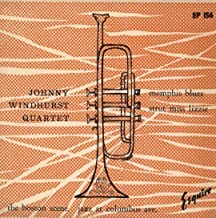
Windhurst only made one recording with his swing quartet called Jazz at Columbus Avenue, for the Transition label in 1956. On the record label Jazzology, George Buck released The Imaginative Johnny Windhurst which showcased his unique trumpet style. The LP was recorded at a showcase in Massachusetts, where the decision to record it was made on the spot just as the show began. The spontaneous set flaunts his innovative playing on timeless numbers such as Back In Your Own Backyard, Strut Miss Lizzie and Lover Come Back to Me.
He eventually moved upstate to Poughkeepsie, New York with his mother, where he finished his career in a dixieland band at Frivolous Sal’s Last Chance Saloon. Trumpeter Johnny Windhurst passed away from a heart attack at the age of 54 on October 2, 1981 in Dutchess County, New York.
More Posts: bandleader,history,instrumental,jazz,music,trumpet
Daily Dose Of Jazz…
Joe McPhee was born November 3, 1939 in Miami, Florida and grew up in Poughkeepsie, New York. He began playing trumpet when he was eight, before learning other instruments. He played in various high school and then military bands before starting his recording career. His first recording came in 1967 when he appeared on the Clifford Thornton album titled Freedom and Unity.
McPhee taught himself saxophone at the age of 32 after experiencing the music of John Coltrane, Albert Ayler, and Ornette Coleman. During the late 1960s and early 1970s, he lectured on jazz music at Vassar College.
In 1975, Werner Uehlinger started the Swiss label Hathut Records with the specific intent of showcasing McPhee’s music. In the 1980s, he met Pauline Oliveros, began studying her musical theories, and worked with her Deep Listening Band.
Not having been signed with any major label in his native United States, Joe was better known throughout Europe until the 1990s. His 1996 album As Serious As Your Life, which takes its title from the jazz book by Val Wilmer, has been said to arguably be the finest of his solo recordings, according to the AllMusic review.
He has recorded or performed with Ken Vandermark, Peter Brötzmann, Evan Parker, Mats Gustafsson, Jeb Bishop, The Thing, Clifton Hyde, Jérôme Bourdellon, Raymond Boni, and Joe Giardullo. Since 1998, he, Dominic Duval, and Jay Rosen have performed and recorded as Trio X. In the 1990s Dominique Eade and McPhee had a jazz ensemble called Naima.
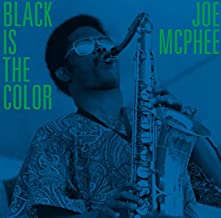
He has written reviews and commentary for Cadence magazine and was awarded the Resounding Vision Award by Nameless Sound. Multi-instrumentalist Joe McPhee, who plays tenor, alto, and soprano saxophone, trumpet, flugelhorn and valve trombone, is most notable for his free jazz work done from the late 1960s to the present day.
More Posts: bandleader,flugelhorn,history,instrumental,jazz,music,saxophone,trumpet,valve trombone
Daily Dose Of Jazz…
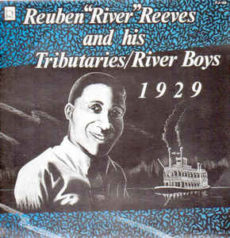
Reuben “River” Reeves was born in Evansville, Indiana on October 25, 1905 and started out playing locally in the Midwest before moving to New York City in 1924. The next year he moved to Chicago, Illinois and by 1926 joined Erskine Tate’s orchestra, then played with Fess Williams and Dave Peyton by the end of the decade. While in Chicago he took lessons from a German trumpet player, Albert Cook, who played in the Chicago Symphony.
While playing at the Regal Theater in 1929, Peyton featured Reuben, his hot trumpet player, on a night where Louis Armstrong had a gig across the street at the Savoy, to outdo the latter which didn’t work. Signed to Vocalion he recorded as a bandleader with his groups the Tributaries and the River Boys. His sidemen were his brother, trombonist Gerald Reeves, and clarinetist Omer Simeon and in 1929, twenty sides were recorded in 1929.
He played under Cab Calloway in the early Thirties, and recorded again with the River Boys in 1933. He toured as a leader for two years from 1933 to 1935, then played freelance through the late 1930s. During World War II, he led an Army band called the Jungleers. Stationed at the Army Jungle Training Center on the northeast coast of Oahu, Hawaii. There they were popular participants in Battle of the Band competitions that were an integral part of the extraordinary music scene in Hawaii during the war.
After the war, he played in Harry Dial’s Blusicians in 1946. Trumpeter and bandleader Reuben Reeves, whose entire output as a bandleader has been released to a single compact disc by RST Records, passed away in September 1975 in New York City.

More Posts: bandleader,history,instrumental,jazz,music,trumpet